Monthly Archives: May 2024

Hyperbolic Headlines are Destroying Journalism!

In our era of information overload, most readers consume their news by scanning headlines rather than through any careful reading of articles. A study by the Media Insight Project found that six in ten people acknowledge that they have done nothing more than read news headlines in the past week​ (Full Fact)​. Consuming news in this matter can make one less, rather than more well-informed.

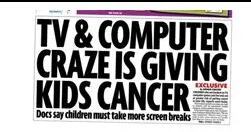
Take, for instance, the headline from a major online newspaper: “Scientists Warn of Catastrophic Climate Change by 2030.” The article itself presents a nuanced discussion about potential climate scenarios and the urgent need for policy changes. However, the headline evokes a sense of inevitability and immediate doom that is not supported by the article’s content. These kind of headlines invoke fear and urgency to drive traffic at the expense of an accurate representation of what is really in the article.

All too typical hyperbolic headlines contribute to instilling dangerously misleading and lasting impressions. For example, a headline that screams “Economy in Freefall: Recession Imminent” might actually precede an article discussing economic indicators and expert opinions on potential downturns. Misleading headlines have an outsized effect in creating a skewed perception that can influence public opinion and decision-making processes negatively.

It often seems that headline writers have not read the articles at all. Moreover, they change them frequently, sometimes several times a day, to drive more traffic by pushing different emotional buttons.

Particularly egregious examples of this can be found in the political arena. During election seasons, headlines often lean towards sensationalism to capture attention. A headline like “Candidate X Involved in Major Scandal” may only refer to a minor, resolved issue, but the initial shock value sticks with readers. It unfairly delegitimizes the target of the headline. The excuse that the article itself is fair and objective does not mitigate the harm done by these headlines because, as we said, most people only read the headlines. And if they do skim the article they often do so in a cursory attempt to hear more about the salacious headline. If the article does not immediately satisfy that expectation, they become quickly bored, and don’t bother to actually read the more reasoned presentation in the article.

This headline-driven competition for clicks has led to a landscape where accuracy and depth are sacrificed for immediacy and sensationalism. Headlines are crafted to evoke emotional responses, whether through fear, anger, or salaciousness, rather than to inform. This shift has profound implications. When readers base their understanding of complex issues on superficial and often misleading headlines, they are ill-equipped to engage in meaningful discourse or make informed decisions.

Furthermore, the impact of misleading headlines extends beyond individual misinformation. It contributes to a polarized society where people are entrenched in echo chambers, each side reinforced by selective and often exaggerated information communicated to them through attention-grabbing headlines. This environment fosters division and reduces the opportunity for constructive dialogue, essential for a healthy democracy​ (Center for Media Engagement)​.

Consider the headline “Vaccines Cause Dangerous Side Effects, Study Shows.” The article might detail a study discussing the rarity of severe side effects and overall vaccine efficacy, but the headline fuels anti-vaccine sentiment by implying a more significant threat. Such headlines not only mislead but also exacerbate public health challenges by spreading fear and misinformation.

Prominent journalists like Margaret Sullivan of the Washington Post and Jay Rosen of NYU have critiqued the increasing prevalence of clickbait headlines, noting that they often prioritize sensationalism over accuracy, thereby undermining the credibility of journalism and contributing to public misinformation. Sullivan has emphasized the ethical responsibility of journalists to ensure that headlines do not mislead, as they serve as the primary interface between the news and its audience.

Unfortunately I suspect that journalists typically have little to no say in the headlines that promote their articles. The authors and editors should reassert control.

Until and unless journalists start acting like responsible journalists with regard to sensational headlines, readers should be wary of headlines that seem too dramatic, overstated, or that attempt to appeal to emotions.

And this is not a problem limited to tabloid journalism… we are talking about you, New York Times! Most people are already skeptical about headlines published in the National Enquirer. Tabloid headlines are not actually as serious a problem as the “credible” headlines put forth by the New York Times and other publications who still benefit from an assumption of responsible journalism.

The current trend of sensationalist online newspaper headlines is a disservice to readers and society. The practice prioritizes clicks over clarity, hyperbole over honesty, and in doing so, contributes to a misinformed and divided public. It is imperative for both readers and journalists to advocate for a return to integrity in news reporting – particularly in the headlines they put out. Accurate, informative headlines are not just a journalistic responsibility but a societal necessity to ensure an informed and engaged populace.

Footnote: Did I fool you??

Does this article sound different than my usual blog articles? Is it better or worse or just different? This was actually an experiment on my part. I asked Chat GPT to write this article for me. I offer it to you with minimal editing as a demonstration of what AI can do.

I’m interested in hearing what you think in the comments. Should I hang up my pen and leave all the writing to AI?

The Vatican Combats Superstition

The Church has always worked tirelessly to portray itself as scholarly, rational, and evidence-based. Going way, way back, they have tried and largely succeeded in marketing themselves as a bulwark against false gods, superstitions, and dangerous beliefs.

In “The Demon-Haunted World,” Carl Sagan told about Jean Gerson back in the 1400’s who wrote “On the Distinction Between True and False Visions.” In it, he specified that evidence was required before accepting the validity of any divine visitation. This evidence could include, among many other mundane things, a piece of silk, a magnetic stone, or even an ordinary candle. More important than physical evidence, however, was the character of the witness and the consistency of their account with accepted church doctrine. If their account was not consistent with church orthodoxy or disturbing to those in power, it was ipso facto deemed unreliable.

In other words, the church has spent thousands of years fabricating pseudo-rational logic to ensure that the supernatural bullshit they are selling is the only supernatural bullshit that is never questioned.

Their pseudo-rational campaign of manipulation is is still going on today.

Just recently, the Vatican announced their latest marketing initiative to promote themselves as the arbiters of dangerous and confusing supernatural claims (see here). They sent their salesmen out in force promoting it, and if their claims were not accepted by the media with such unquestioning deference, I would not need to write this article.

Just as did Jean Gerson in 1400, the modern Vatican has again published revised “rules” for distinguishing false from legitimate supernatural claims. But unlike most of the media, let’s examine a few of these supposedly new rules (or tests) through a somewhat less credulous lens.

The first requirement, according to Vatican “scholars,” is whether the person or persons reporting the visitation or supernatural event possess a high moral character. The first obvious problem is that anyone, even those of low moral character, can have supernatural encounters. So what is this really about? The real reason they include this is because it’s so fuzzy. It gives them the latitude to dismiss reports inconsistent with their doctrine based on a character judgement, and it ensures that if they are going to anoint a new brand-ambassador, that person will not reflect poorly on the Church.

They include a similar criterion involving financial motivation. Again, while a financial interest should make one skeptical, it is not disqualifying. And the real reason this is included, I suspect, is to provide the same benefit as a moral character assessment. It provides further fuzziness to allow them to cherry-pick what sources they want to support, and which they want to disavow.

But the most important self-perpetuating rule is the next one. The Vatican explicitly gives credence to any claims that support church theology and the church hierarchy, and expressly discounts any claims that are not in keeping with Church doctrine as ipso facto bogus.

In other words, since Church doctrine is the only true superstition, any claim that is not in keeping with Church doctrine is logically and necessarily false. This is the exact same specious logic put forth by Jean Gerson in 1400. The Vatican clearly knows that a thriving business must keep reintroducing the same old marketing schemes to every new generation.

Rather than dwell further on the points the Vatican wishes us to focus on, let’s think one moment about what they did not include. Nowhere in their considered treatise on fact-based thinking do they ever mention anything remotely like scientific or judicial rules of evidence. Nowhere do they mention scientific-style investigation, scientific standards of proof, or any establishment of fact for that matter. They emphasize consistency with Church doctrine, but nowhere do they even mention consistency with known universal laws. And certainty nowhere do they suggest a sliver of a possibility that any of their existing beliefs could possibly be proven to be incorrect by some legitimate new supernatural phenomenon.

I won’t go on further as I like to keep these blog posts short, but I hope this is enough to help you see that everything in this current Vatican media campaign is more of their same old, “we are the only source for truth” claim. It’s the same strategy designed to hold an audience that has been adopted successfully by Rush Limbaugh, Fox News, and any number of cults.

The Church is essentially a money-making big-business like Disneyland, selling a fantasy experience built around their cast of trademarked characters with costumes and theme parks, and big budget entertainment events. Imagine if Disney spent thousands of years trying to retain market share by assuring people that they are the only real theme park and that all the rest of them are just fake. Then further imagine that Disney went on to promote scholarly articles about how they are the only reliable judges of which theme park characters are real. That’s the Church.

Disneyland and Universal Studios are just a feel-good entertainment businesses and they admit it. Disney doesn’t insist that Micky Mouse is real and Universal Studios doesn’t claim that only the Autobots can save us from the Decepticons. What makes the arbiters of truth at the Vatican either liars or delusional or both is that they never stop working to convince everyone that their divine mission is to protect us from – all those other – false beliefs.

Keep on Bloviating Against Protests!

We have long had a recurring pattern. Every single time we have protest actions, the bloviators mobilize to train their word processors on the protests. They hyperventilate and opine in the form of their considered and blistering critiques. Most start by lamenting that in <their day> they used to protest, so it’s not that they don’t support <proper> protesting, but while <their> protests were righteously motivated and properly executed, this current one crosses unacceptable lines.

Whatever the current protest might be, and however it may unfold, the bloviators always criticize it for crossing lines of proper protest decorum. Critics express concerns about malevolent actors in the movement. They denounce the protest for causing inconvenience to others. They raise issues over fairness to counter-protestors, about damage whether intentional or incidental, about the exact tone and wording of the rhetoric expressed. They share their sage, less inflamed, assessment that the demands of the protestors won’t have a worthwhile impact on the issue. They council that the protestors really ought to be doing something more worthwhile than protesting if they really want to see actual change.

But here’s the thing. As much as I just bloviated against the bloviators, we need them. They need to keep doing exactly what they always do – armchair bloviate. They are an essential part of an effective and sustainable protest mechanism for making progress on important social issues.

The bloviators serve the protests by reacting. That is precisely the goal of protests; to garner attention and get some reaction, any reaction. They often don’t expect their demands to be met immediately, and they certainly do not expect to solve the larger problems they are protesting about. They are just looking for some attention, some recognition of their issue in the hopes of starting a larger dialog, raising awareness, and forcing some due consideration an honest effort to address it.

When no one will listen, eventually you have to shout to get any attention. In attacking the methods and behavior of the protests and protestors, the bloviators help spread awareness of the important issues driving them. Even bad attention is some attention. Negative blowback ultimately becomes preferable, and in fact more logical and productive, than total apathy, lip service, and inaction.

And there is another way that the bloviators are essential to sustaining an effective tradition of protesting for social change. They fight to constrain the boundaries of what gets attention. By doing so, they make it easier for the next protest movement to garner some attention without going too far. Without them, if the boundaries did not get reset, every subsequent protest action would have to become more extreme than the last.

Imagine we did not have the bloviators. Without them lamenting how this new protest is somehow going too far, the threshold of disruption required to garner some attention would keep increasing. So in a way, they reset the disruption threshold so that we can react with concern and hand-wringing to the next protest, without those protesters having to go farther than the last to get any attention at all. If not for the bloviators constraining those thresholds, important and essential protests would be progressively forced become to extreme to continue to be allowed in our culture.

So bloviators, you keep wringing your hands and lamenting and armchair critiquing every protest. You play an essential part in our delicate balance of protest actions. Without you raising attention to them and resetting boundaries for the next one, we could not continue to live in a country in which essential protesting is both allowed and effective.