Author Archives: Tyson

Unknown's avatar

About Tyson

Love writing all kinds of stuff including fiction, non-fiction, editorials, etc. But writing software is the only writing I do for love AND money!

The Debilitating Weight of Choice

While it is difficult to define happiness, it is quite easy to recognize when we are happy or unhappy. And lots of people are very unhappy nowadays. Not merely unhappy, but profoundly, chronically unhappy. You hardly need scientific data to tell you that, but studies do confirm that Americans are the unhappiest they have been in 50 years (see here).

When we think about trends in America, we often jump back to the 1950’s for before-and-after contrasts and comparisons. Aside from some nostalgic allure, life in the 2020’s is objectively far better than it was in the 1950’s. At first glance we credit technology for improving our quality of life. But while technological advances have been stunning, those technologies have largely resulted in vastly greater levels of information and choice.

Today, thanks to information technologies, we have fast and easy access to fantastically more information than our grandparents did in the 1950’s. At the same time, that explosion of information, along with other social and technological changes, has dramatically expanded the range and number of choices both known to us and available to us.

Relatively scant information was knowable or even discoverable until relatively recently. You could not just look up anything and everything on the Internet. I have only recently discovered basic information that was effectively unknowable for most of my lifetime. Today there is very little that we cannot know, or at least get opinions about, with the few clicks of a mouse.

And amongst all that information, is information about our choices. Not only information making us aware of all our choices, but endless detail, advice, and opinions about those options to help us choose between them.

We may be desensitized to it, but today we enjoy vastly wider choices in foods, in clothing, in entertainment, in our hair color, in social media, an so on and on. We have immense choice not only in consumer goods, but in our life choices. We have far more choices to make about jobs and employers, where to live, where to visit, in our religious affiliation, our political allegiance, and most every aspect of our lives, large and small.

That was not true in the 1950’s. No comparison. You largely went to your local school, lived your entire life in your town of birth, got married to a classmate, had children, got a job at the local company where everyone else got a job, read your local paper each night after meat and potatoes, retired, and hosted holidays for your clan. That was pretty much all you knew and few of your life-paths could be called choices. Our biggest decisions were whether to smoke Marlboro or Camels.

So with both information and choice being so obviously fundamental to our personal and collective happiness, how can it be that we are so increasingly unhappy, both personally and collectively?

I propose that the reason is, in part, too much information about too many choices.

A little of most anything is almost always good but too much of most anything is almost always bad. While a little sunlight is needed to illuminate the darkness, and a little more may disinfect, but too much blinds and even burns. I submit that today we are unhappy, in large part, because we are drowning in information and paralyzed by choice. Further, the two of these in combination multiply and compound the problem.

Too much choice can make people crazy. Psychologist Barry Schwartz talked about the harmful consequences of too much choice in his book, “The Paradox of Choice.” Which product should I buy? Which path should I choose? What will that say about me? What if it’s not the best choice? What if I had chosen something else? What have I missed out on in life because of my choices? Why do I have to even choose? I want it all!

Today we are confronted daily by immeasurably more choices. But it isn’t just that we have choices, as if they were merely nice options. Rather, the only choice you don’t have is not to choose. You have to choose everything. And in making those choices, you are expected to read every review and scrutinize every detail of every choice, large or small. And after having chosen, you have to deal with all the scrutiny and second-guessing from yourself and others. Did I choose the best option? Maybe I should have chosen that other option.

When we are forced to make choices about practically everything, from trivial to life-defining, choice goes from being empowering to onerously debilitating. We are confronted by information and choice in every little thing we try to do. Do you want to make that burrito a supreme? Would you like that Jalapeno spicy? Would you care to round up for charity? It goes on and on in everything we do, both explicitly and implicitly.

It makes us want to scream, “I just want a damn burrito!”

This paradox of choice is exasperated by our abundance of information. Not only do we have to choose everything, but we are aware of every opposing argument, every bit of data, every opinion. Like choice, information about anything and everything is everywhere. And like choice, it isn’t merely there if we want it. Everyone seems determined, like it or not, to fully inform us about everything to ensure that we are happy.

It’s like that with all our plethora of choices and all the information that both informs and drowns us in opportunities taken and not taken. And at every possible opportunity, other people, amplified by the media and the Internet, are constantly informing us of our choices and demanding we become better informed and choose wisely so that we can become happier than we are. But don’t choose wrong!

The cumulative effect of all that information about all those choices is the opposite of what we might hope and expect. Untaken possibilities and choices can become untold sources of hesitation, angst, self-doubt, and regret.

Too much information creates unhappiness in other ways. How can anyone enjoy any entertainment choice today, or any activity at all, when they are confronted with a million voices all telling them they should like it or they should hate it or pick apart every little detail until the entire experience is just too laden with choice and information and flaws and criticisms to have any hope of just enjoying it.

Obviously I’m not suggesting reverting to the scant information and limited choices of the 1950’s. But I do want to point out that while information and choice in moderation are required for happiness, in excess they can and are making us very unhappy indeed.

In the 1950’s we had to actively seek out information and choice to become a fuller person. But today we have to actively insulate ourselves from too much information and too many choices if we are to remain sane and happy.

Start by just being aware of the negative effects of information and choice overload. Merely understanding their combined and cumulative effect can diminish it. Consciously pay a little less attention to extraneous information and try to fret less about your choices. Strive to find that sweet spot at which information and choice help you to become a happier person and a better citizen without succumbing under the debilitating weight of information and choice overload.

Why White Women Want Trump

By the 2016 election it was undeniably crystal clear to everyone that then candidate Donald Trump was almost a caricature of everything women loathe, hate, and despise. He was not only an overt misogynist but bragged about being physically abusive toward women and exerting coercive pressure to demean them.

This was abundantly, undeniably clear to everyone, most of all to white women who have become extremely sensitive toward, and intolerant of, this kind of Neanderthal. I label Trump, and men like him, as Neanderthals, although I have no evidence that actual Neanderthals were anywhere near as contemptuous toward their women as is Donald J. Trump.

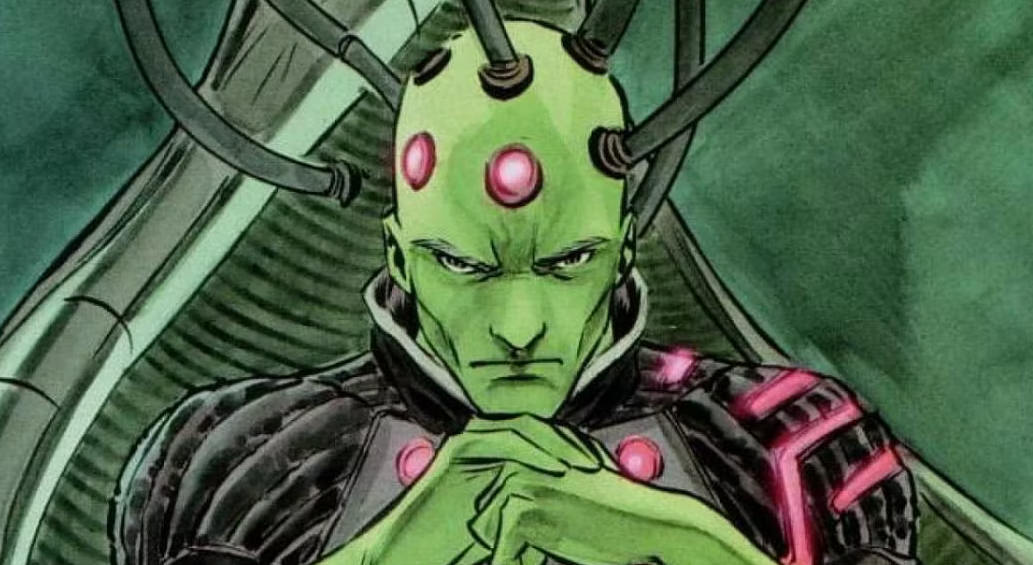
And beyond his incredibly objectionable personality, there is his personal physical attractiveness which has to impact these appraisals. In this regard, again, Trump is perhaps the least likely man in the universe to attract women. He’s old, fat, and arrogant, pretentious, with no sense of humor, a bad comb-over, clownish make-up, wearing ill-fitting suits and reveling in disgusting eating habits. In short, he makes the comic book villain The Penguin look like an absolute charmer in comparison.

Given his incredible abundance of offensive and unattractive characteristics, would any woman possibly vote for Trump to represent their best interests as president?

Well we do know the answer to this. Trump did lose the overall female vote to Hillary Clinton, but how did he fare amongst white women in particular? Did even 20% vote for him? Did he somehow win over 40%?

It was actually 53%.

One could dismiss 53% as a slim majority. But in presidential elections, 53% is typically considered a political landslide. So the reality is, amongst white females at least, Trump won decisively.

How can this be? It seems to confound reason and rationality so completely, that people have a hard time accepting it, let alone explain it. And no, these were not just a lot of befuddled old white ladies living in Florida retirement homes. This 53% included women across the age spectrum.

Journalist Sarah Jaffe examined this perplexing phenomenon in her article “Why Did a Majority of White Women Vote for Trump?” (see here). She cites a number of reasons including a rejection of Hillary Clinton, security, and morals, but while all these rationales may be real factors, they all feel weak and convoluted. Certainly they seem insufficient even collectively to explain the stark magnitude of this disconnect.

In addition to these other “rational” calculations that are often put forth as speculative explanations, I’d like to offer one additional speculation that is not often, if ever, mentioned.

Instinct. Simply put, females evolved to be attracted to Neanderthals. Or, more precisely, to Alpha males who are often the worst, most brutal, meanest Neanderthal in the pack, like Trump.

This is not to demean or be reductionist toward women. It is only to recognize the role of evolved traits and behaviors that may not always serve us well in modern society. One of these is what attracts us at a visceral, unconscious level. Men are irrationally attracted to a great set of boobs, and women are irrationally attracted to the biggest, most thuggish alpha male of the group.

This behavior was clearly observable to me “in the wild” on a trip I booked in Argentina. It was a 24/7 bus-based camping trip that lasted over a month. I was considerably older than the rest of the group and could observe their behavior from a detached perspective.

There were a couple absolutely great guys on the trip. Handsome, college educated, accomplished, witty, considerate. They were everything the women on the trip ought to be attracted to on paper, but I observed no interest of any kind.

Then, halfway through, another guy joined. An extreme Neanderthal. He was slovenly, brutish, uneducated, and never without a cigarette in one hand and a beer in the other. To illustrate the extent to which I am not doing this guy an injustice, his favorite story he told over and over proudly was about how “This chick got in my face at a dance club and says she’s having my baby. I took her in the bathroom and shoved her face in a urinal and told her never come getting in my face when I’m with another chick.”

And yet, a number of those sensible, college educated, suburban type women on the group immediately and overtly started to flirt with this Neanderthal. Flirting so far as grabbing his butt in the bus and loudly “sleeping” with him nightly in turns in his small camp tent.

The last night of the trip I was alone at dinner with the three remaining girls. They were lamenting once more, as they had often over the course of the long trip, about how there were “no nice guys.” I finally felt compelled to point out their behavior, how they had ignored the really great guys on the trip and fallen all over the deplorable Neanderthal.

Initially they dismissed and denied it, but after some mild pressing one of them agreed that yes, she had to admit they did do exactly that. Another turned to me and told me most sincerely by way of explanation that “yes, but when we want to settle down we go for the nice guy.”

I laughed and said, so you’re saying that when you need a man to help raise a baby and fix the toilet, that’s when you’ll give the nice guy a second glance. She answered, as if it made it all understandably fine, that that was absolutely right.

I relate this story not to blame or shame women, but to help us understand and appreciate the extent to which evolved behaviors can and do still play a powerful role in modern life, even in presidential politics. Our innate instincts, uniquely male instincts as well as those of females, manifest in behaviors and rationalizations that do not serve us well any longer in our modern civilized world. Trump is like that guy on the trip. Women, whether we like to admit it or not, are innately attracted to peacocking, even threatening, alpha males like Trump who they perceive, however irrationally, as the strongest and most ruthless leader to protect them and their families.

That’s my hypothesis as least and I’m putting it out there for consideration. I’m not claiming it’s the only factor, but I do suggest that it is a contributing factor that should be at least recognized and factored in if we are to have any hope of overcoming it.

Women, when it comes to the next election, resist getting attracted to the perceived Alpha candidate who brags about grabbing pussy. You know he’s bad for you. Don’t even flirt with the Neanderthal who is only going to abuse you and inevitably shove your face into a urinal. There really are nice presidential candidates who are available. Next time around, go for the boring responsible guy that will help you raise your baby and fix the toilet.

And men, don’t feel the least bit smug or superior because I happen to be focusing on women in this particular situation. You have more than your unhealthy share of evolutionary baggage to acknowledge and leave behind as well!

Why Evangelicals are Hell Bent on Theocracy

I don’t merely repeat other articles in my blogs. But I do sometimes reference and summarize them if I have something, hopefully something important and interesting, to add.

That is the case with “How Evangelical Christians Went From Jimmy Carter to Donald Trump” (see here). In this New York Times article, author Jane Coaston interviews book author Jon Ward who wrote “Testimony,” a book in part at least about the rise of the Evangelical movement.

The interesting part of the interview, for purposes of this article, was Jon Ward’s perspective on the rise of the Evangelical movement. According to Ward, the movement was birthed by the West Coast Hippies of the 60’s. They felt that the religion of their parents was dead and lifeless without enough meaning in their lives. They demanded a new “personal” relationship with Jesus.

This rings true to my own experience growing up. I’m in my sixties now, but growing up, all of my Catholic relatives and everyone else I knew was very laid back about their religion. Even while they had strong political views, their religion really played little part in their thinking. If they dragged themselves to midnight mass on Christmas they were covered for the year.

The Hippies, according to Ward, wanted much more out of their relationship with God.

So then came the presidency of Jimmy Carter. While a devout Christian, Carter was mostly a secular President. According to Ward, this frustrated and angered these newly passionate Christians. Again, this rings true to me. While I have always admired Carter for keeping his faith out of public policy, those newly ambitious Christians became frustrated by it.

Ronald Reagan changed that. He filled them with hope and empowerment and told them they were the good guys. He convinced them that their beliefs were an important and were a legitimate part of political discourse. He made them feel they deserved to be not only heard but be listened to.

According to Ward, the next major step in their rise (or more properly their descent) was under the Clinton presidency. He commented in the interview that Bill and Hillary Clinton taught Christians to hate. What he meant was actually that Conservative talk show host Rush Limbaugh taught Evangelicals to hate, and the Clintons were the target of that hate. Again, having been very aware of both Limbaugh and the Clintons during those years, that rings absolutely true.

Next, according to Ward, was the George W. Bush presidency in which they made Bush their Warrior-King and mobilized into a warrior-army themselves. He did not comment much on the Obama presidency except to say that it was a period of increasing hyperpartisanship.

And all that led to Trump. Whereas Bush was their Warrior-King, Trump became their God-King. A god of destruction. Even though many of them appreciated that Trump would likely “destroy everything,” that was OK. By that point in their radicalization they felt that things were so bad, maybe something good would come from it all being destroyed.

The reason that our newly emerged mainstream of radicalized Christians could take this last nihilistic step, according Ward, is because at each step in their evolution they have had too much sunken cost to pull back. Their only response at each step was to double and then triple down.

So, here’s where I extrapolate past the history that Ward provides.

Since radical Christians have so much sunken cost at this point, after having accepted a “let Trump bring down this whole Tower of Babel” proposition, where can their thinking possibly go next? How can they double-down any further?

The only place left for them to go is to reject Democracy itself and embrace full-on overt Theocracy.

That isn’t actually much of a prediction because we can see this final transformation happening in real time every day.

How can we stop these over-invested and radicalized Christians from destroying any secular, democratic life in America? I don’t know but a first step has to be acceptance of the very real threat that this is where they are headed. If we understand their previous progression as a series of doubling-down to salvage sunken costs, we can better appreciate their inevitable next suicidal step, prepare for it, and hopefully counter it.

We must pull them back from the brink.

Speaking for All Atheists…

So speaking for all atheists in America, I’d like to say we get it and we are on board. We understand the principles that the Supreme Court has made clear and we will abide by them. These include the principle that no one should be made to do anything that might conflict with their deeply help religious beliefs, that they should be given every accommodation of their religious beliefs, and that they should not be required to produce any written or other work product that even hypothetically might conflict with their religious beliefs or 1st Amendment rights.

We won’t fight you any longer regarding the utter silliness and complete folly of these positions.

We also admit that leading religious thinkers like Ken Ham (see here) have been right all along in their insistence that atheism is just another religion. As Ham points out:

“Atheists have an active belief system with views concerning origins (that the universe and life arose by natural processes); no life after death; the existence of God; how to behave while alive; and so much more. Honest atheists will admit their worldview is a faith. Atheism is a religion!”

Atheism is Religion, Answers in Genesis

Well, we do want to be completely honest, Ken Ham, so we agree to abide by your inestimable logic and admit that atheism is a religion. We do admittedly hold a devout, sincere, deeply felt belief in objective reality. And given that we are then a religion, we expect the same rights as you. For example, we atheists will no longer produce any work content of any kind that contains religious iconography, messages, or suggestions. To do so would violate our deeply held beliefs and would be a violation of our 1st Amendment rights. If you wish to have some writing or video work produced, edited, polished or published, we cannot assist you in these or any other creative activities – and all forms of work are creative self-expression in one way or another.

For example, if you wish to have a wedding cake made it must clearly depict a civil marriage or else we cannot in good conscience decorate it. Similarly, we cannot in good conscience produce a web site for your church or charity if it has religious associations. For that matter, under our 1st Amendment rights, we cannot in good conscience perform any action or service which propagates delusional ideas in direct contradiction to our deeply held faith that delusional thinking is bad for sanity.

This is particularly true when religious activities affect children. How can we atheists be forced to even implicitly and indirectly condone and support activities that our devout faith in objective reality tells us are forms of child abuse?

Devout atheists, for example, cannot sell a car to a known Christian. It would violate our deeply held, sincere ethical belief that you might even hypothetically use that car to transport others, maybe even minors, to a church service which would do them clear harm. In fact, we reserve the right to sue any Uber driver or family member who facilitates those activities. The same goes for any other type of sales or service work which we might otherwise be forced to perform for religious customers in violation of our faith.

Further, as employers we atheists cannot in good faith allow Catholics to have Sundays off of work or time off to perform any religious observation. To do so would force us atheists to implicitly express tangible support for those activities that we find morally offensive. This applies also to any company-sponsored benefits or activities that include, directly or indirectly, religious associations.

Atheist doctors and pharmacists, like their Christian counterparts, will, of course, be permitted to withhold medicines or services if they feel that their atheist religious rights would be infringed upon to offer such goods or services as they deem in conflict based upon their personal interpretation of their religious freedom.

In schools, we require that all bibles and other religious reading materials be removed from libraries and from the curriculum in all fields of study. We insist that any history of religion be purged and that any influence of religion in secular matters be expunged from the historical record. We expect that atheist observances at sporting and other events will be protected by our Supreme Court as well. Any school plays with religious themes or references should clearly be prohibited.

Of course, our religious freedom demands that references to god be removed from all coins and any other materials we atheists may be forced use, and we refuse to take any oath that makes reference to god or the bible as those are clearly violations to both our religious freedom and our freedom of speech.

Of course, we atheists stand by our religious brothers and sisters from all religions, no matter how dubious and fringe and crazy their beliefs may be, in their assertions of the same fundamental rights. We trust that our Supreme Court is not simply making up the rules as they go to rationalize and empower an emerging Christian theocracy.

No, given the dedication of our wise Supreme Court to abide by precedent, particularly the intentionally vague and broad precedents they have just recently set, and knowing their profound dedication to intellectual consistency, we are confident that they will rule in support of protecting the religious and 1st Amendment freedom of atheists.

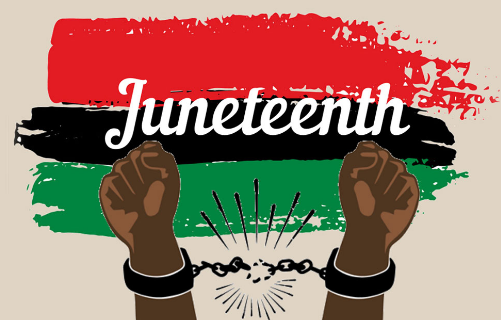
I’m Onboard Juneteenth

In 2021, Juneteenth became the first new federal holiday since Martin Luther King Jr. Day was adopted in 1983. My immediate knee-jerk response was geesh, another silly made-up holiday. That reaction frankly reflected my ignorance. This year, as I learned more about Juneteenth, I have come to appreciate that it is truly a worthy and essential American holiday. In fact, it deserves to be one of our most important holidays.

My first mistake in thinking about Juneteenth was lumping it in alongside all the many holidays and history weeks or months that inundate us constantly. It seems like often there are three holidays going on at any given time. But a federal holiday is special. These are the days that the federal government designates as paid holidays for its workers and there are only twelve of them.

  • New Year’s Day (January 1)
  • Martin Luther King’s Birthday (3rd Monday in January)
  • Inauguration Day (January 20th every 4 years)
  • Washington’s Birthday (3rd Monday in February)
  • Memorial Day (last Monday in May)
  • Juneteenth National Independence Day (June 19)
  • Independence Day (July 4)
  • Labor Day (1st Monday in September)
  • Columbus Day (2nd Monday in October)
  • Veterans’ Day (November 11)
  • Thanksgiving Day (4th Thursday in November)
  • Christmas Day (December 25)

Note that these do NOT include many of the holidays that one normally thinks about like Valentine’s Day, Easter, Halloween, and all the rest. Other holidays may have social, ethnic, or commercial significance, but they are not federal holidays.

Although many of these federal holidays receive their share of criticism, they seem reasonably legitimate to me, mostly.

New Years Day is a no-brainer, as is Independence Day. Honoring notable individuals like Martin Luthor King, Washington, and yes debatably even Columbus, is legitimate. I recoil a bit having two holidays that are typically celebrated as pep-rallies for war, but even I cannot begrudge veterans, living and deceased, their days of recognition. It is nice that we have a day to celebrate labor as well. And, despite its battered history, Thanksgiving Day is a very wholesome and positive excuse to appreciate our blessings.

Christmas however should not be on this list at all. I understand that the federal government is not endorsing religion by offering Christmas as a paid holiday, but it nevertheless should avoid any possible perception of endorsing religion, let alone any particular religion. President Grant should not have made Christmas a federal holiday. Interestingly, his 1870 decision was partially driven by slavery as it was a gesture intended to help unite the north and south.

Why then does Juneteenth deserve a place on this very special list so laden with both explicit and implied significance?

First, given the importance of social justice in the very fabric of America, the inclusion of a social justice holiday, apart from recognizing Martin Luthor King personally, is long overdue.

Second, Juneteenth commemorates defining and transformative events critical to the history and character of our culture. The end of slavery, particularly after our long and bloody civil war to decide the issue, is arguably every bit as significant and important as celebrating Independence Day.

Finally, the events of June 19th represent a powerful and moving event to mark the formal end of our national struggle, and for many, our national nightmare. I can see schoolchildren performing plays depicting Major General Gordon Granger arriving in Galveston two and a half years after the Emancipation Declaration to tell the enslaved citizens that they are free. It is a powerful and moving moment in our history that needs to be commemorated. It reminds us who we are and where we have been, simultaneously at our best and our worst.

So, if you’re like me and are late in giving sufficiently fair consideration to Juneteenth, I urge you to do so now. It is an important holiday that America truly needs and deserves.

The Devil Loves Debate

Debate is an essential method of communication. We engage in debate almost continually about most everything. It’s a skill we admire. We learn debate skills in school and we value skilled debaters most highly.

Healthy debate is great. But as with anything else, as with any essential medicine, a bit too much can become highly counterproductive, even toxic. We don’t typically appreciate, aren’t even aware of, the risks and side-effects, perils and pitfalls, associated with debate. There is a reason the devil is portrayed as a supremely skilled debater.

It’s tough to avoid debates. Even informal discussions are often surrogates for debates or can quickly transition to debates. We see debate as a good or even the best way to arrive at truth and consensus. We often pride ourselves in taking the role of “devil’s advocate” in our belief that forcing debate will yield greater insights and truth.

Debate can certainly yield the healthy outcomes we desire. But too often debate just lures us into a game of proving that our position is right, regardless of the merits. We sincerely don’t intend that, but the entire activity is fundamentally based on winning the race, coming in first, overcoming your opponent. Only by destroying your enemy can you truly reach a shared consensus.

Debates are often not won on the merits, but by who is more assertive, or who has more endurance to continue the debate. They are won by good debaters who can craft an argument that their lesser skilled opponents cannot sufficiently dismantle. That’s why we value “clever” debaters. We put too much faith in the value of facts in debating. Truthful debaters do not win debates. Clever debaters win debates.

All interactive debate is debate training. The more we engage in debate, get better we get at being a clever debater. We get more skilled at crafting or presenting our arguments in ways that win the debate, even in the skilled use of fallacious arguments and techniques that defeat less skilled debaters.

With every debate we get better at it. And with every win we get more positive reinforcement to engage in more debates. And as we win more debates on topics we are well-practiced in, the more we conclude and believe that our position is correct and that everyone else is wrong, as proven by the fact that they cannot defeat us in debate. When we get better at debating, we come to believe we must actually be smarter about everything.

But while having facts on your side should theoretically win debates, truth and even any semblance of reality are only nice-to-haves for a skilled debater. A skilled debater can convince lots of folks, and themselves, that evolution is not real, climate change is a hoax, vaccines are nanochip delivery systems, or that Donald Trump has never told even one lie.

Another pitfall of interactive, interpersonal debate is pride and a simple drive to win. We get caught up and we take it personal. Every time our opponent makes a good point, we are compelled by the rules of the game and by our sense of pride to defeat it by any means possible. If we cannot counter or save face somehow, we feel diminished. Rather than concede we very often move the goal posts, claim we actually said something different, that yes that’s exactly what we meant, or just start making ad hominin attacks and the debate just gets more and more erratic and heated creating animosity. This makes personal debate a risky activity but it makes interactive online debate particularly toxic very quickly.

All those debate sessions also have tangible effects on our neural networks. Each time we engage in “devils advocate” arguments our neural networks get trained, deepened, reinforced to believe as fundamental those arguments. We brainwash ourselves as much as others to progressively accept and believe wackier and wackier arguments. The more you debate, the more you believe your own constructions. Your rationalizations get more and more refined and unassailable. Engaging in debate is a way of strengthening our rationalizations, but is not necessarily a great way to reevaluate them. Christians have spent centuries “testing” their beliefs through debate, and that process of debate has only strengthened their clearly irrational systems of belief – both to themselves and to others.

Many debate tactics are highly successful precisely because they methodically nudge that subtle brainwashing process along. Well you can accept this point correct? Well you must then concede that. And again, when we engage in debate we do not only force drift in others, but we cement it within our own neural networks, making our own arguments feel increasingly valid and true.

At this point you are probably saying, so what? We need to debate and if we are engaging in unhealthy debate then we simply must do better. And in any case when I debate I’m open to being wrong and I am only interested in the truth.

I know we all believe that, but the process of debate makes it very, very easy to deceive ourselves as much as others.

I’m not saying don’t debate, but be as cognizant and hyper–vigilant always to avoid these pitfalls. As you my fictitious reader said before, we must have healthy debate, but we can only accomplish that if we treat it like fire. It is valuable and essential, but we must never lose sight for an instant of the danger of this essential tool.

One more point. Debate isn’t always personal and interactive. Healthy debate might require slower, more glacial debate processes.

I am resistant to even potentially unhealthy personal debate. But I write this blog even though anyone writing a blog nowadays is ridiculed as a relic, like that last holdout still posting on MySpace and sending Yahoo mail. But blogging is not simply cowardice to engage in debate, but it is a slower form of debate that does not suffer as much from the pitfalls inherent in personal engagement and the frenzy of the battle. It lets one side, as I am here, make a [presumably] well thought-out argument, and it allows others to digest, consider and even respond in similarly more dispassionate manner. It’s a slower burning, more controlled fire.

Likewise there are other alternatives to impassioned personal debate. Modern videos were once called “video blogs.” They similarly allow folks to digest the content in more neutral time space in which they don’t feel forced to make some argument, any argument to save face in the moment. Books, documentaries, legal proceedings, school courses, other forms of learning provide a slower but often more fruitful debate process. Science is fundamentally a healthy debate process, but it can only proceed slowly and somewhat impersonally.

Lastly, there are times when it is advisable to avoid debate altogether because it only serves to legitimize or otherwise elevate positions or arguments that should not be worthy of consideration. As an absolute atheist, I have argued against engaging in further debate about the existence of god. We have decided that civil society should not engage in debate about the merits of white supremacy or child molestation. These are not attempts to shut down legitimate discourse or avoid scrutiny. They are healthy recognitions that debate can in some cases be an inroad to indoctrination into unhealthy thinking.

Again, I’m not saying do not debate – or not to take your prescribed medicine. Of course debate must be a healthy essential tool for a healthy brain. But just be cognizant of the traps and pitfalls of this particular form of engagement with others and with the world. Unless we appreciate those pitfalls and remain sensitive to them continually, debate cannot serve as the valuable and productive form of interaction that it can and should be.

I Want to Sing a Love Song

In today’s world, it’s tough to feel positive let alone inspired by anything. It’s all too easy to think that the worst of us represent all of us. It seems like heroes only ever existed in comic books and today even they have been reinterpreted as deeply flawed creatures.

But true heroes do exist in the world. Singer, songwriter, and activist Harry Chapin was one such real life hero. I was reminded of this when I watched the marvelous documentary about Harry called “When in Doubt, Do Something” on Prime Video (see here).

If you are still a huge Harry Chapin fan, you should watch this documentary. If you are wondering if Harry Chapin is the guy that did “Cat’s in the Cradle,” you should watch this documentary.

Harry Chapin was a musical genre all to himself. Although a few other artists might be identified as storyteller musicians, I doubt that even they would feel worthy to be placed along side Harry Chapin in that category. He told emotionally raw stories, set to the backdrop of sweeping cello strings and ethereal falsettos that bore right through the heart to the soul of the listener. Real, basic, everyman stories that anyone can relate to. His story songs ranged from comedic to sappy to dark but he told all his stories fearlessly. He didn’t pontificate. He was never so obvious as to entreat us to “give peace a chance” or “love one another right now.” He didn’t tell, he showed us universal truths by showing us the everyday people he brought to life through his music.

If you are interested in my recommendations, I’d suggest “Mail Order Annie,” “Mr. Tanner,” and “A Better Place To Be” as just three. If these don’t make you emotional you may have trouble passing the “I am not a robot” test.

Besides being a prolific songwriter and tireless performer, Harry was also a pragmatic idealist who devoted his energy and creativity to combating global poverty, hunger, and homelessness. During the Carter years he gave everything one could possibly give in service of his fellow human beings through both his music and through his dauntless legislative lobbying on behalf of humanity.

One thing that the documentary illustrates vividly is that everyone who interacted with Harry Chapin, and Harry reached many, many people, has their Harry Chapin stories that they can never forget. It is not undue hyperbole to say that most anyone who heard his music was deeply touched. Those who saw him in concert or in more informal performances felt forever connected to him. And those who lived and worked alongside him were transformed by him.

I’m no exception to that. Although I’m only one of millions that were profoundly touched by Harry Chapin, my own Harry Chapin stories are still unique. In true Harry Chapin tradition here are two of them.

I was tending bar in my early twenties. It was one of those local corner family-owned dives there I mostly poured beer for regulars. Every Friday night this young couple would come in and sit at the bar. I never actually learned their names but we had a ritual. At some point during the night they would play “Taxi” on the jukebox and the three of us would share six and a half intimate minutes while we sang Taxi along with Harry Chapin. Like honoring some reverent moment of silence, none of the other working-class patrons would so much as shift on their stool until we were done.

To appreciate my second Harry story, you have to understand that I always went to see Harry Chapin in concert whenever he played in the area. One week, the radio stations kept promoting his upcoming concert at the local Performing Arts Center in Milwaukee where I lived. On concert night, the DJ mentioned that the Harry Chapin concert was to start shortly and I realized that for some reason I had never bought a ticket!

Just out of hopeless desperation I drove over to the PAC. There was no one in the lobby as the concert had already seated. I nevertheless walked up to the ticket window and inquired. Of course there were no tickets left. Sad but unsurprised I turned to walk away but hesitated when I noticed another employee come in from the back and whisper to the agent. The agent turned back to me and said that there was a no-show and they were putting the ticket up for sale. Of course I snatched it up!

It turned out that the ticket was row AAA, the very front row, dead center. I had the best seat in the house to enjoy that Harry Chapin concert. Eventually, Harry came out for the encore. He did Sniper. Now you have to understand, Sniper is a 10 minute magnum opus, exhaustively relating the gut-wrenching story of a clock tower sniper. It was probably longer in concert.

And for this song, Harry came and sat on the edge of the stage with his guitar, feet dangling just inches from my knees. At the finish, exhausted and sweat covered, Harry ended the epic climax of the song. While the audience cheered he just sat there, looking directly at me the entire time, spent and flushed, yet with the kind of connection one only imagines experiencing in feeling of true love at first sight.

I found I just couldn’t clap along with the rest of the audience. I couldn’t call for yet another encore. I feared he might think badly of me, so I just pursed my lips and nodded as if to say, “It’s OK. You have given it all. You don’t have to give any more.” Harry nodded back, every so slightly, and I could see he understood and appreciated my holding back as perhaps his loudest applause of all.

Well, that was my Harry moment was back then. The documentary brings back those memories and shows me how very common my moment was for anyone who interacted with this exceptional human being. But that doesn’t make my moment feel less special. On the contrary, it makes me appreciate him even more.

Harry, you taught me to look at people with all their flaws and quirks and see them as worthy of love, understanding and respect. You taught me to look at all the darkness of the world, to expose it, even to battle against it, and not become jaded or disheartened by it but rather embrace it with compassion and even humor.

I wish there were more like you in the world, Harry, and it is our loss that you died so young. But the fact of your life makes me confident that we all can be better as well.

Harry still reminds us that we are all not just represented by the worst of us, but that we are all also represented by the best of us.

Pro-Choice Activists Can’t Play Chess

When I was in grade school, my best friend’s grandfather was a former chess grandmaster. He attempted to teach me the game. And he failed.

Every time I would start to make a move, he would swat my hand, reset the piece, and tell me no. Never move just to move or merely to react. He would demand that I think farther ahead and come up with a better move.

Although I was hopeless at chess, that one lesson did sink in. Never make a move without first anticipating the subsequent moves that may follow. No move should ever be merely a reaction and none should ever be made in isolation. Rather, every move must coordinate with every other move to advance a larger strategy.

It’s that strategic ability to anticipate, to corral your opponent, to control the board, and ultimately to trap them that constitutes the difference between the grandmaster and the novice, the winner and the loser. It is true in chess and it is no less true in the legal and political battle for abortion rights, a game where refusal to play is not an option.

As energetic, creative, and diligent as pro-choice activists may be, we have been outmatched by opponents who think many more steps ahead. Not only do they have more skill at this game, they have a level of ruthlessness and focus that we struggle to overcome, regardless of how passionate we are about preserving a woman’s right to choose.

Abortion activists do work very hard to counter each of the moves that anti-choice grandmasters make toward ending abortion. But while the moves of our opponents are well-coordinated and planned, our moves are mostly reactive. The following list of examples is long, but its very length serves to underscore the magnitude of the problem.

  • When they prohibited Medicaid and/or insurance from covering abortion, we set up funds that provided financial assistance.
  • When they required that patients must be given inaccurate or biased counseling, we developed websites and other sources of accurate info that patients could access.
  • When they required that counseling be provided by a physician days before the actual service, we started using videoconferencing or phone to enable patients to avoid an extra trip.
  • When they required parental approval for minors to have abortion, we set up services that helped minors to seek approval from a judge.
  • When they established unnecessary but onerous requirements about abortion clinic structure or provider credentials that were impossible for many clinics to meet, some clinics closed down. We started mailing pills to patients who were left with no nearby access.
  • When they required patients to have tests before the abortion, we found ways for patients to get the tests in their communities, without having to travel to the clinic itself.
  • When they banned abortion in certain states, we set up clinics in adjacent states, right across the border.
  • When they protested outside clinics, we engaged escorts to help patients get through the picket lines.
  • When they started killing abortion providers, we installed bulletproof barriers and hired guards.
  • When they started to harass or threaten people who had had abortions, we advised patients to say that they were miscarrying.
  • When they required that the provider show the patient any ultrasound pictures, we stopped doing ultrasounds unless they were absolutely necessary.
  • When they required that providers describe the fetus in detail to the patient, we gave patients headphones that they could use to block out the sound.

Again, these are all necessary and hard-fought actions taken to mitigate the damage caused by the anti-abortion movement. But they are isolated and reactive or predictably proactive at best. They do not demonstrate coordinated progress in advancing a strategic plan to win the larger battle. As just one example to illustrate, one prong of a strategic plan might be a generational effort to erect a legal foundation to ultimately establish that a fetus is not a person. None of these reactive efforts contribute to any such wider and longer term effort.

Our activists often lament that we cannot take any initiative because we are continually put on the defensive. But isn’t that the whole point of chess? To advance a strategic plan even as you deploy and defend your pieces?

If my friend’s grandfather were observing the abortion rights game we are engaged in, he would swat the hands of our pro-choice activists and insist that we think strategically, that even as we respond to counter immediate threats we simultaneously maneuver to take ultimate control of the gameboard; hopefully in subtle ways that our opponents never see coming.

Here is what seems clear. If we keep on as we have, if we continue to simply react without advancing a larger strategy to win, abortion is headed to a checkmate. And that checkmate will mean personhood for fetuses and a total nationwide ban on abortion under penalty of murder.

Like any novice in chess, we may be far closer to a loss than we can appreciate. If our opponents succeed and achieve an all-too-sudden checkmate, what should we expect?

Together with my wife, who is a leading abortion researcher, we put together a short video to depict the future that anti-abortion zealots may very well force upon us. It adapts a scene from the popular television show The Wire to illustrate how abortion medications may be administered in the not-too-distant future.

It may be that our best hope for relatively safe and effective abortions will lie with street corner drug dealers who can outthink and outmaneuver the forces arrayed against them to offer abortion medications to people who desperately need that help.

Not to in any way minimize the urgency of avoiding that dystopian future, but streetcorner sales might actually not be as disastrous as many might imagine.

Mifepristone and misoprostol are highly safe and effective abortion medications. Patients can almost always determine on their own whether they are pregnant, whether they want an abortion, and whether they are eligible for the treatment. And, in the rare instances in which the patient misjudges eligibility, the risk of severe complications is minimal. There are very few medical contraindications, and the risk of severe issues is low in even those cases. Studies have shown that the quality of the medications, even when produced by questionable foreign sources is, so far at least, perfectly fine. Supervised follow-up, while desirable, is not essential.

Be that as it may, no one wants to end up relying upon illegal drug sales as the mechanism for health care delivery in America. But to avoid that, we need to stop reacting and start taking control of this deplorable game of abortion chess that anti-choice zealots are forcing us to play.

Understanding Belief

I <believe> that the title of this article may be a bit of an exaggeration. In this installment I only intend to discuss the literal definition of the word “belief.” But as you will see, that is not as simple as one might imagine. Still, it is an essential first step toward a fuller understanding of belief.

Dictionaries cite a number of distinct definitions for the word belief. It can express trust in a person or a thing, acceptance of a well-known idea, or it can convey our conviction of the truth of a proposition. But those few definitions don’t even begin to touch the wide range of ways the word belief is used in everyday conversation.

The different uses of the words “belief” and “believe” are almost endless. We may say “I believe in forgiveness” to express support for that outlook. We may say “I believe that’s true” to express agreement, or we may say “I find that hard to believe” to express skepticism. We may say “I believe today is Tuesday” to express a factual certainty or “I believe it will rain today” to express a prediction. We may say “I believe I’ll have a piece of cake” to express an intention. We may say “I believe in you” to express trust, or “I believe it will all work out for the best” to express hope.

And yes, we may say “I believe in angels” to express a literal belief in their existence.

It is really only that last usage of belief that makes it a crucial word in the epistemological sense, that is, in discerning facts from lies, reality from fantasy. All those other usages confuse and make it difficult to think about belief clearly in the literal context. So it is important that we understand what a belief is in that narrower context if we are to understand its role in knowing the truth of things.

In this narrow but critical context, a belief is an assertion that an idea is true despite having neither verified facts nor sound logic to support it, particularly when some evidence should be observed if the assertion were true.

Asserting a fact is not, as some like to assert, merely asserting another belief. One does not strictly believe in facts. Facts are supported by logic and evidence. Beliefs, by definition, are not.

Yes, sometimes we may be wrong about a fact. But a mistaken fact is not a belief. While we may be incorrect in our assertion of fact, we did not accept the idea without first concluding that we had sufficient valid evidence to support it.

And yes, sometimes what is a belief at one point later becomes a proven fact. However, that does not make all beliefs some sort of potential facts that deserve provisional respect. A belief is rarely just an unproven fact. That may better be called a hypothesis.

There is another requirement of beliefs that is not normally recognized. A belief must be subject to rejection. After sufficient evidence is presented, the believer must be willing to reject that belief. If they are unable do so, then their belief is actually a delusion. A delusion is a persistent belief that we cling to despite being presented with evidence to the contrary, logic to the contrary, or a lack of evidence where evidence should be found.

So I may hold, what is for me, a belief born of ignorance. But if I continue to hold to that belief after evidence to the contrary has been presented, or after it has been shown that there is no evidence where one should expect to find it, then it becomes for me a delusion.

When we persist in believing an idea despite any evidence to the contrary or a lack of evidence where one expects to find it, then that is no longer a belief, it is a delusion. It turns out that many of the ideas that we commonly call beliefs should by definition be more accurately characterized as delusions.

And one cannot simply rationalize that they are not delusional by refusing to accept evidence to the contrary, by refusing to acknowledge a lack of evidence, or by citing bogus evidence or logic. Our own delusions are not something one can self-assess with any degree of confidence and our rationalizations of our delusions do not make them rational (more on rationalization).

In fact, there is a further category along this spectrum known as a “bizarre delusion.” A bizarre delusion is a delusion that is so extreme, so bizarre, that it deserves a more severe label. A bizarre delusion might be something on the order of believing that one is possessed by a demon.

The number of believers and the level of normalization of a belief do affect how we categorize these ideas. Certainly, for example, belief in God qualifies as a bizarre delusion. But because so many people share this particular bizarre delusion, it seems less bizarre and we upgrade it to a delusion. And because even that would be intolerably insulting to so many people, we further upgrade it to a belief. But belief in God really is a bizarre delusion since it is both exceedingly implausible and not subject to rejection regardless of logical implausibility or a total lack of evidence where one would certainly expect to find it.

Here are some examples of assertions that illustrate these steps along the belief spectrum:

Fact
All life evolved on Earth over the last 3.7 or so billion years (supported by overwhelming evidence).

Mistake
Simple cloth masks can prevent Covid transmission (as stated early in the pandemic but rejected soon after).

Belief
Intelligent aliens must exist but I do not believe they could ever reach us (supported by logic and lack of evidence but subject to reevaluation if evidence is found).

Delusion
The Earth is 6000 years old and evolution is a hoax (stubbornly rejects overwhelming evidence to the contrary).

Bizarre Delusion
I speak to God and he answers me (when meant literally).

I hope this short overview provides a starting point from which to better navigate discussions of belief. You can continue delving into beliefs, how and why we believe them and how to think better, by picking up my new book, Pandemic of Delusion.

A South Africa Story

I usually write articles to make a clear and specific point or argument. This time I’m going to do something different and simply relate a very short story. Although anecdotal, this story illustrates a wide range of individual and societal dynamics that are universal. But I’ll say little more and hope that it stimulates broader thought and discussion.

This story takes place in rural South Africa. It happened while I was serving in the Peace Corps there. Every day I walked past a heavy construction site. This was interesting as it was the only active job site in the village. They were putting up some sort of commercial multistory building. But what jumped out at me one day was that I never saw any men on the job. All the construction workers were women. This seemed curious.

In fact, it felt so odd that I became increasingly irritated about this. Where were all the men? Why were women forced to do all this heavy labor-intensive construction work?

I got curious enough to ask a local about this. “Where are all the men?” The local pointed down to the next streetcorner and said, “They are all in the bar.”

I was incensed. Every subsequent day as I walked past the site I became even more incensed. What kind of miserable, lazy, good-for-nothing men were these that they drank in a tavern while the women were outside doing heavy labor?

My disgust for the men of the village persisted until one day I could not contain my contempt any longer. I expressed my outrage to another local. That person patiently explained that the government gave very attractive incentives to construction companies to hire women. In fact, these incentives were so attractive and successful, that they let all the men go. Those men in the tavern were displaced and simply could no longer hold jobs in construction. And there were no other jobs.

Needless to say, my sense of outrage toward the men of the village immediately disappeared. My judgmental attitude was replaced with embarrassment over my uninformed indignation.

Amazing how just one new fact can flip the entire narrative of judgments that we passionately believe to be so very obvious.