Category Archives: Books and Films

Superman vs the Tech Bros

I just watched the new James Gunn Superman movie for the second time on the big screen. What stands out most for me was not David Corenswet’s supremely noble yet authentically flawed human portrayal of Superman, nor was it Nicolas Hoult’s disquietingly relevant embodiment of a deeply flawed modern tech-genius. Rather it was Lex Luthor’s staff of willing, even exuberant, tech bro employees.

The intentionally discordant portrayal of these fresh-faced henchmen (and equally women) has been widely noted and discussed, but I don’t believe it has been specifically written about as much as is deserved.

Traditionally in comics, and in their movie renditions, the henchmen of the named villain are invariably stupid, thuggish, and cravenly despicable individuals. They are the lackeys who actually perform the hands-on murder, mayhem, and destruction. The scientists who create the death rays that the villain will unleash are typically mad and insanely amoral.

But in Superman, Lex Luthor runs a very wholesome-seeming high-tech enterprise. He hires brilliant, mostly young, people. He clearly treats them well (most of the time) and presumably pays them quite well. These are young people who listen to upbeat music while they work and kick the soccer ball when they have some free time.

And they also high-five each other and express pride and glee as they unleash death and destruction.

When Lex’s tech bros remotely control their creations to torture, pummel, and kill they take great joy in their accomplishments. When they design armies of “bot chimps” (don’t ask) that deluge the public with lies and misinformation, they high-five each other. Even as the dimensional rift they created is leveling Metropolis, and is quite likely to go on to destroy the Earth, they show little concern about the horrific destruction and cost of human life, let alone any thought about their own complicity.

Perhaps most disquieting is at the end, after all that, when Lex is exposed in the media as a liar, they all turn toward him with surprised stares of shock and betrayal.

I don’t want to politicize this article too much by launching into a diatribe about the parallels to leaders like Musk and Trump. But I do want to hold this movie up as a stark mirror reflecting the true image of all those fresh-faced, music-loving henchmen who actually do the dirty work of lying and harming so many people to satisfy the insatiable ego of our deeply flawed, and all-too-real, super-villains.

Without all their enthusiastic efforts, these super-villains would be powerless.
AI Armageddon is Nigh!

Satan is passe. We are now too sophisticated to believe in such things. Artificial Intelligence has become our new pop culture ultimate boogeyman. Every single news outlet devotes a significant portion of their coverage every day hyperventilating over the looming threat of AI Armageddon.

I mean, everyone seems to be talking about it. Even really smart experts in AI seem to never tire of issuing dire, ominous warnings in front of Congress. So there must be something to it.

But let’s jump off the AI bandwagon for a moment.

There is certainly some cause for concern about AI. I have written previously about how AI works and about the very real danger that “bad” AI-driven information technology can easily exacerbate the problem of misinformation being propagated through our culture (see here). But I also pointed out that the only solution to this problem is “good” AI that nudges our thinking toward facts and rationality.

That challenge of information integrity is real. But what is not realistic are the rampant fantastical Skynet scenarios in which AI driven Terminator robots are dispatched by a sentient, all-powerful AI intelligence that decides that humankind must be exterminated.

Yes I know, but Tyson, a lot of really smart experts are certain that some kind of similar AI doomsday scenario is not only possible but almost inevitable. If not complete Armageddon, at least more limited scenarios in which AI “decides” to harm people.

Well to that I say that a lot of really smart people who ought to know better were also certain in their belief in the Rapture. Being smart in some ways is no protection against being stupid in others.

If Congresspersons thought their constituents still cared about the Rapture, they would trot out any number of otherwise smart people to testify before them about the inevitability of the looming Rapture. If it got clicks, news media would incessantly report stories about all the leading experts who warn that the Rapture is imminent. Few of the far larger number of people who downplay the Rapture hysteria would get reported on.

If you read my book, Pandemic of Delusion, you’d have a pretty good sense of how this kind of thinking can take root and take over. Think about it. We have had nearly a century of exposure to science fiction stories which almost invariably include storylines about computers running amok and taking over. Many of us were first exposed to the idea by the Hal 9000 in 2001 A Space Odyssey or by Skynet in the Terminator, but similar sentient computers and robots have long served as a villain in virtually every book, TV, or movie franchise.

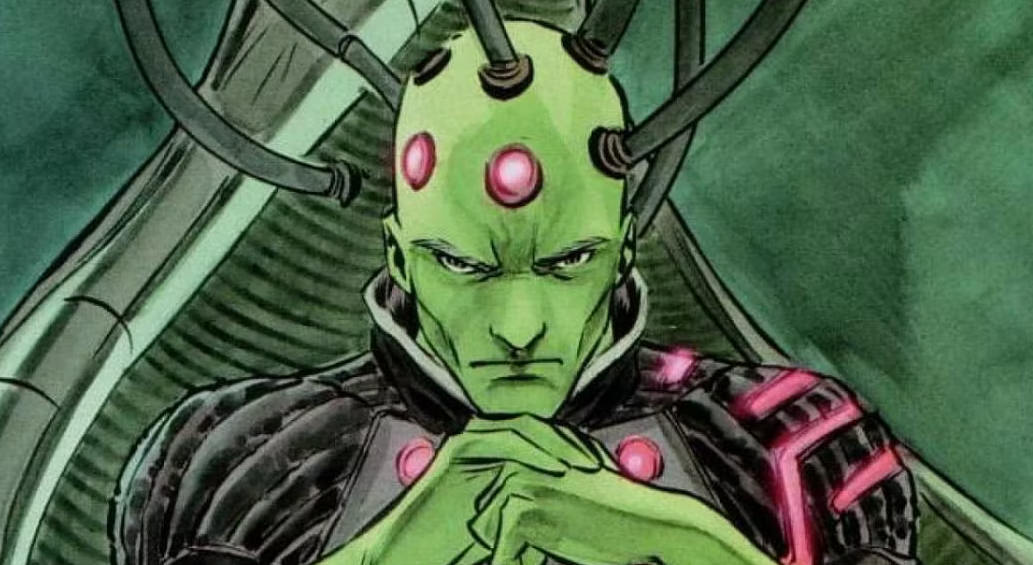
We have seen countless examples in superhero lore as well. Perhaps the most famous is Superman’s arch-nemesis Brainiac. Brainiac was a “smart” alien weapon that gained sentience and decided that its mission was to exterminate all life in the universe. Brainiac destroyed billions of lives throughout the universe and only Superman has managed to prevent him from exterminating all life on Earth.

The reason I point out the supersaturation of AI villains in pop culture is to get you to think about the fact that all of our brains have been conditioned over and over and over to be comfortable with the idea of AI villains. Even though merely fantasy, all this exposure has nevertheless conditioned our brains to be receptive to the idea of sentient killer AI. Not only open to the idea, but completely certain that it is reasonable and unavoidable.

This is not unlike being raised in a Christian culture and being unconsciously groomed to not only be open to the idea of the Rapture but to become easily convinced it makes obvious common sense.

Look, AI has become a fixation in our culture. We attach AI when we want to sell something. Behold, our new energy-saving AI lightbulbs! But we also attach AI when we want to scare folks. Beware the AI lightbulb! It’s going to decide to electrocute you to save energy!!

I implore you to please stop getting paralyzed by terrifying AI boogeymen, and instead start doing the real work of ensuring that AI helps make the world a safer and saner place for all.

Why Evangelicals are Hell Bent on Theocracy

I don’t merely repeat other articles in my blogs. But I do sometimes reference and summarize them if I have something, hopefully something important and interesting, to add.

That is the case with “How Evangelical Christians Went From Jimmy Carter to Donald Trump” (see here). In this New York Times article, author Jane Coaston interviews book author Jon Ward who wrote “Testimony,” a book in part at least about the rise of the Evangelical movement.

The interesting part of the interview, for purposes of this article, was Jon Ward’s perspective on the rise of the Evangelical movement. According to Ward, the movement was birthed by the West Coast Hippies of the 60’s. They felt that the religion of their parents was dead and lifeless without enough meaning in their lives. They demanded a new “personal” relationship with Jesus.

This rings true to my own experience growing up. I’m in my sixties now, but growing up, all of my Catholic relatives and everyone else I knew was very laid back about their religion. Even while they had strong political views, their religion really played little part in their thinking. If they dragged themselves to midnight mass on Christmas they were covered for the year.

The Hippies, according to Ward, wanted much more out of their relationship with God.

So then came the presidency of Jimmy Carter. While a devout Christian, Carter was mostly a secular President. According to Ward, this frustrated and angered these newly passionate Christians. Again, this rings true to me. While I have always admired Carter for keeping his faith out of public policy, those newly ambitious Christians became frustrated by it.

Ronald Reagan changed that. He filled them with hope and empowerment and told them they were the good guys. He convinced them that their beliefs were an important and were a legitimate part of political discourse. He made them feel they deserved to be not only heard but be listened to.

According to Ward, the next major step in their rise (or more properly their descent) was under the Clinton presidency. He commented in the interview that Bill and Hillary Clinton taught Christians to hate. What he meant was actually that Conservative talk show host Rush Limbaugh taught Evangelicals to hate, and the Clintons were the target of that hate. Again, having been very aware of both Limbaugh and the Clintons during those years, that rings absolutely true.

Next, according to Ward, was the George W. Bush presidency in which they made Bush their Warrior-King and mobilized into a warrior-army themselves. He did not comment much on the Obama presidency except to say that it was a period of increasing hyperpartisanship.

And all that led to Trump. Whereas Bush was their Warrior-King, Trump became their God-King. A god of destruction. Even though many of them appreciated that Trump would likely “destroy everything,” that was OK. By that point in their radicalization they felt that things were so bad, maybe something good would come from it all being destroyed.

The reason that our newly emerged mainstream of radicalized Christians could take this last nihilistic step, according Ward, is because at each step in their evolution they have had too much sunken cost to pull back. Their only response at each step was to double and then triple down.

So, here’s where I extrapolate past the history that Ward provides.

Since radical Christians have so much sunken cost at this point, after having accepted a “let Trump bring down this whole Tower of Babel” proposition, where can their thinking possibly go next? How can they double-down any further?

The only place left for them to go is to reject Democracy itself and embrace full-on overt Theocracy.

That isn’t actually much of a prediction because we can see this final transformation happening in real time every day.

How can we stop these over-invested and radicalized Christians from destroying any secular, democratic life in America? I don’t know but a first step has to be acceptance of the very real threat that this is where they are headed. If we understand their previous progression as a series of doubling-down to salvage sunken costs, we can better appreciate their inevitable next suicidal step, prepare for it, and hopefully counter it.

We must pull them back from the brink.

Speaking for All Atheists…

So speaking for all atheists in America, I’d like to say we get it and we are on board. We understand the principles that the Supreme Court has made clear and we will abide by them. These include the principle that no one should be made to do anything that might conflict with their deeply help religious beliefs, that they should be given every accommodation of their religious beliefs, and that they should not be required to produce any written or other work product that even hypothetically might conflict with their religious beliefs or 1st Amendment rights.

We won’t fight you any longer regarding the utter silliness and complete folly of these positions.

We also admit that leading religious thinkers like Ken Ham (see here) have been right all along in their insistence that atheism is just another religion. As Ham points out:

“Atheists have an active belief system with views concerning origins (that the universe and life arose by natural processes); no life after death; the existence of God; how to behave while alive; and so much more. Honest atheists will admit their worldview is a faith. Atheism is a religion!”

Atheism is Religion, Answers in Genesis

Well, we do want to be completely honest, Ken Ham, so we agree to abide by your inestimable logic and admit that atheism is a religion. We do admittedly hold a devout, sincere, deeply felt belief in objective reality. And given that we are then a religion, we expect the same rights as you. For example, we atheists will no longer produce any work content of any kind that contains religious iconography, messages, or suggestions. To do so would violate our deeply held beliefs and would be a violation of our 1st Amendment rights. If you wish to have some writing or video work produced, edited, polished or published, we cannot assist you in these or any other creative activities – and all forms of work are creative self-expression in one way or another.

For example, if you wish to have a wedding cake made it must clearly depict a civil marriage or else we cannot in good conscience decorate it. Similarly, we cannot in good conscience produce a web site for your church or charity if it has religious associations. For that matter, under our 1st Amendment rights, we cannot in good conscience perform any action or service which propagates delusional ideas in direct contradiction to our deeply held faith that delusional thinking is bad for sanity.

This is particularly true when religious activities affect children. How can we atheists be forced to even implicitly and indirectly condone and support activities that our devout faith in objective reality tells us are forms of child abuse?

Devout atheists, for example, cannot sell a car to a known Christian. It would violate our deeply held, sincere ethical belief that you might even hypothetically use that car to transport others, maybe even minors, to a church service which would do them clear harm. In fact, we reserve the right to sue any Uber driver or family member who facilitates those activities. The same goes for any other type of sales or service work which we might otherwise be forced to perform for religious customers in violation of our faith.

Further, as employers we atheists cannot in good faith allow Catholics to have Sundays off of work or time off to perform any religious observation. To do so would force us atheists to implicitly express tangible support for those activities that we find morally offensive. This applies also to any company-sponsored benefits or activities that include, directly or indirectly, religious associations.

Atheist doctors and pharmacists, like their Christian counterparts, will, of course, be permitted to withhold medicines or services if they feel that their atheist religious rights would be infringed upon to offer such goods or services as they deem in conflict based upon their personal interpretation of their religious freedom.

In schools, we require that all bibles and other religious reading materials be removed from libraries and from the curriculum in all fields of study. We insist that any history of religion be purged and that any influence of religion in secular matters be expunged from the historical record. We expect that atheist observances at sporting and other events will be protected by our Supreme Court as well. Any school plays with religious themes or references should clearly be prohibited.

Of course, our religious freedom demands that references to god be removed from all coins and any other materials we atheists may be forced use, and we refuse to take any oath that makes reference to god or the bible as those are clearly violations to both our religious freedom and our freedom of speech.

Of course, we atheists stand by our religious brothers and sisters from all religions, no matter how dubious and fringe and crazy their beliefs may be, in their assertions of the same fundamental rights. We trust that our Supreme Court is not simply making up the rules as they go to rationalize and empower an emerging Christian theocracy.

No, given the dedication of our wise Supreme Court to abide by precedent, particularly the intentionally vague and broad precedents they have just recently set, and knowing their profound dedication to intellectual consistency, we are confident that they will rule in support of protecting the religious and 1st Amendment freedom of atheists.

Pandemic of Delusion

You may have heard that March Madness is upon us. But never fear, March Sanity is on the way!

My new book, Pandemic of Delusion, will be released on March 23rd, 2023 and it’s not arriving a moment too early. The challenges we face both individually and as a society in distinguishing fact from fiction, rationality from delusion, are more powerful and pervasive than ever and the need for deeper insight and understanding to navigate those challenges has never been more dire and profound.

Ensuring sane and rational decision making, both as individuals and as a society, requires that we fully understand our cognitive limitations and vulnerabilities. Pandemic of Delusion helps us to appreciate how we perceive and process information so that we can better recognize and correct our thinking when it starts to drift away from a firm foundation of verified facts and sound logic.

Pandemic of Delusion covers a lot of ground. It delves deeply into a wide range of topics related to facts and belief, but it’s as easy to read as falling off a log. It is frank, informal, and sometimes irreverent. Most importantly, while it starts by helping us understand the challenges we face, it goes on to offer practical insights and methods to keep our brains healthy. Finally, it ends on an inspirational note that will leave you with an almost spiritual appreciation of a worldview based upon science, facts, and reason.

If only to prove that you can still consume more than 200 characters at a time, preorder Pandemic of Delusion from the publisher, Interlink Publishing, or from your favorite bookseller like Amazon. And after you read it two or three times, you can promote fact-based thinking by placing it ever so casually on the bookshelf behind your video desk. It has a really stand-out binding. And don’t just order one. Do your part to make the world a more rational place by sending copies to all your friends, family, and associates.

Seriously, I hope you enjoy reading Pandemic of Delusion half as much as I enjoyed writing it.

Scooby-Doo Set a High Bar

Most everyone knows that Scooby-Doo is an entertainment franchise that started as an animated television series back in 1969. In a nutshell, it consisted of a group of four teenage mystery investigators and their dog, a lovable Great Dane named Scooby-Doo.

The series had, and mostly still retains, a very rigid storyline structure. The kids arrive in their Mystery Van to investigate a report of strange occurrences. After disregarding dire warnings from creepy eye-witnesses who attempt to warn them away, the teens eventually encounter the actual vampire, ghost, alien, or fill-in-the-blank monster.

Hijinks ensue as the team alternately chases, and is chased by, the monster through the usual hallway doors or warehouse barrel gags. Eventually, often with the inadvertent assistance of Scooby-Doo, the team eventually corners the monster.

Here is the important part. Every episode, without exception, ends with the big reveal. The fake mask comes off and the teens gasp, “It’s groundskeeper Ed!” It invariably turns out that some trusted guy was faking the entire thing, typically in some scheme to profit from peoples’ superstition and fear. What seemed like such a compelling and terrifying monster suddenly gets exposed as just some greedy old guy in a cheap homemade mask.

The show should be required viewing as an essential part of every sound educational curriculum. It taught kids that even if something is seemingly inexplicable and scary, even if trusted adults tell you that you should be frightened, you can be assured that the answer is knowable and that it will turn out to be something quite simple and mundane once you discover it.

Scooby-Doo teaches kids the critically important lesson that if something seems inexplicable, they can be confident that “there is always a trick.” This is especially true in the case of any purportedly paranormal or supernatural mystery. The reality behind every supernatural account is always, and can only be, something quite unremarkable. Most likely, it is merely some greedy scammer trying to trick you out of your money.

And those greedy scammers are often television producers.

It is deplorable that ostensibly educational television networks like “The Science Channel,” “The Discovery Channel”, and “The History Channel” are not as educational and socially-responsible as are the Scooby-Doo Adventures. All of these supposedly educational channels not only fail to educate, but indeed they feature supernatural “investigations” without ever getting to the big reveal. They show us the scary stories and the tense chase but never the unmasking. Instead they convince many that these stories might be real and leave them with the tantalizing promise of further revelations in the next episode.

This is not harmless entertainment. This is the socially irresponsible perpetuation of nonsensical thinking that does great damage to our capacity to reason effectively, both individually and collectively.

It is a truly sad that these supposedly educational networks are no better than those dastardly Scooby-Doo villains. It is even more sad that a cartoon Great Dane named Scooby-Doo is a far greater force for reason and sanity in the world than all of those involved in manufacturing this entertainment and representing these paranormal “investigations” as educational reality-based television.

It is even sadder to realize that these networks do not need to broadcast these irresponsible ghost-hunter type shows to make a buck. Scooby-Doo proves, as do highly successful shows like Mythbusters, that you can be socially responsible and create a beloved and very profitable entertainment franchise at the same time. Like Scooby-Doo, they could unmask the real source of each supposed “mystery” — but they choose not to.

Like Scooby-Doo, they could end with a dramatic reveal which exposes how these stories get started, how we get fooled, and how they perpetuate — but they choose not to. Instead, unlike Scooby-Doo, the producers of these shows, the people who make them, and the networks that promote them choose to be socially irresponsible.

Scooby-Doo… where are you?

The Demise of Superheroes

I’m going to go out on a limb and predict the imminent demise of the superhero movie genre.

You should care and I’ll tell you why in a bit.

As a superhero fan for most of my 60 plus years, this saddens me greatly. Don’t get me wrong, I’m so happy that I got to see all my comic book heroes come to life on big screens. But all good things must end.

It’s been a great run. While DC has always struggled to find its zone in live-action films, they still have offered some shining gems like the Dark Knight, Wonder Woman, Suicide Squad, and Aquaman.

Marvel, despite some duds, has been brilliant in offering an entire “universe” to “marvel” in. Hey, how many movie producers can you name that have given us dozens of epic movies and shows that you can watch in order like one continuously unfolding saga?

But even the amazing Marvel machine must eventually run out of gas.

Yes, Avengers: Endgame made nearly a billion dollars, and the more recent Spider-Man: No Way Home has come close to that, but these franchises have run their course. Most of its great heroes have been retired, killed, or have just become too familiar, too tiresome, telling their same origin stories over and over like some senile old grandparent. The James Bond franchise took great pains not to oversaturate their market and even they became tiresome, no longer exciting even young viewers.

Whether through desperation or sincere woke consciousness or both, Marvel’s current Phase 4 is overtly all about gender. Phase 4 represents the intentional female takeover of the genre, with female versions of pretty much every character, major and secondary, taking the reigns. Clearly a wokeness agenda is not to blame for killing the genre, but just because the genre is struggling to remain fresh and interesting doesn’t mean we should sacrifice it on the altar of a woke agenda (see here).

Comics have long demonstrated strong threads of social awareness, responsiveness, and leadership. As early as the 1970’s comics took on a lot of difficult social issues like drug abuse, sexuality, racism, and yes even gender inequality. But if the writers only care about the characters as vehicles to promote a social agenda, the stories suffer and fans see through that. That is how the proudly agenda-driven CW network has ruined most of the great DC heroes that they have been entrusted with.

And frankly female heroes are not going to revitalize the industry. It’s not that men don’t enjoy watching female heroes, particularly if wearing tight spandex, but they are not interested in a contrived She-Hulk. Fans can suspend reality enough to accept superpowers, but not enough to accept tiny Natalie Portman as the new Thor. Even Black Widow was a huge box office disaster.

The doubling down of gender in Phase 4 is only going to drive male fans farther away and it will not induce one new female to become a fan. Women who are not fans will pressure and fight to demand that there be more female superheroes, but they still won’t watch their movies let alone pay for them. Wokeness will only accelerate the demise of the industry.

You may ask, I’m not a superhero fan so why should I care?

You should care because not so long ago everyone was predicting the death of the movie industry. Soon, they said, all movie theatres would become extinct. That has not yet happened and superheroes have been a huge part of defying those predictions. Action/Adventure movies represent nearly 50% of movie revenue and the superhero genre represents the lion’s share of that revenue and excitement in general.

It has arguably been superheroes that have saved theatres and have kept it possible for you to still see Downton Abbey and all those Oscar winners on the big screen. If the superhero genre dies, movie theatres and much of the big-budget industry will likely soon follow.

I for one, will lament a world without blockbuster superheroes. And if you care about a vibrant big screen film industry, for yourself or for your kids to marvel at, you should not take any joy in their passing.

In the greater scheme of things, this should be a cautionary tale that coopting creative or other advocacy domains to serve wokeness or any other particular social cause, acts like a destructive parasite that only destroys its host and creates backlash against the cause being promoted.

Freedom of Speech Extremism

Why do I still watch Bill Maher?

The guy used to be interesting but now he is just Archie Bunker channeling Andy Rooney. In fact he went out of his way in his 1/28 episode to opine about how he has not changed; it’s the world that has changed. Sorry Bill, but you’re like those guys who lamented that Star Wars was ruined by Jar Jar Binks. But if Jar Jar doesn’t capture your imagination like the Ewoks did when you were a kid, it’s not Star Wars that has changed, it’s you. And you, Bill have become a surly curmudgeon ranting about what a waste space travel is, how stupid superhero movies are, how dangerous Muslims are, and how silly Progressives are.

But that was just my own little rant. What I really want to talk to you about in this installment is Freedom of Speech. In that same episode, Bill Maher spoke with Ira Glasser, former Executive Director of the ACLU about the new policies put in place at that organization. Their outrage was because the ACLU has said that it will no longer defend certain kinds of speech that are offensive.

Bill and Ira insist upon a non-negotiable, absolutist, all or nothing view of free speech. As Bill said:

“you can’t have it [freedom of speech] if there are exceptions.”

And later, Ira stated:

“the only way to do that is to defend speech no matter what the content is.”

Sorry but they are attempting to convince their audience to accept a fallacious false choice proposition regarding Freedom of Speech. According to them, if you impose any limits at all, you can’t have free speech. This is nonesense.

I can understand that Bill Maher, like so many other media talkers, has a personal vested self-interest in preserving their total immunity to say whatever they like without fear of repercussion. Therefore it is not surprising that most media pundits who express and create public opinion about free speech, strongly espouse a similar extremist view.

But no right is all or nothing. None can be. Of course, I would not want to see the ACLU become the champion of snowflakes, but they also should not protect what is clearly dangerous and harmful speech. And yes, speech can be deadly. The Free Speech false choice is what hate-mongers and misinformation-peddlers use to convince others to defend them.

We have to say enough already.

There are clear lines of acceptable societal norms at the extreme. And when speech crosses those clear lines, we can all recognize that and we should not have large, powerful, and influential organizations defending the indefensible. This absolutist, false choice position is the same one presented to protect gun rights. If we ban even one gun, they tell us, our Second Amendment rights are gone. Those who support unfettered Capitalism and wealth accumulation frighten us with the same false choice. If you impose any limit, any restrictions, then Capitalism is dead and you’re own right to make billions has been taken away. If we allow any abortions, then we must allow all abortions. The list of similar examples could go on indefinitely.

When it comes back to Free Speech, we can and must have reasonable limits and the ACLU should not defend hateful, damaging, and dangerous speech that crosses clear lines. To do so makes it complicit and undermines its mission to protect free speech.

Other countries like Canada have far more sane, reasonable limits on free speech and they are hardly a propaganda-controlled state.

We don’t accept false choices when they are used to justify abandoning reasonable limits on other rights, we should not accept them when used to advocate for an anything-goes position on free speech.

Bill, you’re simply wrong yet again. But no, I don’t think you’ve crossed the line and you should be able to continue spouting self-interested false choice arguments. Just as I should continue to have to right to push back. But that doesn’t mean there should be no limits at all nor that setting any limits at all would end freedom of speech.

But if you use your platform to suggest that “someone” should exercise their Second Amendment Rights to “deal with” anyone who disagrees with you, I hope the ACLU will decline to defend you.

Religious Child Maltreatment

In her excellent book, “Breaking Their Will,” author Janet Heimlich powerfully documents the many ways that religion motivates and justifies the maltreatment of children (see here). She identifies the following general forms of religious child abuse:

  • justifying abusive physical punishment with religious texts or doctrine;
  • having children engage in dangerous religious rituals;
  • taking advantage of religious authority to abuse children and procure their silence;
  • failing to provide children needed medical care due to a belief in divine intervention;
  • terrifying children with religious concepts, such as an angry and punitive god, eternal damnation, or possession by the devil or by demons;
  • making children feel guilty and shameful by telling them they are sinful;
  • neglecting children’s safety by allowing them to spend more time with religious authorities without scrutinizing the authorities’ backgrounds;
  • inculcating children with religious ideas; and
  • failing to acknowledge or report child abuse or neglect to protect the image of a religion or a religious group.

“Breaking Their Will” goes into tremendous detail in documenting and expanding upon each of these forms of child maltreatment, with the possible exception of the one that jumps out to me like a flashing neon light. That one seems like it is far too easy to skim over and lose sight of.

I am speaking of the second to last item. I was very pleased that, in addition to all of the more specific forms of abuse, the author did include “inculcating children with religious ideas” as a form of abuse. This foundational form of abuse deserves deeper and more serious consideration.

Fantasy is wonderful for kids. But saturating a developing mind in fantasy presented as fact does fundamental harm to their rational capacity and compromises their ability to distinguish fact from fantasy more generally. It diminishes their ability to evaluate evidence and to recognize sound logic. It necessarily trains their neural networks to falsely rationalize irrational beliefs. And it thereby does real harm their ability to make fact-based decisions as children and throughout their lives.

While none of the many of the abuses documented in “Breaking Their Will” can be excused or dismissed or minimized as merely misguided aberrations of otherwise benign religious practices, some would try to do so. This particular abuse, however, is inherent in all religious inculcation, however benign or even beneficial it may be in other ways. It is so inherent to religious inculcation that it cannot be dismissed as aberrational.

Further, as difficult as it can be to “get over” or “move beyond” other forms of religious abuse, the compromising of the developing rational faculties of a child during their most formative years has long term implications that are particularly difficult to overcome, insidious in their expression, and impacts practically every aspect of a child’s future life.

Most of us grew up with religion and we think we are just fine. That makes it very difficult for most of us to see the harm in religious training. Many people feel the same way about corporal punishment. My dad beat me and I turned out fine. Our upbringing and continued exposure to religion creates a bias to accept religious inculcation as normal.

In order to “control for” our bias, substitute religious beliefs with some other comparable belief. What if we were teaching our children that aliens are present on Earth and that they can body-snatch us if we are bad. If we are good, the aliens will take us on board their ship to their home planet where we will live in in eternal happiness. Imagine further that this idea was mainstreamed such that huge numbers of people not only believed this, but they used this belief to guide their lives and insisted that we implement public policies based on this belief.

Certainly, you would find this unacceptable. Even if you held that adults should be free to believe whatever nonsense they like, you would probably still argue that they should not be allowed to inculcate their children with this set of crazy beliefs. You would undoubtedly argue that this does real long term harm and that parents should be prevented from “messing with” their children’s impressionable minds in such a detrimental manner.

How is the inculcation of religious nonsense any different? It is not, except for the fact that we have been inculcated to accept it as reasonable.

Perhaps our own ability to rationalize away the harm caused by religious inculcation is the best proof of the harmful effect of the religious maltreatment we suffered as children.

You can learn more about religious child maltreatment and ways that you can join the fight in stopping it at the Child-Friendly Faith Project (see here).

Blogs are Tweets for Adults

The other day author Ta-Nehisi Coates made some comments about Twitter that really spoke to me. Read them below or watch the interview (see here).

I think for somebody like me who is most comfortable, and more than comfortable, feels that what I have to give are ideas and notions that take a lot of time to cook, you know that have to marinade, that have to be baked, have to be in the oven for a little while, something like twitter is death for me. It was probably bad and it would have been much much worse because I think it incentivizes two things that are not good for my process, it incentives immediate reaction and it incentivizes argument.

I don’t know why it’s that way but people I have met or know in real life are one way in real life and if you saw their twitter persona you would be like is that the same person? I think for me it would be corrupting. I shouldn’t be able to broadcast everything I’m thinking. I shouldn’t even have the power to do that. Because you can say I have the power to do it but I’m not going to do it, that’s not how the world works. You’re gonna do it because like all humans we’re weak, you know?

This sentiment by Mr. Coates really summed up my own feelings about Twitter and social media more generally. I’ve certainly felt the siren song to tweet. I’ve even wavered under the urging of others to get with the program. But I’ve never tweeted more than a handful of times and then only to announce a particularly important blog article.

The reason I have resisted tweeting was articulated by Mr. Coates in his interview. Twitter would be corrupting for me. I prefer writing a more well-considered and fully developed blog article than be restricted to a shallowly supported tweet followed by an increasingly argumentative tweet storm as I battle to defend it with essential nuance.

Does Twitter have any redeeming value? Of course. Lots. It is a great way to network and organize, to get a message out, to build brand value, to excite lots of people, and to mobilize a community of like-minds.

But, the benefits of Twitter (and social media in general) do not immunize it from criticism and at least recognition of its limitations and even dangers. There are benefits to having guns handy too, but that does not negate all the harm they do. And as Ta-Nehisi Coates pointed out, Twitter also encourages and facilitates the worst of our natures and undermines the thoughtful, considered sharing of ideas in a positively persuasive manner.

This positive and productive sharing of ideas is where blogs shine. Certainly with respect to Twitter, but even in comparison to nightly news shows or what are often tedious and inflated books, blogs serve to give regular folks a right-sized forum that encourages and facilitates the best of our natures. A good blog requires the author to actually think an idea through completely and present it in a clear and concise fashion.

And with that as context, I want to take this opportunity to thank those of you who make the effort to slog though my blog on occasion. This is now my 164th figmentum. My first article was a post about the television series Penny Dreadful back in May of 2015 (see here). And although I garner only a handful of readers, one occasional thumbs-up from any of you means far more to me than a thousand likes on Twitter.

I appreciate you for being the kind of reader who is willing to invest your valuable time in what are hopefully thoughtful and well-developed articles (by me or by other bloggers) that not only entertain but sometimes might even inspire you.

Hopefully I can bring you another 164 installments that contribute in their small way to the productive sharing of thoughts and ideas in a world beset by tweets.