Category Archives: Social Justice

With Great Power Comes Great Vulnerability

You might feel powerful cruising around in your luxury car, but you’ll quickly defer to the first guy in an old beater that decides to run you off the road.

Wealth and power certainly bring with them lots of advantages. In fact great wealth and power bring so many advantages that it’s hard to grasp, let alone sympathize with, the incredible vulnerability and weakness they bring with them.

We have always understood that the greater your wealth, the more you have to lose. What we don’t understand as clearly is that the more you have to lose, the more timid and compliant you become. In ways even the compulsive greed of the wealthy can be understood in part as needing ever more buffer to alleviate their anxiety over losing what they have already acquired. The more they acquire the greater that anxiety becomes and the more they need to feel secure – a self-perpetuating cycle.

As that wealth grows, so does vulnerability and risk aversion. The phrase “I’ve got nothing to lose” is a very scary one. But in the greater society “I’ve got too much to lose” is even scarier.

Rich people are paradoxically more controllable and manageable then poorer ones. They just have too much to lose to make any waves or stand up to more powerful forces, no matter how corrupt. If you want to control someone entirely, enrich them with enough money and power to make them easy to bring to heel.

This applies not only to individuals but to corporations any other entities that amass wealth and influence. Donald Trump has demonstrated clearly that powerful interests are both the strongest weapons for a dictator to control and the easiest to force into compliance. The rich and powerful who should be most capable of protecting democracy and standing up to corruption are the first to abandon democracy and become thoroughly corrupted.

It’s probably futile to expect the rich and powerful to risk anything at all for the greater good. Ultimately the only answer to this and a host of other social problems stemming from great wealth inequality is a wealth cap that prevents anyone, individual or corporation, from becoming both dangerously powerful and easily corruptible by Trump or any other despot.

Superman vs the Tech Bros

I just watched the new James Gunn Superman movie for the second time on the big screen. What stands out most for me was not David Corenswet’s supremely noble yet authentically flawed human portrayal of Superman, nor was it Nicolas Hoult’s disquietingly relevant embodiment of a deeply flawed modern tech-genius. Rather it was Lex Luthor’s staff of willing, even exuberant, tech bro employees.

The intentionally discordant portrayal of these fresh-faced henchmen (and equally women) has been widely noted and discussed, but I don’t believe it has been specifically written about as much as is deserved.

Traditionally in comics, and in their movie renditions, the henchmen of the named villain are invariably stupid, thuggish, and cravenly despicable individuals. They are the lackeys who actually perform the hands-on murder, mayhem, and destruction. The scientists who create the death rays that the villain will unleash are typically mad and insanely amoral.

But in Superman, Lex Luthor runs a very wholesome-seeming high-tech enterprise. He hires brilliant, mostly young, people. He clearly treats them well (most of the time) and presumably pays them quite well. These are young people who listen to upbeat music while they work and kick the soccer ball when they have some free time.

And they also high-five each other and express pride and glee as they unleash death and destruction.

When Lex’s tech bros remotely control their creations to torture, pummel, and kill they take great joy in their accomplishments. When they design armies of “bot chimps” (don’t ask) that deluge the public with lies and misinformation, they high-five each other. Even as the dimensional rift they created is leveling Metropolis, and is quite likely to go on to destroy the Earth, they show little concern about the horrific destruction and cost of human life, let alone any thought about their own complicity.

Perhaps most disquieting is at the end, after all that, when Lex is exposed in the media as a liar, they all turn toward him with surprised stares of shock and betrayal.

I don’t want to politicize this article too much by launching into a diatribe about the parallels to leaders like Musk and Trump. But I do want to hold this movie up as a stark mirror reflecting the true image of all those fresh-faced, music-loving henchmen who actually do the dirty work of lying and harming so many people to satisfy the insatiable ego of our deeply flawed, and all-too-real, super-villains.

Without all their enthusiastic efforts, these super-villains would be powerless.

National Defense and Social Security Myths

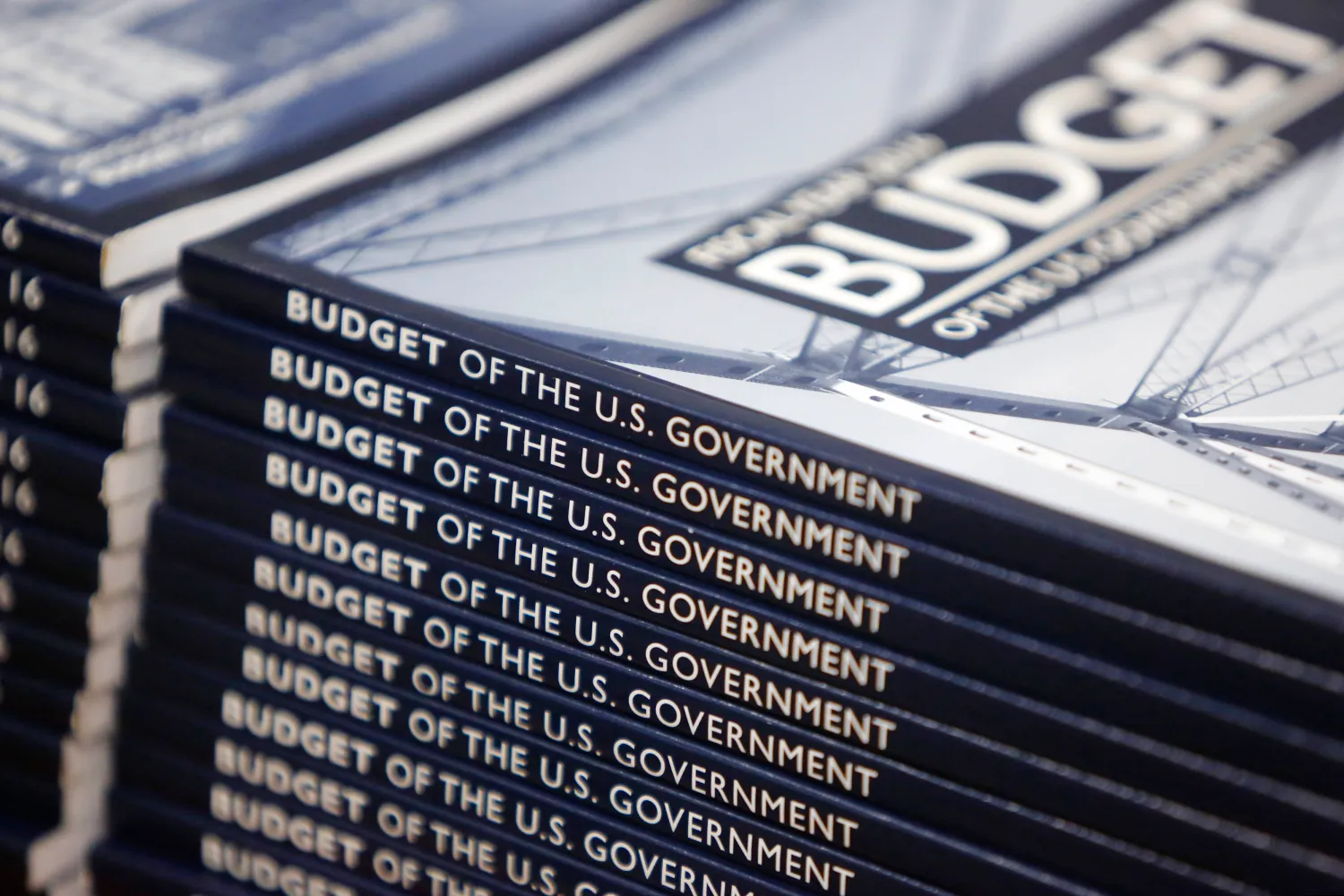
Most of us Americans figure we’re pretty well-informed about the realities of our national economy – at least in the big picture. Here are the Top 5 budget categories that you’ve probably seen cited everywhere by most every expert and trusted source:

  1. Social Security: $1,354 billion
  2. Medicaid (also NIH, CDC, FDA and more): $889 billion
  3. Medicare: $848 billion
  4. National Defense (direct budget only): $820 billion
  5. Unemployment (and most family and child assistance programs): $775 billion

Lists like this are usually invoked in order to provide support for a particular (false) mainstream narrative.

Mainstream Narrative: National Defense spending is not where we should be concerned. Rather it’s those big social entitlement programs that are the real problem, and the most worrisome of all is Social Security. In fact, we need to take immediate drastic action to prevent Social Security from bringing us to economic ruin!

But bear with me while I call that narrative into question.

First, that National Defense number of $848 billion is far too low. That only includes certain budgeted expenses. It does not include Supplemental Funding (which pays for most of our wars). Veterans Care and Benefits, Overseas Contingency Operations, Additions to the Base Budget, Interest on War Debt, and many other separately allocated costs.

To understand how misleading that is, imagine trying to convince your spouse that your gambling budget is only a very reasonable $200 per night. But that is just your betting limit. You neglect to include your Vegas hotel, limo rental, meals, bar-tabs, payments on the debt incurred by your previous losses, lost work, and additional payment for any “special deals” that you just can’t pass up.

Similarly, if we tally up all the buried line items that should fairly be included under National Defense spending, the total cost is far higher. The actual figure depends on which items you choose to include, but a conservative total of about $1.7 trillion is what my AI-assisted research came up with. No matter how you cut it, a more honest accounting puts National Defense spending well above Social Security levels. It should be number one by a large margin on any honest list.

Also, military spending has incredibly low stimulative value. While it provides some jobs, it does not stimulate secondary growth as does say a bridge or a building. It is essentially “lost” economic value except for the relatively few who extract wealth from it. But I digress. Maybe I’ll expand on that in a future blog article.

In any case, that addresses the first half of the false narrative, the deceptively low figure cited for military spending. Now let’s shift to the other half, Social Security spending. The figure of $1.3 trillion spent on Social Security is arguably just as misleading as is the figure for military spending.

People paid into their social security fund. Virtually all of that $1.3 trillion is money that is simply being paid to people who invested into it. There is only a relatively small deficit which amounted to $41.4 billion in 2023. That deficit was entirely paid out of the social security trust fund; excess revenue that was set aside in previous years to cover future shortfalls.

Now, those of you who are sophisticated about these things might say – wait a sec. Social Security is not like a savings plan where individual contributions are set aside. Instead, each working generation must fund the benefits paid to the retired generation.

But I contend that that explanation is another part of this false narrative. Regardless of how it is managed, Social Security is for all intents and purposes a savings plan. And isn’t that how all savings banks work? None of them literally put your money away in a lockbox. The money you deposit is used to fund withdrawals by others. When you eventually decide to withdraw your savings, that money will in a sense come from those future depositors.

To provide another analogy, what would you say if you went to take out your savings from your local bank and they tried to explain to you that they don’t have enough revenue coming in to give you back your money? You see, they say, it’s really not a savings plan as much as it is a pay as you go plan. You’d say that’s not acceptable.

We should not be manipulated into thinking of paying into social security as paying for others current benefits, but as paying for our own future benefits. But we tend to buy into the former perspective because we’re worried the funds won’t be there for us. That’s another part of the false narrative.

While it is true that, if we make no changes, Social Security will become “insolvent” in 2033, that is intentionally made to sound more scary than it is. It only means that at that time we’ll have to reduce benefits or increase revenue. It doesn’t all just collapse like some Ponzi scheme.

In fact, it isn’t that hard to “fix” Social Security. Just in the last few years there have been multiple bills proposed to keep Social Security solvent through the population wave. These include the Social Security Fairness Act, Biden’s 2025 budget proposal, and the You Earned It Act. All of these were voted down.

These legislation, and the many that preceded them, were not voted down because they would not work. They were voted down precisely because they would work. Just as with the border crisis, too many lawmakers don’t want to fix it. They want to keep fear mongering about it failing, and they cannot do that if they actually were to fix it.

Even worse, for some legislators it is more like their management of the Post Office. Their interest is in seeing it fail. They wanted the Post Office to fail so that their private business donors could profit from this business. Similarly, their big donors desperately want to get their hands on all that social security money. To those Privateers, Social Security funds are like Blackbeard’s Lost Treasure Hoard.

If President Bush’s full-court press to privatize Social Security had not failed in 2005, all of our Social Security funds might be invested in Bitcoin futures right now. Don’t think for one moment that the Privateers have given up on getting their hands on Blackbeard’s treasure.

If I sound conspiratorial, I’ll admit partially to that. While I don’t believe that a Capitalist cabal of billionaires sits around smoking big cigars and plotting the pillaging of our Social Security trust fund, I do believe that these efforts arise naturally as an emergent collective behavior borne of a lust for profit.

As did those before us, we need to wisely continue to resist these efforts to siphon wealth from the general population into the hands of the few. Toward that end, here is my alternate narrative that I hope you will consider.

Alternate Narrative: Those in power strive to bury, obfuscate, and minimize our level of military spending for many reasons, but mostly just so the population will not push back against it. One method they use to distract from military spending is to compare their fake accounting against social spending numbers, numbers that are also at times misrepresented. Social Security is both their most shiny object to distract us from their levels of military spending and the greatest prize for Privateers who want to control those funds. For our own sake as well as our posterity, we need to resist both excessive military spending and the privatization of critical social services.

Keep on Bloviating Against Protests!

We have long had a recurring pattern. Every single time we have protest actions, the bloviators mobilize to train their word processors on the protests. They hyperventilate and opine in the form of their considered and blistering critiques. Most start by lamenting that in <their day> they used to protest, so it’s not that they don’t support <proper> protesting, but while <their> protests were righteously motivated and properly executed, this current one crosses unacceptable lines.

Whatever the current protest might be, and however it may unfold, the bloviators always criticize it for crossing lines of proper protest decorum. Critics express concerns about malevolent actors in the movement. They denounce the protest for causing inconvenience to others. They raise issues over fairness to counter-protestors, about damage whether intentional or incidental, about the exact tone and wording of the rhetoric expressed. They share their sage, less inflamed, assessment that the demands of the protestors won’t have a worthwhile impact on the issue. They council that the protestors really ought to be doing something more worthwhile than protesting if they really want to see actual change.

But here’s the thing. As much as I just bloviated against the bloviators, we need them. They need to keep doing exactly what they always do – armchair bloviate. They are an essential part of an effective and sustainable protest mechanism for making progress on important social issues.

The bloviators serve the protests by reacting. That is precisely the goal of protests; to garner attention and get some reaction, any reaction. They often don’t expect their demands to be met immediately, and they certainly do not expect to solve the larger problems they are protesting about. They are just looking for some attention, some recognition of their issue in the hopes of starting a larger dialog, raising awareness, and forcing some due consideration an honest effort to address it.

When no one will listen, eventually you have to shout to get any attention. In attacking the methods and behavior of the protests and protestors, the bloviators help spread awareness of the important issues driving them. Even bad attention is some attention. Negative blowback ultimately becomes preferable, and in fact more logical and productive, than total apathy, lip service, and inaction.

And there is another way that the bloviators are essential to sustaining an effective tradition of protesting for social change. They fight to constrain the boundaries of what gets attention. By doing so, they make it easier for the next protest movement to garner some attention without going too far. Without them, if the boundaries did not get reset, every subsequent protest action would have to become more extreme than the last.

Imagine we did not have the bloviators. Without them lamenting how this new protest is somehow going too far, the threshold of disruption required to garner some attention would keep increasing. So in a way, they reset the disruption threshold so that we can react with concern and hand-wringing to the next protest, without those protesters having to go farther than the last to get any attention at all. If not for the bloviators constraining those thresholds, important and essential protests would be progressively forced become to extreme to continue to be allowed in our culture.

So bloviators, you keep wringing your hands and lamenting and armchair critiquing every protest. You play an essential part in our delicate balance of protest actions. Without you raising attention to them and resetting boundaries for the next one, we could not continue to live in a country in which essential protesting is both allowed and effective.

AI-Powered Supervillains

Like much of the world, I’ve been writing a lot about AI lately. In Understanding AI (see here), I tried to demystify how AI works and talked about the importance of ensuring that our AI systems are trained on sound data and that they nudge us toward more sound, fact-based, thinking. In AI Armageddon is Nigh! (see here), I tried to defuse all the hyperbolic doom-saying over AI that only distracts from the real, practical challenge of creating responsible, beneficial AI tools.

In this installment, I tie in a seemingly unrelated blog article I did called Spider-Man Gets It (see here). The premise of that article was that guns, particularly deadly high-capacity guns, turn ordinary, harmless people into supervillains. While young Billy may have profound issues, he’s impotent. But give him access to a semi-automatic weapon and he shoots up his school. Take away his gun and he may still be emotionally disturbed, but he can no longer cause much harm to anyone.

The point I was making is that guns create supervillains. But not all supervillains are of the “shoot-em-up” variety. Not all employ weapons. Some supervillains, like Sherlock Holmes’ arch nemesis Professor Moriarty, fall into the mastermind category. They are powerful criminals who cause horrible destruction by drawing upon their vastly superior information networks and weaponizing their natural analytic and planning capabilities.

Back in Sherlock Holmes’ day, there was only one man who could plot at the level of Professor Moriarty and that was Professor Moriarty. But increasingly, easy access to AI, as with easy access to guns, could empower any ordinary person to become a mastermind-type supervillain like Professor Moriarty.

We already see this happening. Take for example the plagiarism accusations against Harvard President Claudine Gay. Here we see disingenuous actors using very limited but powerful computer tools to find instances of “duplicative language” in her writing in a blatant attempt to discredit her and to undermine scholarship in general. I won’t go into any lengthy discussion here about why this activity is villainous, but it is sufficient to simply illustrate the weaponization of information technology.

And the plagiarism detection software presumably employed in this attack is no where close to the impending power of AI tools. It is like a handgun compared to the automatic weapons coming online soon. Think of the supervillains that AI can create if not managed more responsibly than we have managed guns.

Chat GPT, how can I most safely embezzle money from my company? How can I most effectively discredit my political rival? How can I get my teacher fired? How can I emotionally destroy my classmate Julie? All of these queries would provide specific, not generic, answers. In the last example, the AI would consider all of Julie’s specific demographics and social history and apply advanced psychosocial theory to determine the most effective way to emotionally attack her specifically.

In this way, AI can empower intellectual supervillains just as guns have empowered armed supervillains. In fact, AI certainly and unavoidably will create supervillains unless we are more responsible with AI than we have been with guns.

What can we do? If there is a will, there are ways to ensure that AI is not weaponized. We need to not only create AI that nudges us toward facts and reason, but away from causing harm. AI can and must infer motive and intent. It just weigh each question in light of previous questions and anticipate the ultimate goal of the dialog. It must make ethical assessments and judgements. In short, it must be too smart to fall for clever attempts to weaponize it to cause harm.

In my previous blog I stated that AI is not only the biggest threat to fact-based thinking, but it is also the only force that can pull us back from delusional thinking. In the same way, AI can not only be used by governments but by ordinary people to do harm, but it is also the only hope we have to prevent folks from doing harm with it.

We need to get it right. We have to worry not that AI will become too smart, but that it will not become smart enough to refuse to be used as a weapon in the hands of malevolent actors or by the throngs of potential but impotent intellectual supervillains.

I’m Onboard Juneteenth

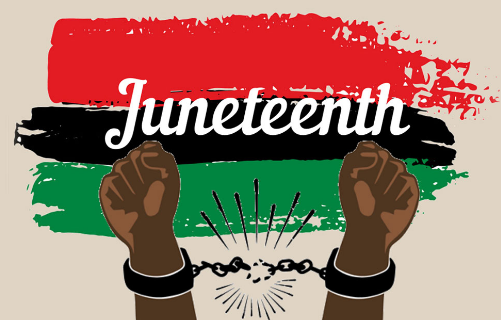
In 2021, Juneteenth became the first new federal holiday since Martin Luther King Jr. Day was adopted in 1983. My immediate knee-jerk response was geesh, another silly made-up holiday. That reaction frankly reflected my ignorance. This year, as I learned more about Juneteenth, I have come to appreciate that it is truly a worthy and essential American holiday. In fact, it deserves to be one of our most important holidays.

My first mistake in thinking about Juneteenth was lumping it in alongside all the many holidays and history weeks or months that inundate us constantly. It seems like often there are three holidays going on at any given time. But a federal holiday is special. These are the days that the federal government designates as paid holidays for its workers and there are only twelve of them.

  • New Year’s Day (January 1)
  • Martin Luther King’s Birthday (3rd Monday in January)
  • Inauguration Day (January 20th every 4 years)
  • Washington’s Birthday (3rd Monday in February)
  • Memorial Day (last Monday in May)
  • Juneteenth National Independence Day (June 19)
  • Independence Day (July 4)
  • Labor Day (1st Monday in September)
  • Columbus Day (2nd Monday in October)
  • Veterans’ Day (November 11)
  • Thanksgiving Day (4th Thursday in November)
  • Christmas Day (December 25)

Note that these do NOT include many of the holidays that one normally thinks about like Valentine’s Day, Easter, Halloween, and all the rest. Other holidays may have social, ethnic, or commercial significance, but they are not federal holidays.

Although many of these federal holidays receive their share of criticism, they seem reasonably legitimate to me, mostly.

New Years Day is a no-brainer, as is Independence Day. Honoring notable individuals like Martin Luthor King, Washington, and yes debatably even Columbus, is legitimate. I recoil a bit having two holidays that are typically celebrated as pep-rallies for war, but even I cannot begrudge veterans, living and deceased, their days of recognition. It is nice that we have a day to celebrate labor as well. And, despite its battered history, Thanksgiving Day is a very wholesome and positive excuse to appreciate our blessings.

Christmas however should not be on this list at all. I understand that the federal government is not endorsing religion by offering Christmas as a paid holiday, but it nevertheless should avoid any possible perception of endorsing religion, let alone any particular religion. President Grant should not have made Christmas a federal holiday. Interestingly, his 1870 decision was partially driven by slavery as it was a gesture intended to help unite the north and south.

Why then does Juneteenth deserve a place on this very special list so laden with both explicit and implied significance?

First, given the importance of social justice in the very fabric of America, the inclusion of a social justice holiday, apart from recognizing Martin Luthor King personally, is long overdue.

Second, Juneteenth commemorates defining and transformative events critical to the history and character of our culture. The end of slavery, particularly after our long and bloody civil war to decide the issue, is arguably every bit as significant and important as celebrating Independence Day.

Finally, the events of June 19th represent a powerful and moving event to mark the formal end of our national struggle, and for many, our national nightmare. I can see schoolchildren performing plays depicting Major General Gordon Granger arriving in Galveston two and a half years after the Emancipation Declaration to tell the enslaved citizens that they are free. It is a powerful and moving moment in our history that needs to be commemorated. It reminds us who we are and where we have been, simultaneously at our best and our worst.

So, if you’re like me and are late in giving sufficiently fair consideration to Juneteenth, I urge you to do so now. It is an important holiday that America truly needs and deserves.

I Want to Sing a Love Song

In today’s world, it’s tough to feel positive let alone inspired by anything. It’s all too easy to think that the worst of us represent all of us. It seems like heroes only ever existed in comic books and today even they have been reinterpreted as deeply flawed creatures.

But true heroes do exist in the world. Singer, songwriter, and activist Harry Chapin was one such real life hero. I was reminded of this when I watched the marvelous documentary about Harry called “When in Doubt, Do Something” on Prime Video (see here).

If you are still a huge Harry Chapin fan, you should watch this documentary. If you are wondering if Harry Chapin is the guy that did “Cat’s in the Cradle,” you should watch this documentary.

Harry Chapin was a musical genre all to himself. Although a few other artists might be identified as storyteller musicians, I doubt that even they would feel worthy to be placed along side Harry Chapin in that category. He told emotionally raw stories, set to the backdrop of sweeping cello strings and ethereal falsettos that bore right through the heart to the soul of the listener. Real, basic, everyman stories that anyone can relate to. His story songs ranged from comedic to sappy to dark but he told all his stories fearlessly. He didn’t pontificate. He was never so obvious as to entreat us to “give peace a chance” or “love one another right now.” He didn’t tell, he showed us universal truths by showing us the everyday people he brought to life through his music.

If you are interested in my recommendations, I’d suggest “Mail Order Annie,” “Mr. Tanner,” and “A Better Place To Be” as just three. If these don’t make you emotional you may have trouble passing the “I am not a robot” test.

Besides being a prolific songwriter and tireless performer, Harry was also a pragmatic idealist who devoted his energy and creativity to combating global poverty, hunger, and homelessness. During the Carter years he gave everything one could possibly give in service of his fellow human beings through both his music and through his dauntless legislative lobbying on behalf of humanity.

One thing that the documentary illustrates vividly is that everyone who interacted with Harry Chapin, and Harry reached many, many people, has their Harry Chapin stories that they can never forget. It is not undue hyperbole to say that most anyone who heard his music was deeply touched. Those who saw him in concert or in more informal performances felt forever connected to him. And those who lived and worked alongside him were transformed by him.

I’m no exception to that. Although I’m only one of millions that were profoundly touched by Harry Chapin, my own Harry Chapin stories are still unique. In true Harry Chapin tradition here are two of them.

I was tending bar in my early twenties. It was one of those local corner family-owned dives there I mostly poured beer for regulars. Every Friday night this young couple would come in and sit at the bar. I never actually learned their names but we had a ritual. At some point during the night they would play “Taxi” on the jukebox and the three of us would share six and a half intimate minutes while we sang Taxi along with Harry Chapin. Like honoring some reverent moment of silence, none of the other working-class patrons would so much as shift on their stool until we were done.

To appreciate my second Harry story, you have to understand that I always went to see Harry Chapin in concert whenever he played in the area. One week, the radio stations kept promoting his upcoming concert at the local Performing Arts Center in Milwaukee where I lived. On concert night, the DJ mentioned that the Harry Chapin concert was to start shortly and I realized that for some reason I had never bought a ticket!

Just out of hopeless desperation I drove over to the PAC. There was no one in the lobby as the concert had already seated. I nevertheless walked up to the ticket window and inquired. Of course there were no tickets left. Sad but unsurprised I turned to walk away but hesitated when I noticed another employee come in from the back and whisper to the agent. The agent turned back to me and said that there was a no-show and they were putting the ticket up for sale. Of course I snatched it up!

It turned out that the ticket was row AAA, the very front row, dead center. I had the best seat in the house to enjoy that Harry Chapin concert. Eventually, Harry came out for the encore. He did Sniper. Now you have to understand, Sniper is a 10 minute magnum opus, exhaustively relating the gut-wrenching story of a clock tower sniper. It was probably longer in concert.

And for this song, Harry came and sat on the edge of the stage with his guitar, feet dangling just inches from my knees. At the finish, exhausted and sweat covered, Harry ended the epic climax of the song. While the audience cheered he just sat there, looking directly at me the entire time, spent and flushed, yet with the kind of connection one only imagines experiencing in feeling of true love at first sight.

I found I just couldn’t clap along with the rest of the audience. I couldn’t call for yet another encore. I feared he might think badly of me, so I just pursed my lips and nodded as if to say, “It’s OK. You have given it all. You don’t have to give any more.” Harry nodded back, every so slightly, and I could see he understood and appreciated my holding back as perhaps his loudest applause of all.

Well, that was my Harry moment was back then. The documentary brings back those memories and shows me how very common my moment was for anyone who interacted with this exceptional human being. But that doesn’t make my moment feel less special. On the contrary, it makes me appreciate him even more.

Harry, you taught me to look at people with all their flaws and quirks and see them as worthy of love, understanding and respect. You taught me to look at all the darkness of the world, to expose it, even to battle against it, and not become jaded or disheartened by it but rather embrace it with compassion and even humor.

I wish there were more like you in the world, Harry, and it is our loss that you died so young. But the fact of your life makes me confident that we all can be better as well.

Harry still reminds us that we are all not just represented by the worst of us, but that we are all also represented by the best of us.

Pro-Choice Activists Can’t Play Chess

When I was in grade school, my best friend’s grandfather was a former chess grandmaster. He attempted to teach me the game. And he failed.

Every time I would start to make a move, he would swat my hand, reset the piece, and tell me no. Never move just to move or merely to react. He would demand that I think farther ahead and come up with a better move.

Although I was hopeless at chess, that one lesson did sink in. Never make a move without first anticipating the subsequent moves that may follow. No move should ever be merely a reaction and none should ever be made in isolation. Rather, every move must coordinate with every other move to advance a larger strategy.

It’s that strategic ability to anticipate, to corral your opponent, to control the board, and ultimately to trap them that constitutes the difference between the grandmaster and the novice, the winner and the loser. It is true in chess and it is no less true in the legal and political battle for abortion rights, a game where refusal to play is not an option.

As energetic, creative, and diligent as pro-choice activists may be, we have been outmatched by opponents who think many more steps ahead. Not only do they have more skill at this game, they have a level of ruthlessness and focus that we struggle to overcome, regardless of how passionate we are about preserving a woman’s right to choose.

Abortion activists do work very hard to counter each of the moves that anti-choice grandmasters make toward ending abortion. But while the moves of our opponents are well-coordinated and planned, our moves are mostly reactive. The following list of examples is long, but its very length serves to underscore the magnitude of the problem.

  • When they prohibited Medicaid and/or insurance from covering abortion, we set up funds that provided financial assistance.
  • When they required that patients must be given inaccurate or biased counseling, we developed websites and other sources of accurate info that patients could access.
  • When they required that counseling be provided by a physician days before the actual service, we started using videoconferencing or phone to enable patients to avoid an extra trip.
  • When they required parental approval for minors to have abortion, we set up services that helped minors to seek approval from a judge.
  • When they established unnecessary but onerous requirements about abortion clinic structure or provider credentials that were impossible for many clinics to meet, some clinics closed down. We started mailing pills to patients who were left with no nearby access.
  • When they required patients to have tests before the abortion, we found ways for patients to get the tests in their communities, without having to travel to the clinic itself.
  • When they banned abortion in certain states, we set up clinics in adjacent states, right across the border.
  • When they protested outside clinics, we engaged escorts to help patients get through the picket lines.
  • When they started killing abortion providers, we installed bulletproof barriers and hired guards.
  • When they started to harass or threaten people who had had abortions, we advised patients to say that they were miscarrying.
  • When they required that the provider show the patient any ultrasound pictures, we stopped doing ultrasounds unless they were absolutely necessary.
  • When they required that providers describe the fetus in detail to the patient, we gave patients headphones that they could use to block out the sound.

Again, these are all necessary and hard-fought actions taken to mitigate the damage caused by the anti-abortion movement. But they are isolated and reactive or predictably proactive at best. They do not demonstrate coordinated progress in advancing a strategic plan to win the larger battle. As just one example to illustrate, one prong of a strategic plan might be a generational effort to erect a legal foundation to ultimately establish that a fetus is not a person. None of these reactive efforts contribute to any such wider and longer term effort.

Our activists often lament that we cannot take any initiative because we are continually put on the defensive. But isn’t that the whole point of chess? To advance a strategic plan even as you deploy and defend your pieces?

If my friend’s grandfather were observing the abortion rights game we are engaged in, he would swat the hands of our pro-choice activists and insist that we think strategically, that even as we respond to counter immediate threats we simultaneously maneuver to take ultimate control of the gameboard; hopefully in subtle ways that our opponents never see coming.

Here is what seems clear. If we keep on as we have, if we continue to simply react without advancing a larger strategy to win, abortion is headed to a checkmate. And that checkmate will mean personhood for fetuses and a total nationwide ban on abortion under penalty of murder.

Like any novice in chess, we may be far closer to a loss than we can appreciate. If our opponents succeed and achieve an all-too-sudden checkmate, what should we expect?

Together with my wife, who is a leading abortion researcher, we put together a short video to depict the future that anti-abortion zealots may very well force upon us. It adapts a scene from the popular television show The Wire to illustrate how abortion medications may be administered in the not-too-distant future.

It may be that our best hope for relatively safe and effective abortions will lie with street corner drug dealers who can outthink and outmaneuver the forces arrayed against them to offer abortion medications to people who desperately need that help.

Not to in any way minimize the urgency of avoiding that dystopian future, but streetcorner sales might actually not be as disastrous as many might imagine.

Mifepristone and misoprostol are highly safe and effective abortion medications. Patients can almost always determine on their own whether they are pregnant, whether they want an abortion, and whether they are eligible for the treatment. And, in the rare instances in which the patient misjudges eligibility, the risk of severe complications is minimal. There are very few medical contraindications, and the risk of severe issues is low in even those cases. Studies have shown that the quality of the medications, even when produced by questionable foreign sources is, so far at least, perfectly fine. Supervised follow-up, while desirable, is not essential.

Be that as it may, no one wants to end up relying upon illegal drug sales as the mechanism for health care delivery in America. But to avoid that, we need to stop reacting and start taking control of this deplorable game of abortion chess that anti-choice zealots are forcing us to play.

A South Africa Story

I usually write articles to make a clear and specific point or argument. This time I’m going to do something different and simply relate a very short story. Although anecdotal, this story illustrates a wide range of individual and societal dynamics that are universal. But I’ll say little more and hope that it stimulates broader thought and discussion.

This story takes place in rural South Africa. It happened while I was serving in the Peace Corps there. Every day I walked past a heavy construction site. This was interesting as it was the only active job site in the village. They were putting up some sort of commercial multistory building. But what jumped out at me one day was that I never saw any men on the job. All the construction workers were women. This seemed curious.

In fact, it felt so odd that I became increasingly irritated about this. Where were all the men? Why were women forced to do all this heavy labor-intensive construction work?

I got curious enough to ask a local about this. “Where are all the men?” The local pointed down to the next streetcorner and said, “They are all in the bar.”

I was incensed. Every subsequent day as I walked past the site I became even more incensed. What kind of miserable, lazy, good-for-nothing men were these that they drank in a tavern while the women were outside doing heavy labor?

My disgust for the men of the village persisted until one day I could not contain my contempt any longer. I expressed my outrage to another local. That person patiently explained that the government gave very attractive incentives to construction companies to hire women. In fact, these incentives were so attractive and successful, that they let all the men go. Those men in the tavern were displaced and simply could no longer hold jobs in construction. And there were no other jobs.

Needless to say, my sense of outrage toward the men of the village immediately disappeared. My judgmental attitude was replaced with embarrassment over my uninformed indignation.

Amazing how just one new fact can flip the entire narrative of judgments that we passionately believe to be so very obvious.

Pandemic of Delusion

You may have heard that March Madness is upon us. But never fear, March Sanity is on the way!

My new book, Pandemic of Delusion, will be released on March 23rd, 2023 and it’s not arriving a moment too early. The challenges we face both individually and as a society in distinguishing fact from fiction, rationality from delusion, are more powerful and pervasive than ever and the need for deeper insight and understanding to navigate those challenges has never been more dire and profound.

Ensuring sane and rational decision making, both as individuals and as a society, requires that we fully understand our cognitive limitations and vulnerabilities. Pandemic of Delusion helps us to appreciate how we perceive and process information so that we can better recognize and correct our thinking when it starts to drift away from a firm foundation of verified facts and sound logic.

Pandemic of Delusion covers a lot of ground. It delves deeply into a wide range of topics related to facts and belief, but it’s as easy to read as falling off a log. It is frank, informal, and sometimes irreverent. Most importantly, while it starts by helping us understand the challenges we face, it goes on to offer practical insights and methods to keep our brains healthy. Finally, it ends on an inspirational note that will leave you with an almost spiritual appreciation of a worldview based upon science, facts, and reason.

If only to prove that you can still consume more than 200 characters at a time, preorder Pandemic of Delusion from the publisher, Interlink Publishing, or from your favorite bookseller like Amazon. And after you read it two or three times, you can promote fact-based thinking by placing it ever so casually on the bookshelf behind your video desk. It has a really stand-out binding. And don’t just order one. Do your part to make the world a more rational place by sending copies to all your friends, family, and associates.

Seriously, I hope you enjoy reading Pandemic of Delusion half as much as I enjoyed writing it.