
We have long had a recurring pattern. Every single time we have protest actions, the bloviators mobilize to train their word processors on the protests. They hyperventilate and opine in the form of their considered and blistering critiques. Most start by lamenting that in <their day> they used to protest, so it’s not that they don’t support <proper> protesting, but while <their> protests were righteously motivated and properly executed, this current one crosses unacceptable lines.
Whatever the current protest might be, and however it may unfold, the bloviators always criticize it for crossing lines of proper protest decorum. Critics express concerns about malevolent actors in the movement. They denounce the protest for causing inconvenience to others. They raise issues over fairness to counter-protestors, about damage whether intentional or incidental, about the exact tone and wording of the rhetoric expressed. They share their sage, less inflamed, assessment that the demands of the protestors won’t have a worthwhile impact on the issue. They council that the protestors really ought to be doing something more worthwhile than protesting if they really want to see actual change.
But here’s the thing. As much as I just bloviated against the bloviators, we need them. They need to keep doing exactly what they always do – armchair bloviate. They are an essential part of an effective and sustainable protest mechanism for making progress on important social issues.
The bloviators serve the protests by reacting. That is precisely the goal of protests; to garner attention and get some reaction, any reaction. They often don’t expect their demands to be met immediately, and they certainly do not expect to solve the larger problems they are protesting about. They are just looking for some attention, some recognition of their issue in the hopes of starting a larger dialog, raising awareness, and forcing some due consideration an honest effort to address it.
When no one will listen, eventually you have to shout to get any attention. In attacking the methods and behavior of the protests and protestors, the bloviators help spread awareness of the important issues driving them. Even bad attention is some attention. Negative blowback ultimately becomes preferable, and in fact more logical and productive, than total apathy, lip service, and inaction.
And there is another way that the bloviators are essential to sustaining an effective tradition of protesting for social change. They fight to constrain the boundaries of what gets attention. By doing so, they make it easier for the next protest movement to garner some attention without going too far. Without them, if the boundaries did not get reset, every subsequent protest action would have to become more extreme than the last.
Imagine we did not have the bloviators. Without them lamenting how this new protest is somehow going too far, the threshold of disruption required to garner some attention would keep increasing. So in a way, they reset the disruption threshold so that we can react with concern and hand-wringing to the next protest, without those protesters having to go farther than the last to get any attention at all. If not for the bloviators constraining those thresholds, important and essential protests would be progressively forced become to extreme to continue to be allowed in our culture.
So bloviators, you keep wringing your hands and lamenting and armchair critiquing every protest. You play an essential part in our delicate balance of protest actions. Without you raising attention to them and resetting boundaries for the next one, we could not continue to live in a country in which essential protesting is both allowed and effective.
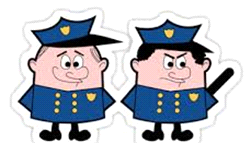 Make Nice incremental advocates, don’t discredit your Make War brethren and thereby waste the leverage they afford you. Appreciate that they are an asset not a liability and use them to your advantage. Radicals, appreciate that your role is bad cop and pursue it with relish but also appreciate that it ultimately takes Make Nice folks to close the deal. When a better compromise is achieved then either camp could have negotiated alone, realize that it was only possible because both camps were strong and worked with each other rather than against each other.
 figmentums