Tag Archives: Social Media

Staying Sane Is Hard Work

Sliding down into delusion is seductive, easy, and fun. Modern information technology is making it ever harder to resist. Staying sane, on the other hand, is hard work—and it is getting harder every day.

The internet has made it possible for infectious ideas to spread faster than any physical disease. For a virus to circle the globe, you need mutations and air travel. To become infected by fake news and dangerous ideas, you need only a Wi‑Fi connection. Modern technology exposes us to vastly more information than ever before, much of it unhealthy, and every time our neural networks are exposed to bad information, it feels a bit more sensible to us—even if we know it is fake. Mere repeated exposure wears ever‑deepening grooves of familiarity into our brains. The more we see, hear, and click on a claim, the more reasonable it feels. Eventually, insidiously, it becomes self‑evident—common sense that seems inescapable.

In the past, news was filtered through human editors and gatekeepers. They certainly had their biases and blind spots, but at least someone was nominally responsible for quality. Today, sources like Facebook, Fox News, YouTube, podcasts, X/Twitter, and even our government have largely abandoned any obligation to fact‑check before amplifying. They create the illusion of informed reporting but are often almost completely untethered to reality. Their algorithms and personalities have one overriding job: keep you engaged. They notice what you watch or click and then say, in effect, “If you believe that, then check this out!” They do not care whether they are feeding you solid science or the latest conspiracy theory; they only care whether you will stay tuned in and click some more. The responsibility to sort out well‑supported information from unsupported claims, sound logic from specious arguments, is pushed entirely onto you.

That would be a tall order even if our brains were perfectly rational. They aren’t. Imagine you are curious about a fringe idea like Bigfoot. You type “proof of Bigfoot” into a search engine or social platform, intending to investigate skeptically. You will quickly find articles, videos, posts, and even reality shows arguing that Bigfoot is at least plausible or even real. Because you clicked, the algorithms learn that Bigfoot content “works” on you and begin to serve you more of it: more sightings, grainy photos, confident testimony. Before long, your feed is heavily populated by Bigfoot believers. From your perspective, it starts to look as if there is an enormous body of evidence out there. Everywhere you look, people treat the idea seriously. If so many people think there is something to it, there must be something to it.

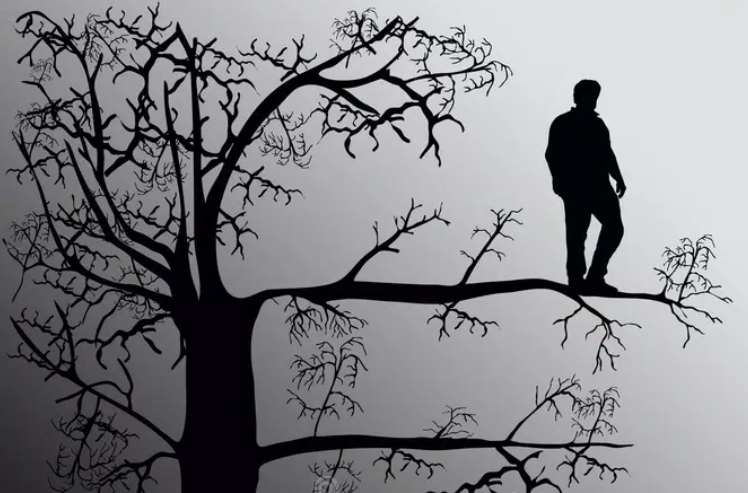
In reality, you are being drawn out onto ever thinner and more dangerous limbs. The algorithm nudges you along in little steps, each of which seems perfectly solid and reasonable. This process does not just happen with Bigfoot. It happens with vaccine myths, climate denial, election lies, cultish political beliefs, and every other infectious or click‑inducing idea. The result is that many people come to feel they have made a careful, “objective” study of an issue when in fact they have been drawn, step by step, down a rabbit hole into an Alice in Wonderland alternate reality.

We cannot redesign the global information system by ourselves, but we can develop habits that make us harder to capture. One simple practice is to explicitly search for the reverse of whatever you are investigating. If you search for “proof of Bigfoot,” deliberately also search for “debunking Bigfoot claims,” and click on those results often enough that the search engines learn you will reliably choose that kind of content too. This at least gives you some exposure to different perspectives. Both sides might still be exaggerated, but you are less likely to be left with the illusion that everyone agrees with one side only.

Another, related technique is to always look back to first principles. If you only consider that next little step out along the branch, it will seem safe and sensible. But if you stop and look back at how far you have wandered from the solid trunk, you quickly realize that you are dangerously far out on a limb. Having acknowledged that we do occasionally discover new species, must really therefore admit that a hitherto undiscovered tribe of Bigfoot might actually exist?

It also matters where you spend your time. Just as like‑minded people congregate in person, different online communities attract and cultivate different kinds of thinkers. Choose to frequent healthy online environments. That is not to say you should avoid diverse ideas; but if rumor, outrage, and unvetted claims infect the community or the platform itself, you will become infected. Seek out vibrant but serious gathering sites where people demand citations, scrutinize sources, and correct obvious nonsense. If you stick to them, your own brain will become better at recognizing sound evidence and logic, as well as specious arguments. If the level of discourse on a trusted site degrades, you should leave and stop exposing your brain to it.

Given all the infectious information we are unavoidably exposed to, it is no surprise that people sometimes slip from belief into delusion. Beliefs, at least in principle, are subject to change. We might hold them strongly, but new evidence can persuade us to reconsider. When a belief becomes impervious to change—when no amount of contrary evidence, no matter how strong or consistent, is allowed to matter—it has crossed over into delusion. Using that word makes many professionals uneasy. In a clinical setting, “delusional” has a specific meaning and diagnostic criteria. Nevertheless, in the generally accepted lay domain, delusion is the proper word to describe thinking patterns that have become impervious to evidence or reason.

When a person or a movement has fallen prey to delusional ideas, when contrary facts are dismissed out of hand or reinterpreted as attacks, we no longer function in the realm of honest disagreement. We are locked into a self‑reinforcing mental world that will not adjust to reality. In a culture where influencers dominate the discourse, the rest of us are put at risk. Delusions can be comforting, energizing, and politically useful, but facts always assert themselves in the end. Reality does not care if you believe in it.

As a result of so many infectious ideas being disseminated so quickly, we are currently suffering from a global pandemic of delusion. We cannot wipe it out, but we can protect ourselves and try not to contribute to its spread. We can monitor our own information diets, seek out counter‑evidence, choose better communities, learn to better assess claims, and be more precise in our language. We can and must resist being nudged toward delusion. As susceptible as our brains are to misinformation, they can also be trained to better assess the soundness of claims and to detect specious arguments.

The way repetition reshapes our memories and our very perceptions, the way algorithms exploit our pattern‑seeking brains, the way beliefs slide, inch by inch, into full‑blown delusion—all of these dynamics, and many others, are at work in our politics, our media, our religions, and our personal lives. In my book Pandemic of Delusion: Staying Rational in an Increasingly Irrational World (see here), I unpack those mechanics in much greater detail, with concrete examples and practical tools for recognizing when you, or someone you care about, is being nudged away from reality. If this short essay inspires you to want to bolster your defenses, the book will provide you with a practical field guide: offering insight as to why we are so susceptible to misinformation, how to recognize it, and how to immunize yourself against it. It will give you a fighting chance to stay sane when the world around you seems determined to drive you crazy.

Trump Exposed Our Stupidity

I have long expressed the speculation that we are probably no smarter than the population of ancient Babylon. Yes, we may have more technology and more knowledge, but brains evolve very slowly and have probably long ago reached intrinsic intellectual limits like the maximum size of an insect with an exoskeleton. Similarly, we are probably no smarter overall than people were way back when.

Given the number of people in our population who believe in any sort of crazy, nonsensical, disproven claim, it’s hard to deny that we have a lot of really stupid people in our population. Despite that, we have long preferred to respect the intelligence of our fellow humans and at worst characterize them as misled, uninformed, uneducated, and so on. Not stupid though. Oh no, we’re not saying that.

When Trump came to power I said that was further proof of how stupid we are. Clearly we are not stupid in all ways, but I was talking about the particular set of “social intelligence” smarts that might allow us to form a just and sustainable social system. As social stupidity exerted itself throughout the Trump era, more and more people found they had no choice but to refer to his supporters as simply stupid.

Still, most continued to resist that harsh point-blank criticism. They hung on to hope that Trump voters were simply misinformed by Fox News.

Then Covid came along. As it became clear that many Trump supporters and some others were continuing to resist vaccines and thereby placing themselves and others at mortal risk, the rest of us have pretty much been forced to admit that, yes, they are just plain stupid. We can no longer continue to pretend that any less critical adjective is sufficient to describe them.

Trump has not made people stupid. Stupid people created Trump. Trump didn’t tell them what to think, he threw out trial balloons at his rallies and he echoed whatever they cheered to most strongly. He led stupid people wherever they told him they wanted to go.

The stupid people don’t worship Trump. They don’t even follow Trump. The moment he tries to take them where they don’t want to go, they rebel. They boo him as they did when he tried to urge them to get vaccinated. As horrible as Trump may be, the real problem is not Trump, the real problem are the stupid people who created and continue to empower Trumpism.

Look, it’s clear we have different kinds of smart and stupid. Some people may be brilliant in lots of ways, but still be quite hopelessly stupid at math. You don’t want them teaching math to your kids. In the same way, we should accept that some people, as smart as they may be in lots of ways, are simply hopelessly stupid when it comes to social policy and they should not be allowed anywhere near making it.

In their excellent book, Hating America, authors Barry Rubin and Judith Colp Rubin document the dire misgivings that many 18th century European intellectuals expressed regarding the formation of a Democracy in America (see here). They warned that a system that empowered uninformed and stupid masses to make critical decisions was doomed to be dysfunctional and destructive. Their concern was elevated by their certainty that America, with all its vast resources, would become very powerful. Putting that much power in the hands of the stupid masses would be disastrous, they warned.

It has taken longer than those European intellectuals feared, but their predictions and warnings are finally coming true. A powerful America, dysfunctional and destructive in its behavior, careening down the road to a calamitous global future with stupid people behind the wheel.

Why now? I mean, the stupid people who support Trumpism – if not Trump himself – have always been here. They spewed nonsense in ancient Babylon, they owned slaves in America, and lynched free Blacks more recently. They have always hated government, believed in nonsense, proudly flew their Confederate flags, denied climate change, and rejected vaccinations. But we have managed pretty well so far. We have made progress despite them. So why worry about them now? What makes them more dangerous today?

I’ll give two reasons why our stupid population is more dangerous today – social media and guns. Social media gives them the critical ability to mutually-reinforce their stupidity, to coordinate, to rise up in online or real-world mobs, and to take over our government through coordinated action or even under threats of violence. Social media promised to empower the masses, and unfortunately it has succeeded.

And guns give these people the real power not only to mobilize, coerce, and threaten, but to exert their will through with profoundly horrifying violence and destruction.

It is long past time that we all accept and acknowledge that we have, and always will have, a socially stupid and dangerous fraction of people in our population. We must further accept that no amount of education, media campaigns, or empathetic outreach – or even fear of death – will dissuade these people from their stupid behavior. We cannot “bring them around.” We rather must find ways to moderate them, disempower them, and achieve a fair and sustainable society despite them.

We need, as George Will has said, sane and rational people in our representative form of government who can moderate our worst, stupidest, passions. But social media, and increasingly guns and threats of violence, are installing stupid people in our government who then gerrymander and create other pathways to bring in even more stupid people.

Eliminating, or strongly controlling, the two major enablers of stupidity, social media and guns, is essential if we are going to survive our socially stupid population and prove those European intellectuals wrong about the unavoidable fate of a Democratic system of government.

Blogs are Tweets for Adults

The other day author Ta-Nehisi Coates made some comments about Twitter that really spoke to me. Read them below or watch the interview (see here).

I think for somebody like me who is most comfortable, and more than comfortable, feels that what I have to give are ideas and notions that take a lot of time to cook, you know that have to marinade, that have to be baked, have to be in the oven for a little while, something like twitter is death for me. It was probably bad and it would have been much much worse because I think it incentivizes two things that are not good for my process, it incentives immediate reaction and it incentivizes argument.

I don’t know why it’s that way but people I have met or know in real life are one way in real life and if you saw their twitter persona you would be like is that the same person? I think for me it would be corrupting. I shouldn’t be able to broadcast everything I’m thinking. I shouldn’t even have the power to do that. Because you can say I have the power to do it but I’m not going to do it, that’s not how the world works. You’re gonna do it because like all humans we’re weak, you know?

This sentiment by Mr. Coates really summed up my own feelings about Twitter and social media more generally. I’ve certainly felt the siren song to tweet. I’ve even wavered under the urging of others to get with the program. But I’ve never tweeted more than a handful of times and then only to announce a particularly important blog article.

The reason I have resisted tweeting was articulated by Mr. Coates in his interview. Twitter would be corrupting for me. I prefer writing a more well-considered and fully developed blog article than be restricted to a shallowly supported tweet followed by an increasingly argumentative tweet storm as I battle to defend it with essential nuance.

Does Twitter have any redeeming value? Of course. Lots. It is a great way to network and organize, to get a message out, to build brand value, to excite lots of people, and to mobilize a community of like-minds.

But, the benefits of Twitter (and social media in general) do not immunize it from criticism and at least recognition of its limitations and even dangers. There are benefits to having guns handy too, but that does not negate all the harm they do. And as Ta-Nehisi Coates pointed out, Twitter also encourages and facilitates the worst of our natures and undermines the thoughtful, considered sharing of ideas in a positively persuasive manner.

This positive and productive sharing of ideas is where blogs shine. Certainly with respect to Twitter, but even in comparison to nightly news shows or what are often tedious and inflated books, blogs serve to give regular folks a right-sized forum that encourages and facilitates the best of our natures. A good blog requires the author to actually think an idea through completely and present it in a clear and concise fashion.

And with that as context, I want to take this opportunity to thank those of you who make the effort to slog though my blog on occasion. This is now my 164th figmentum. My first article was a post about the television series Penny Dreadful back in May of 2015 (see here). And although I garner only a handful of readers, one occasional thumbs-up from any of you means far more to me than a thousand likes on Twitter.

I appreciate you for being the kind of reader who is willing to invest your valuable time in what are hopefully thoughtful and well-developed articles (by me or by other bloggers) that not only entertain but sometimes might even inspire you.

Hopefully I can bring you another 164 installments that contribute in their small way to the productive sharing of thoughts and ideas in a world beset by tweets.