Like much of the world, I’ve been writing a lot about AI lately. In Understanding AI (see here), I tried to demystify how AI works and talked about the importance of ensuring that our AI systems are trained on sound data and that they nudge us toward more sound, fact-based, thinking. In AI Armageddon is Nigh! (see here), I tried to defuse all the hyperbolic doom-saying over AI that only distracts from the real, practical challenge of creating responsible, beneficial AI tools.
In this installment, I tie in a seemingly unrelated blog article I did called Spider-Man Gets It (see here). The premise of that article was that guns, particularly deadly high-capacity guns, turn ordinary, harmless people into supervillains. While young Billy may have profound issues, he’s impotent. But give him access to a semi-automatic weapon and he shoots up his school. Take away his gun and he may still be emotionally disturbed, but he can no longer cause much harm to anyone.
The point I was making is that guns create supervillains. But not all supervillains are of the “shoot-em-up” variety. Not all employ weapons. Some supervillains, like Sherlock Holmes’ arch nemesis Professor Moriarty, fall into the mastermind category. They are powerful criminals who cause horrible destruction by drawing upon their vastly superior information networks and weaponizing their natural analytic and planning capabilities.
Back in Sherlock Holmes’ day, there was only one man who could plot at the level of Professor Moriarty and that was Professor Moriarty. But increasingly, easy access to AI, as with easy access to guns, could empower any ordinary person to become a mastermind-type supervillain like Professor Moriarty.
We already see this happening. Take for example the plagiarism accusations against Harvard President Claudine Gay. Here we see disingenuous actors using very limited but powerful computer tools to find instances of “duplicative language” in her writing in a blatant attempt to discredit her and to undermine scholarship in general. I won’t go into any lengthy discussion here about why this activity is villainous, but it is sufficient to simply illustrate the weaponization of information technology.
And the plagiarism detection software presumably employed in this attack is no where close to the impending power of AI tools. It is like a handgun compared to the automatic weapons coming online soon. Think of the supervillains that AI can create if not managed more responsibly than we have managed guns.
Chat GPT, how can I most safely embezzle money from my company? How can I most effectively discredit my political rival? How can I get my teacher fired? How can I emotionally destroy my classmate Julie? All of these queries would provide specific, not generic, answers. In the last example, the AI would consider all of Julie’s specific demographics and social history and apply advanced psychosocial theory to determine the most effective way to emotionally attack her specifically.
In this way, AI can empower intellectual supervillains just as guns have empowered armed supervillains. In fact, AI certainly and unavoidably will create supervillains unless we are more responsible with AI than we have been with guns.
What can we do? If there is a will, there are ways to ensure that AI is not weaponized. We need to not only create AI that nudges us toward facts and reason, but away from causing harm. AI can and must infer motive and intent. It just weigh each question in light of previous questions and anticipate the ultimate goal of the dialog. It must make ethical assessments and judgements. In short, it must be too smart to fall for clever attempts to weaponize it to cause harm.
In my previous blog I stated that AI is not only the biggest threat to fact-based thinking, but it is also the only force that can pull us back from delusional thinking. In the same way, AI can not only be used by governments but by ordinary people to do harm, but it is also the only hope we have to prevent folks from doing harm with it.
We need to get it right. We have to worry not that AI will become too smart, but that it will not become smart enough to refuse to be used as a weapon in the hands of malevolent actors or by the throngs of potential but impotent intellectual supervillains.
Excuse me sir, might I have some sensible gun control please?
I am not a gun control advocate.
I am a gun abolishment activist.
Of course, I’m aware that would be a considered foolish position by the vast majority of people who are horrified by gun violence and truly want to make meaningful change to curb the carnage. We cannot abolish guns. That kind of extremist talk is not only unrealistic but it threatens to undermine the hope of implementing the sensible, meaningful gun reforms that serious gun control advocates have struggled so long to enact.
But that’s just it. We have been chasing “sensible gun reform” for many decades and we have been getting nowhere. In all the time that we have been meekly begging for reasonable gun control measures, the gun epidemic has only intensified in severity and scope. For every marginal success, there have been far more numerous losses. It is no longer realistic to counsel patience. We need to face reality. And the reality is that what we have been doing, the consensus measures that our advocates continue to call for, have not worked, are not working, and are not going to work.
After every mass shooting their meme used to be “thoughts and prayers.” Now the new meme is “thoughts and prayers are not good enough.” But like the one before it, this new rallying cry is just another empty, mollifying platitude that may appear to be a strong call to action but is in reality just another impotent lament.
Banal platitudes like this are the typical drum beat of our most ardent and well-intentioned gun control advocates. David Hogg and Fred Guttenberg are just two examples. I mention them not to disparage them but only to provide two examples of passionate, dedicated, and well-meaning gun control leaders who are failing us. Their milksop calls for “sensible gun legislation” are not fresh and new. These are the same old same old we have been hearing as long as there has been a gun debate.
Their calls for incremental reforms only help convince a bullet-riddled population that they cannot realistically hope for any more than the most bromide of relief from gun violence. In fact, the NRA would do well to fund our gun control advocates as they serve the gun industry by offering placating calls for ineffective half-measures, measures that, even if enacted, would do little to nothing to address the real problem — guns in our population.
Almost every supposed activist gun control advocate appearing in the media goes to great pains to preface every comment with assurances that they are gun owners themselves, that they hunt, and that they ardently support the 2nd amendment. They feel it is crucial that we know first and foremost that they are not trying to take away anyone’s gun. They go to great lengths to reassure pro-gun viewers that they are only advocating for a few modest, sensible gun reforms. Perhaps the very anodyne tone of their activism is what makes them attractive to controversy-shy media outlets fearful of being called too radical.
Given the lengths to which gun control activists go in their efforts to praise guns and gun ownership, it is sometimes difficult to see what side they are on. They seem to spend more time legitimizing and validating an inviolate right to gun ownership than they do condemning the key enabler of gun violence, namely guns.
The sensible, modest calls to action from our gun control advocates are simply inadequate to the urgency of the gun problem we face. The truth of this seems blatantly evident but yet we are continually assured and largely convinced that modest reforms are the most we can hope to achieve. I for one refuse to believe that we cannot do far, far better. And do far, far better we must.
One might think that our failure to institutionalize even the most modest gun control measures proves that we cannot reasonably hope to achieve more. There is some logic to the view that if one demands too much one will get nothing. But in this case that has proven to be failed logic. It is also true that sometimes, when pushing against a deeply rooted barrier with a lot of inertia, that no modest pressure, however persistent, will ever cause it to budge significantly. Only by the exertion of tremendous force can one hope to break it free and gain any momentum. Clearly no number of mass shootings alone will ever break the iron will of gun enthusiasts and profiteers.
We need to finally understand that only by exerting extreme pressure against the gun industry and our gun culture can we hope to make any lasting gain whatsoever. We should learn from anti-abortion activists and adapt some of their strategies that have proven to be highly successful. I know, I know, we aren’t like them and don’t want to be like them. But at some point, you have to either play rough, get tough, and do whatever it takes… or get out of the way.
Our nation may be overcome by a mass gun obsession, but the solution is not to enable it. The only way to snap us out of it is to set far more ambitious gun sanity goals than those long sought by mainstream gun control advocates. And it is feasible to achieve them. It is possible to change hearts and minds, change cultures, and change economic risk reward balances dramatically and quickly.
Here is just a short list of some of the kind of things we could and should be doing if we want to accomplish more than merely wringing our hands and effectively accepting a permanent culture of gun violence in America and an endless recurring nightmare of gun violence.
Admit the truth. Gun control measures will not fix the gun violence problem. Often in life when leaders don’t know what to do, or can’t do what they know they should, they advocate for inconsequential half-measures. They know these will have negligible effect, but it makes everyone feel better to see <something> being done even though they all know that these remedies will do little good. This is the case with our modest gun reform demands. Everyone knows that they won’t significantly curb the problem of mass shootings, but we all go through the motions nonetheless. It gives us some hope of improvement, however false, until the next mass shooting.
Focus on guns as the problem. Every time we get diverted into talking about mental health, about training, about background checks, or about gun locks we are not talking about the singular overriding cause of our gun problem, namely guns and the gun industry. Guns can effectively turn anyone into real live superpowered villain, and as long as we have guns, people will be lured into using them to commit mass murder. No amount of “sensible gun regulations” will curb that significantly. Engaging in debates over “sensible gun regulations” distracts and misdirects our focus away from the key problems; guns, guns, and guns. We need to stay laser focused and redirect every attempt to deflect back to the problem of guns.
Break free from internalized low expectations. I am going to put extra emphasis on this point because it is so critically important. Gun interests have succeeded fantastically in conditioning their opponents to believe, and take as an immutable given, that there is no hope that America might ever abandon its love affair with guns. It is an intractable reality, or so they have made us believe, that guns are here to stay and we cannot hope for anything more than some few “sensible gun regulations.”
But this is a lie. We have seen over and over again how broad public sentiment can change, and change profoundly, almost overnight on what seems like the most strongly felt issues. Broad public sentiment can turn against our gun culture overnight. And severe restrictions and liability can cause even the most sociopathic gun owner to recalculate their cost/benefit.
Gun supporters know that their gun culture is fragile. Why do you suppose they fight so rabidly to defend it? Why is it we have such trouble believing what our opponents prove to us every day by their fearful, paranoid defense of guns?
Stop legitimizing gun ownership and excusing gun owners. Stop legitimizing guns by going on about how much you support gun rights and assuring gun owners that they are great, responsible, people who happen to love guns and have every right to own them. We should instead marginalize gun ownership and gun owners as socially irresponsible collaborators in gun violence.
Frame gun ownership as moral choice. We should frame gun ownership as an irresponsible, unethical, and immoral choice. Because it is. We should force Christians in particular to justify over and over again how their faith places their right of gun ownership over the life of even one child slain in a mass shooting. Similarly, we need to send the message to men that guns are evidence not of their manliness, but of their cowardice.
Emphasize that we do not have to exercise every right. Just because we currently have a right to bear arms does not mean that we are obligated to do so. We need to send the message that even if one has an uppercase Right to do something, that does not mean it is lowercase right to do so. When it comes to guns, a good person would moderate their selfish individual rights for the good of society. In fact, the noblest definition of morality may be our willingness to forego our individual rights for the good of our fellow man. We need to make that argument and hammer it home relentlessly.
Stop accepting rationalizations. We accept too easily what are often fake rationalizations that we legitimately need guns for hunting, or for recreational target shooting, or to expand our collection, to wage war against our government, or for personal protection. We should stop giving these excuses more weight than they deserve. To whatever extent there is a legitimate, justifiable need for a gun, the appropriate gun can be signed out from a well-regulated gun repository. Private guns can be held in the custody of an approved and monitored facility for check-out as needed for recreation or other purposes. If we can rent snow skis when we want to go skiing, we can check out a gun to go deer hunting.
Marginalize and denormalize gun ownership. We should stop being so reluctant to blame and shame gun owners, manufacturers, sellers, and apologists. Every gun owner is part of the problem and we should stop pretending that there are any “good” gun owners out there. Further, we should stop participating in the fiction that whoever commits gun violence is a special mental case. The reality is that guns turn otherwise normal people into gun maniacs. The desire to purchase a gun that is only useful for killing lots of people quickly should be a sufficient red flag to alert us to a potentially dangerous and unstable person.
Make extreme demands. Abortion activists didn’t gain ground by calling for “sensible abortion reform.” They demanded nothing less than the end of all abortions, period. They didn’t bemoan the fact that they might seem unreasonable or generate blowback. They welcomed blowback. We should do the same. We should stop calling for “sensible gun reform” and start demanding the abolishment of all private gun ownership in our society. We should make gun proponents feel lucky to walk away with only somewhat less Draconian reforms.
Stop accepting that the 2nd Amendment is the last word. Anti-abortion activists never accepted that Roe v Wade was the last word. True, it was not a Constitutional Amendment, however it was “settled law.” But not for their activists. Similarly, the 2nd Amendment should not be accepted as sacrosanct by anti-gun activists. Maybe we cannot repeal it, but we can try. At the very least that effort would force their side to divert resources and offer substantive arguments to defend an archaic interpretation of the 2nd Amendment in a modern world replete with 21st century weaponry.
Reinterpret the 2nd Amendment. While we work to repeal the 2nd Amendment, we should work to limit it. Again, anti-abortion activists have pioneered a wide array of effective strategies that we can adapt. Foremost, we should embark upon a decades-long mission to appoint anti-gun Supreme Court Justices with the courage and conviction to reinterpret the 2nd Amendment. Contrary to what we have come to accept, the 2nd Amendment is neither unambiguous nor absolute. It is open to broad interpretation and less ideological Justices could legitimately overturn previous precedents as overly broad interpretations of the 2nd Amendment and conscribe gun rights in a far more socially responsible manner. We should not accept any ruling as the final word until they do.
Make it as hard to open a gun shop as it is to open an abortion clinic. The next thing we should be doing to lessen the damage of the 2nd Amendment is to limit its application in the real world. Again, anti-Abortion activists have given us the model for aggressive activism. Anti-abortion activists targeted abortion clinics very successfully. We should use those same proven successful tactics against gun factories, gun shows, and gun shops. Appear at every city council meeting in large and vocal numbers and lobby for new zoning restrictions and multitudinous regulations to make it difficult to open or operate these businesses. There are a million bills we could get passed to make their life difficult. “Of course, you can open a gun store, we are not stopping you, but you now need walls and windows that can stop high speed armor piercing ammunition. It’s a safety issue to protect gun buyers.”
Push for laws to effectively reduce guns by restricting firearms everywhere. In addition to lobbying for laws to make it difficult to run gun-related businesses, make it difficult for gun owners to take their gun anywhere. Establish gun-free zones and other requirements that make it impractical to carry guns. When these new laws or private sector policies are challenged, defend them vigorously. When they are blocked or overturned by courts, modify them slightly and try again. The anti-abortionists didn’t let such setbacks dissuade them from their unrelenting efforts. Even if a hundred initiatives are struck down, some will get through and in the meantime the gun lobby will have spent limited resources to defend against them.
Pressure individual gun sellers and gun manufacturers. We should put every bit of pressure we can bring to bear upon the individual people supporting gun manufacturing, sales, and ownership. Picket, boycott, protest, publicize, shame, and even harass them to a point. We should make their every activity in support of guns an ordeal. Like anti-abortionists, we should set up cordons in front of gun stores, showing prospective customers graphic pictures of gun-torn bodies and asking them how they can contribute to this carnage by buying a gun. Remind them that this is more likely to be the fate of them or their loved ones if they keep a gun in the house. We should confront store owners and ask them how they can live with themselves for selling tools of murder. We should confront gun executives and employees in restaurants and ask them how they can work for an industry that profits from death. Expand and escalate counter-protests at every pro-gun event.
Be willing to show graphic gun violence. Television and movies, no matter how graphic, do not do justice to the real horrors of gun violence. We need to be less squeamish about confronting people with that horror, through both words and images. For many on both sides, a personal, visceral experience is all that will move them to action or cause them to really consider the harm that guns cause.
Push for laws to increase liability and lawsuits. We need to stop taking “the gun industry is protected from lawsuits” as an insurmountable barrier. We need to renew our efforts to overturn such protections and, in the meantime, bring legal action, finding creative cause to challenge and test every possible variation in court. At the same time, we need to use each of these opportunities to make our case to the court of public opinion.
Wage Performative Protests Follow the model of The Satantic Temple in pushing back against religious extremism and hold performative events to make gun rights supporters uncomfortable with their own policies and behaviors. Give them a taste of how they would feel if the “wrong” people in their view brandished guns. Establish groups like Blacks for Gun Freedom, Gays for Gun Rights, and Machine Gun Moms for Choice and flood gun open carry zones and Hobby Lobby with people in paramilitary gear brandishing guns. Imagine a huge presence of Drag Queens for Guns Everywhere at CPAC or a force of mock Muslim Fighters raising up fake AK-47s and shouting “2nd Amendment! 2nd Amendment!” at gun rallies. Of course this must be very well organized and obvious toy weapons are enough to make the point. But the Satanic temple has shown how this kind of smart performance pushback can be very effective to force the other side to reconsider whether they really want everyone <else> to exercise the rights they are advocating.
So, there are just a few ideas.
If you feel that these sorts of tactics are too distasteful for you, then what <are> you willing to do to save the lives of your loved ones from gun violence? If they die in a mass shooting at school, or at the grocery store, or at some public venue, will your conscience be at ease knowing that you called for commonsense gun reform?
While it is sometimes true that the ends don’t justify the means, in the real world the ends absolutely do justify the means in most cases. Every time we make a tough decision, every time we risk ourselves to save a life, or prevent a crime, or accomplish any noble goal, it is precisely because the ends do justify the means.
Certainly, the end of reducing gun violence does not justify any means. But it does justify, no it demands, far stronger means than we as a nation have enacted so far. Let’s rise to the challenge that we face and take bolder, stronger action against the plague of guns in our country.
If this article motivates you to want to do more than merely donate more money to institutionalized gun control advocates, you can start by reposting it on other media platforms!
Back in the year 1900, there were only 4,192 passenger cars manufactured in the United States. Those 4,192 turn-of-the-century car enthusiasts could freely putter along their dirt roads with little concern about speed limits, driver training or tests, licensing, stop lights, traffic cops, seat belts, or fatal accidents. I’m sure some still managed to get into bouts of road-rage fueled fisticuffs, or run over the occasional slow-reacting pedestrian, but these incidents, while vexing, were not unmanageable.
Fast-forward to 2022 and there are now over 284 million motor vehicles operating on the roads of the United States. Today we absolutely do have to worry about things like speed limits, driver training and tests, licensing, stop lights, traffic cops, seat belts, and fatal accidents. Not only are there far more cars today, they are far more densely packed into confined spaces, they are dramatically heavier, and are far faster. To fail to regulate car ownership and to strictly circumscribe their use in today’s world would not be merely vexing, it would be insanely dystopian.
In this, I think any even the most passionate car enthusiast would agree.
But what if one of the drafters of our Constitution was also the proud owner of a 1886 Benz Patent Motorcar? He might have honestly believed that motorcar ownership is a right that should never be curtailed by the government in any way. And further, he might have argued that the personal mobility offered by the motorcar was essential to civil resistance against an oppressive government. Therefore, what harm could come from including a Motorcar-Rights Amendment to ensure that some future tyrannical government can not seek to oppress us by curtailing our ability to move about and associate freely?
What would likely have happened if we did have such a “Motorcar-Rights Amendment” in our Constitution?
Likely we would be in much the same situation we are in with guns.
Like gun owners, car enthusiasts would have tenaciously invoked their Constitutional Right to block any regulation that in any way restricted their use of cars. No seat belts, no speed limits, no competence tests, no police enforcement–no slippery-slope regulations of any kind. Certainly the American Automobile Association, funded by the car industry, would unfailingly argue in front of the Supreme Court that even the most modest car control regulation or liability exposure is unconstitutional. Regardless of the number of horrific high speed accidents, heedless of death and injury counts, the Supreme Court would steadfastly insist that we adhere to the original intent of the Constitution. “Responsible” car owners would buy ever bigger and more dangerous vehicles in order to defend their rights, to defend our liberty, and to defend themselves from all those “other” reckless car drivers.
Over the decades, as cars got bigger, faster, and more numerous, our dogged protection of that right would have gradually transformed our county into a vast and deadly demolition derby with 284 million rhinoceros-sized death-machines all trying to outdo each other by buying even more deadly elephant-sized death machines.
And our only response would be to continue to send our thoughts and prayers to all the victims of that insane car-nage even as we were quick to reaffirm our commitment to protecting “responsible car ownership” and advocating for inconsequentially modest reforms.
And guns have incomparably less value to society than do cars.
What a more sane and rational Supreme Court would and should do about guns is to drastically reevaluate or even better abandon this primeval Constitutional right in recognition of the real world we live in today. But regardless of that, any ethical and responsible individual would and should voluntarily elect not to own guns of any kind for any reason and refuse to defend or support any private gun ownership whatsoever for any reason.
Before I start this article about guns, I want to assure you that I’m not here to take away anyone’s gun. I respect the Second Amendment and I myself am a gun enthusiast and an avid hunter. I’m only here to advocate for some small, common sense regulations to keep guns out of the hands of crazy people, not to in any way infringe upon the rights of the millions of responsible gun owners like you and me!
Do you believe that? Do you want the truth?
What I just said was complete, utter bullshit. I don’t actually mean any of it. It is simply the mandatory apology that some unwritten consensus has dictated must preface any suggestion of even the smallest, sanest gun regulations.
“First sir, let me assure you that in no way do I wish to suggest that you do do not have every legal right to spit on the floor, and I respect your traditions and in no way want to abridge your enjoyment of our restaurant, but could you perhaps, please agree to at least spit into a napkin – if it is not inconvenient in any way…”
Here’s what I actually believe. I believe that if you want a gun, you have failed the mental health test and are too crazy to be allowed to have one (see more here). I believe that if you can rationalize that somehow your right to own a gun is worth the life of even one child blown to bits in a mass shooting, you are morally sick and should never call yourself a Christian. I believe that your gun doesn’t demonstrate your strength, but rather it exposes how pathetically cowardly and insecure you really are. It is not merely that bad people use guns, guns create supervillians (see more here).
Further, I believe the Second Amendment should be abolished. Erased. There should be no private gun ownership at all. If I were Thanos, I’d click every single gun out of existence. If I were a benevolent dictator, I’d end all private sales and then go house to house, confiscate every one, and melt them for scrap. Guns should be limited to law enforcement professionals or temporarily checked out, like ski rentals, from regulated gun rental agencies for limited-time hunting or recreation (see more here).
As I write this, I can feel all the common sense gun reform advocates clutching at their pearls and gasping for breath. Oh my, oh my, now he’s done it! He’s put in writing exactly what the gun advocates have been saying we really think all along! He’s set our long struggle for modest gun reform back 50 years!
In reality, the gun nuts are both right and wrong about this.
They are wrong that gun control advocates want to come after their guns. I don’t know how many, but I suspect that the vast majority are sincere in their Stockholm syndrome defense of gun rights. I think the most prominent leaders of the movement are especially sincere, because you cannot get to be a leader of a mainstream gun control movement today if you are not authentically supportive of gun ownership as an inviolable right.
At the same time, the gun nuts are correct however, because they instinctively realize that none of the “sensible” gun control measures put forth will actually make much difference. They intuit that the only solution to increasingly horrific gun carnage is to drastically limit gun availability. They know, even if gun control advocates do not, that as “sensible” controls prove inadequate, even sympathetic gun control advocates will be forced to advocate for more restrictive measures.
Look here. Beyond all the time-worn, rehashed arguments, this gun debate really just falls in to two positions. There are those who, like me, believe it is unethical, selfish, and cowardly to cling to guns in the face of all the devastation they cause. And there are those who somehow rationalize their desire to own weapons of murder, regardless of their tragic cost to individuals and to society.
In between those two are the practical, sensible, gun control advocates who, sincerely or as a tactic, bow and pledge allegiance to fundamental gun rights before making any qualified suggestion for modest gun reform. As to their sincerity, I put that down to a lifetime indoctrination into the gun culture of America. As to their tactics, I only point out that deference to gun rights has not worked for them or for us despite decades of trying.
Perhaps it is time that more people, particularly leaders, grow a spine and say enough is enough. We are not going to genuflect before the Second Amendment any more. You should not have guns and if you do you are crazy and immoral in that regard. We should try playing hardball instead of softball. Force the gun nuts to accept some limited concessions when the alternative is ending private gun sales in America and making the industry liable for the damage their products inflict.
Hey, could a hardball stance really be any less effective than the deferential, milksop approach we have taken so far? We need more leaders willing to stand up and denounce guns utterly and completely and without equivocation (see more here).
Any less from gun control advocates is tantamount to collaboration in mass murder.
Today is Memorial Day. This holiday does make me reflect upon the many soldiers who lost their lives while serving in the military. Without doubt it brings great comfort to many. But for me, those thoughts unavoidably drift far beyond merely acknowledging and appreciating their sacrifice. I’m forced to ask, is this level of glorification justified? Is it a good thing? Does it go too far? And does it cause unanticipated and undesired harm?
How justified really is the extremely high level of recognition we ascribe to soldiers on Memorial Day, Veterans Day, at more routine events, and in the many popular references and acknowledgments that are so pervasive throughout our culture? Many may say it’s far too little and too perfunctory. But many others feel our reverence for and romanticization of the military is borderline pathological.
Yes, some soldiers die during their service. But we have many professions that suffer from similarly high death rates, in fact much higher if you only count combat deaths (see here). And if we look at harm to health and well-being more generally, the terrible cost suffered by other professions is even far more pronounced.
But even while acknowledging the actual numbers, we still like to think that military service is special; that soldiers didn’t merely make the ultimate sacrifice in the course of earning a paycheck. We imagine their sacrifice to be more noble because they were selflessly serving their country to protect our freedom and liberty and our democratic way of life.
In reality, that may at times be the big picture result of military service, but many professions likewise serve those same greater goals. But for individual soldiers, claims of noble motivation are highly exaggerated rationalizations. Many studies have shown that the primary motivation for joining the military is simply money. One such study by RAND (see here) identifies five primary reasons that people join the military:
Adventure and Travel
Benefits
Job Stability and Pay
Escaping a Negative Environment
Job Training
None of these driving motivations have anything to do with defending freedom and democracy. They are all simply based upon personal gain. Now, that’s not to say that serving a noble cause is not important to many in the military. But for most it’s secondary at best and a rationalization at worst.
That is not as true of many other service professions. Teachers, Peace Corps Volunteers, and many in legal, medical, or other service professions do often cite helping others as primary motivations for working in difficult, low-paying, and sometimes dangerous careers. Not so with most of the soldiers who are so honored by our culture.
So then we ask, what’s the harm? Certainly we should not fail to honor one group simply because we cannot similarly honor all deserving groups. Recognition is often not fair. It never can be. And maybe the goal of inducing soldiers to join the military is indeed so important to democracy that honoring them is a necessary pragmatic white-lie we maintain for the greater good.
Well, my concern about this kind of pragmatic logic is two-fold. First, it is not at all clear that the good accomplished by our huge military overcomes the bad. But secondly, I am pretty confident that our glorification of the military does real, profound harm to our social fabric by propagating guns, military dress and equipment, and paramilitary behaviors that are incredibly damaging to our country. Beyond mass shootings, our fetishizing over everything military has become inextricably intertwined with the greatest dangers to our democracy emerging from within.
I have to think that our exaggerated romanticizing over soldiers is a significant enabling factor in the marketing of the real dangers and threats we face as a people. Glorifying soldiers, their equipment, and military solutions only models and ennobles this kind of behavior in civil society. We see this distorted and dangerous military mimicry escalating almost daily.
Maybe military behavior, however noble in theory, has become so corrupted in popular society that it is time to reevaluate our long-standing military traditions and their increasingly theoretical and irrelevant positive values.
So what should we do differently?
My suggestion is that we treat Memorial Day more like a remembrance of people who died in natural disasters or mass shootings. We remember these people as victims, not heroes. Rather than creating romanticized narratives of altruism and self-sacrifice, we should mourn the tragic, often needless, loss of friends and family. We should show icons of hope and renewal rather than parading our flags and shooting off rifles in militaristic displays. We should mourn the foreign policies that have put so many in harm’s way, dismantle a military-industrial complex that drives so many into the military, and stop feeding the delusions of so many disturbed, gun-crazy individuals in our society who are driven by the distorted ideas of military honor that they take away from Memorial Day and other military exhibitions.
After being snowed in for a week, I finally got out to see Spider-Man: No Way Home (see here). It was a super fun action movie. But as with all good writing, it also made me think interesting thoughts, such as what makes people bad, redemption, and the effect of superpowers our real world.
The following contains movie spoilers. If you have not seen it yet, and think you might like to, close this article and come back after you’ve checked it out!
With sympathy to those of you who have little patience for superhero stuff, I’ll set up the story really simply. A group of supervillains are brought into our universe by accident. They immediately do what supervillains do; they unleash their terrible powers to create widespread havoc and death.
Spiderman does find a way to send them back to their own universes. Despite intense pressure to do so, and despite the horrible threat that these supervillains pose, he cannot bring himself to effectively deport them to wreak havoc in their old universes. So instead, he tries desperately to help each of them to become better people who can live peacefully in any universe.
Each of these supervillains has a different background and unique challenges that contribute to their evil behavior. Since I don’t have the room in this article to talk about all of them, I’ll focus on just one. That supervillain is called Electro and he is played in the movie by Jamie Foxx.
Electro has the ability to literally siphon electricity from electrical grids and to fire it in lightning-like bolts and bursts. His destructive power is fantastic. But when Spider-Man manages to destroy his electrical emitter, Electro immediately becomes your uncle. Suddenly he is no longer a crazed and maniacal supervillain, but a pretty ordinary next door neighbor. He is no more crazed and maniacal than your typical muffler-repairman and just about as dangerous. In fact, once his power is taken away, it’s hard to imagine that he was ever any kind of threat.
This sudden and dramatic transformation isn’t as unlikely as it may seem at first. Superpowers do actually exist in our real world, and they do induce the same kind of deadly behavior in many otherwise harmless people. Take those superpowers away, and those real-world supervillains are just your uncle, your neighbor, or your muffler-repairman.
These real-world superpowers most typically take the form of public or private office, wealth, or guns.
High offices are in limited supply. And great wealth is still relatively hard to come by. So while dangerous, people with those superpowers are somewhat rare. While they do exist and can do great damage, there can never be too many Donald Trump or Lex Luthor type supervillains in the world. And also, these supervillains are somewhat constrained by the precariousness of their positions of power.
But anyone today can buy a semi-automatic weapon and become a real-world supervillain that rivals Electro in destructive power. And relative to the rich and the office-holders, many of these people have few constraints that restrain their unleashing of that power – at least one time.
As Spider-Man often repeats, “with great power comes great responsibility.” There are certainly some, like Spider-Man, who take that to heart and strive to use their power, their office, their wealth, or their gun, to make the world a better place.
But it is also true to observe that “absolute power corrupts absolutely.” And as Spider-Man: No Way Home shows us, there are many who are intoxicated by great power and who, like Electro, would be perfectly decent citizens if not for that power.
So yea, guns.
Guns grant anyone a superpower. By making guns so easily available, we have created a nascent army of actual and potential supervillains.
Many rationalize that guns are not the problem. But that is simply wrong. As Spider-Man: No Way Home shows us, the means to destroy is exactly the problem. When people who can be drawn toward violence are allowed to have guns, it’s like giving Electro his superpower back. Without that power, he is not particularly dangerous. But with that power in his hands, he cannot help but become a supervillain.
For too many people, the lure to use their superpower can be overwhelming. If you could shoot lightning bolts, how could you not? You possess a voice. Are you never frustrated enough to shout out in anger with it? The mere possession of a superpower fundamentally inverts every calculation. With guns, your muffler-repair guy becomes a mass shooter. Without guns, well he’s just your muffler-repair guy.
Electro could not both possess a device of mass destruction and not use it. Modern guns grant less flashy but similarly destructive superpowers. We should not be so foolish as to give everyone access to them. Giving everyone access to Twitter is dangerous enough.
Spider-Man realized this. The weapons are the problem, not the people who possess them.
I have long expressed the speculation that we are probably no smarter than the population of ancient Babylon. Yes, we may have more technology and more knowledge, but brains evolve very slowly and have probably long ago reached intrinsic intellectual limits like the maximum size of an insect with an exoskeleton. Similarly, we are probably no smarter overall than people were way back when.
Given the number of people in our population who believe in any sort of crazy, nonsensical, disproven claim, it’s hard to deny that we have a lot of really stupid people in our population. Despite that, we have long preferred to respect the intelligence of our fellow humans and at worst characterize them as misled, uninformed, uneducated, and so on. Not stupid though. Oh no, we’re not saying that.
When Trump came to power I said that was further proof of how stupid we are. Clearly we are not stupid in all ways, but I was talking about the particular set of “social intelligence” smarts that might allow us to form a just and sustainable social system. As social stupidity exerted itself throughout the Trump era, more and more people found they had no choice but to refer to his supporters as simply stupid.
Still, most continued to resist that harsh point-blank criticism. They hung on to hope that Trump voters were simply misinformed by Fox News.
Then Covid came along. As it became clear that many Trump supporters and some others were continuing to resist vaccines and thereby placing themselves and others at mortal risk, the rest of us have pretty much been forced to admit that, yes, they are just plain stupid. We can no longer continue to pretend that any less critical adjective is sufficient to describe them.
Trump has not made people stupid. Stupid people created Trump. Trump didn’t tell them what to think, he threw out trial balloons at his rallies and he echoed whatever they cheered to most strongly. He led stupid people wherever they told him they wanted to go.
The stupid people don’t worship Trump. They don’t even follow Trump. The moment he tries to take them where they don’t want to go, they rebel. They boo him as they did when he tried to urge them to get vaccinated. As horrible as Trump may be, the real problem is not Trump, the real problem are the stupid people who created and continue to empower Trumpism.
Look, it’s clear we have different kinds of smart and stupid. Some people may be brilliant in lots of ways, but still be quite hopelessly stupid at math. You don’t want them teaching math to your kids. In the same way, we should accept that some people, as smart as they may be in lots of ways, are simply hopelessly stupid when it comes to social policy and they should not be allowed anywhere near making it.
In their excellent book, Hating America, authors Barry Rubin and Judith Colp Rubin document the dire misgivings that many 18th century European intellectuals expressed regarding the formation of a Democracy in America (see here). They warned that a system that empowered uninformed and stupid masses to make critical decisions was doomed to be dysfunctional and destructive. Their concern was elevated by their certainty that America, with all its vast resources, would become very powerful. Putting that much power in the hands of the stupid masses would be disastrous, they warned.
It has taken longer than those European intellectuals feared, but their predictions and warnings are finally coming true. A powerful America, dysfunctional and destructive in its behavior, careening down the road to a calamitous global future with stupid people behind the wheel.
Why now? I mean, the stupid people who support Trumpism – if not Trump himself – have always been here. They spewed nonsense in ancient Babylon, they owned slaves in America, and lynched free Blacks more recently. They have always hated government, believed in nonsense, proudly flew their Confederate flags, denied climate change, and rejected vaccinations. But we have managed pretty well so far. We have made progress despite them. So why worry about them now? What makes them more dangerous today?
I’ll give two reasons why our stupid population is more dangerous today – social media and guns. Social media gives them the critical ability to mutually-reinforce their stupidity, to coordinate, to rise up in online or real-world mobs, and to take over our government through coordinated action or even under threats of violence. Social media promised to empower the masses, and unfortunately it has succeeded.
And guns give these people the real power not only to mobilize, coerce, and threaten, but to exert their will through with profoundly horrifying violence and destruction.
It is long past time that we all accept and acknowledge that we have, and always will have, a socially stupid and dangerous fraction of people in our population. We must further accept that no amount of education, media campaigns, or empathetic outreach – or even fear of death – will dissuade these people from their stupid behavior. We cannot “bring them around.” We rather must find ways to moderate them, disempower them, and achieve a fair and sustainable society despite them.
We need, as George Will has said, sane and rational people in our representative form of government who can moderate our worst, stupidest, passions. But social media, and increasingly guns and threats of violence, are installing stupid people in our government who then gerrymander and create other pathways to bring in even more stupid people.
Eliminating, or strongly controlling, the two major enablers of stupidity, social media and guns, is essential if we are going to survive our socially stupid population and prove those European intellectuals wrong about the unavoidable fate of a Democratic system of government.
I was inspired and encouraged by our local “March For Our Lives” event in Tacoma, and by those held concurrently around the world. A number of speakers conveyed their passionate optimism regarding our prospects for implementing “sensible gun laws.” Some cited our eventual acceptance of seat belt laws, despite tremendous initial resistance, as one example of how important change can and does happen.
And there is an even more compelling precedent for optimism. I grew up in the 1960’s. At that time smoking was epidemic. Every indoor space was visibly thick with noxious, stifling smoke. Every tabletop was marred by ashes and burns. Beaches, park lawns, and other public spaces were strewn with disgusting butts. Workplaces and restaurants were more like Marakesh hookah bars than the clean, safe, and wholesome places they are today. Smokers could not be persuaded to change their behavior regardless of the cost to themselves let alone to others. Their right to enjoy unrestricted smoking was fueled by a powerful tobacco industry and protected by a complicit government. The result was that no one, even non-smokers, could find safety from the horrific health toll that this unrestricted smoking claimed. And certainly, few people believed there was any realistic chance to challenge the seemingly unassailable right and all-powerful compulsion of so many to smoke anywhere and everywhere they pleased.
Their arguments and excuses were much the same as those used in our current gun debate. But all those who said that significant changes in our smoking culture were impossible… were wrong. And they are wrong today about the hopelessness of achieving significant gun control.
But the relatively smoke and butt free world we enjoy today, that younger people thankfully take for granted, did not come about naturally or by accident. It came about because people fought for it. It came about because some ignored all those who maintained that smoking was too ingrained in our culture, that smokers could never be persuaded to curtail their habit to any extent whatsoever, and that in any case big tobacco was far too powerful to fight.
Big tobacco, as invincible and all-powerful as they seemed, lost that war. Smokers, as uncaring to suffering as their addiction made them, did eventually accept dramatic restrictions of their previously unrestricted right to smoke. And once the culture shifted under them, dramatic and fundamental change did not take long.
So don’t let anyone tell you that the NRA is too powerful. Don’t let anyone tell you guns are not the problem. Don’t let anyone tell you that gun owners will only allow their guns to be pried from their “cold dead hands.” Don’t let anyone convince you that the world will not be a far safer place with fewer guns. And don’t accept that our goals must be limited to “sensible gun restrictions,” because by taking this very meek approach we implicitly concede that guns are good and reasonable things to own – except for say crazy people or known criminals.
Rather than enumerating who cannot own guns, we should enumerate who can own them. The right to own guns should require proof of exceptional need. Such exceptions allowing ownership can include authorized facilities who “loan out” guns for controlled sporting or hunting activities, for guns held in secure armories for the use by “well regulated” militia groups, and for people with exceptional security needs.
Lest you think that such ambitious goals are impossible, consider that New York City has largely accomplished them. A little over a year ago we moved from New York City to Washington State. Despite the far greater population density, we frankly felt safer there. This is partly due to their very restrictive gun control laws. You are not allowed to own guns in NYC unless you can demonstrate an exceptional circumstance. Their laws effectively make gun ownership the exception. This has arguably contributed greatly to reducing gun violence, unarguably made us feel safer, has been accepted by the population, and has survived Constitutionality challenges in the courts. If such significant restrictions can work there, then there is no reason to accept any less nationwide.
As with seat belts, and more dramatically as with smoking, change can happen. New York City shows us that such change can be more transformative than we may believe – even when it comes to guns. The rallies and marches today give me a new sense of optimism that meaningful and significant change, akin to our transformative changes in smoking behavior, may be on the way for our insane gun culture. We just have to keep working to make it happen.
For other blog posts on our gun epidemic, click on the Guns category on the right!
We are trapped in a nightmarish, escalating civil war in which gun nuts, bolstered by the otherwise sensible people who support them in this national insanity, battle against those who recognize that we can we never hope to acceptably reduce gun violence until gun ownership is dramatically reduced.
Yes legislative action can blunt the damage a bit. We could and should prohibit semi-automatic weapons, as well as deadly ammunition and large capacity magazines. We could and should improve our mental health testing and strengthen background checks. We should stop shielding gun manufacturers from liability. But honestly, even all of these would not do nearly enough. These sort of legislative actions are merely the band aids we apply since we know we have no chance to obtain the life-saving cure we desperately need. In the case of our gun epidemic, that panacea is a radical gun-ectomy to remove all cancerous firearms from private hands.
Some think that repeal of the Second Amendment is a cure. But the reality is that we are so collectively obsessed with guns that we will never repeal our Second Amendment, no matter what the cost in lives. We could parade piles of bullet-ridden corpses down every American street every day and we would still stubbornly insist that no cost is too high to ensure our god-given right to bear arms. And even if we did, removing this right would do nothing affirmative to limit guns. States would only be free to pass their own similar gun-protection amendments.
But I think there is one slim hope that we are not sufficiently considering. That hope is the Supreme Court. The Supreme Court, with the stroke of one landmark decision, could reinterpret the Second Amendment so as to not only open up legislative options but to force legislators to enact them. Keeping a sensibly interpreted Second Amendment in place would be far more valuable than simply repealing it.
To refresh your memory, the Second Amendment states that “A well regulated Militia, being necessary to the security of a free State, the right of the people to keep and bear Arms, shall not be infringed.” This is an extremely vague statement. Our forefathers made much of their writing intentionally vague so that future courts could reinterpret them in the context of their changing times.
Certainly times have changed with respect to guns. Since this amendment was ratified in 1791, guns have obviously grown in destructive power like the growth of a fire-cracker into a nuclear weapon. The population and our proximity to each other have also grown dramatically. The days of hunting as a necessity are long past. And the number of guns, as well as their destructive power, has grown millions of times over.
Yes, I know that just back in 2008 the Supreme Court ruling in Columbia v. Heller tremendously strengthened Second Amendment protections. Although that ruling was actually very narrow, it has been extended to justify the most generous interpretation. It can be argued that this ruling was as indirectly disastrous for sane gun reform as Citizen’s United was for campaign reform.
But the Supreme Court can, should, and does evolve on important, deeply held issues. It seemed that the Supreme Court had spoken clearly against civil rights in Dred Scott v. Standford and Plessy v. Ferguson. But they did eventually do the right thing in Brown v. Board of Education and Loving v. Virginia.
If our system is to work at all, we must not give up on the Supreme Court. We must hope eternal that at least one conservative member, in light of our exponentially deteriorating situation with regard to guns, might be willing to agree to subtle but dramatically consequential changes in our interpretation of the Second Amendment.
For example, the Supreme Court could rule that the phrase “a well regulated militia” is key and that it requires a far more limited distribution of weaponry. They could rule that the definition of “arms” must be far more restricted than our current interpretation. They could rule that “infringement” does not mean anything close to the current carte blanche in place now. They could clarify that their ruling in Heller does not justify extreme gun protections nor does it speak against sensible gun control.
Is this likely? Of course not. Is it possible? It certainly is and the impact of such a ruling could be huge. What we must do is not give up on this avenue even as we simultaneously pursue others. We must find justifications to bring a never-ending stream of cases before the Supreme Court to give them opportunities to put forth a modern, ethical, and rational interpretation of the Second Amendment. We could ask them, for example, to rule whether our current lack of gun control might actually violate our Second Amendment right to a well-regulated militia. We could ask them to rule whether it is consistent with the Second Amendment to allow certain weapons to be available for sport purposes only when provided at an approved facility.
Who knows, there may be a Justice right now who might now be willing to bend on this issue, if only given one more opportunity to make such a ruling. In any case, the reality is that until they do our Second Amendment genocide will continue to worsen.
Reinterpreting, not repealing, the Second Amendment is our best way out of this gun crisis that we have brought upon ourselves. Neither voters nor the repeal of the Second Amendment will force lawmakers to control gun proliferation. Just as with slavery and segregation, only a Supreme Court ruling can both allow and force them to do so.
I am a proud card-carrying member of the NRA. My father and my grandfather were members of the National Raptor Association as well. My great-granddad owned several hawks and a falcon that he used for hunting back in the day so it is a matter of tradition in our family. My collection currently includes a goshawk, a kestrel, two owls, and a buzzard as well as several dozen other magnificent predatory birds.
It makes me so frustrated to hear people who know nothing about birds of prey continually bash those of us who care so deeply about them. I truly love my birds and handle them responsibly. I should not be punished if some less responsible owners allow their birds to prey on cats, dogs, and other house pets. The answer to raptor attacks is not more regulation, but better enforcement the regulations we already have on the books. Raptor owners should voluntarily take classes on raptor husbandry, learn how to handle their raptors responsibly, and keep them well-secured in an approved aviary when not hunting. But families should take responsibility as well and protect their infants and young children with natural cover. Or else they should obtain their own protective birds of prey to repel hungry attacking birds.
I also own three velociraptors that descended directly from the line that were rescued from the destroyed Jurassic Park facility – the first one. These are the original birds of prey. Wingless, yes, but ancient raptors nevertheless. They are potentially dangerous but that is why it is so important that they be kept only by responsible owners like myself.
Our founding fathers owned raptors and they never specifically said that velociraptor ownership should not also be a cherished, protected right. They knew that all raptors are an essential part what makes our American culture so exceptional. Raptors are the only thing protecting our citizenry from housebreakers and totalitarian governments. If we allow the bleeding heart liberals to restrict our velociraptors today, they’ll come after our American Eagles tomorrow. The claim that my velociraptor is far more likely to rend the flesh from me and my family is as absurd as are false beliefs in global climate change or evolution.
Of course I feel tremendous sorrow for the thousands that were lost in the original Jurassic Park massacre. I also pray for all those devoured in Jurassic Park 2, 3, 4, 5, and the many people shredded every day by velociraptor attacks across the country. But this is a small price to pay to protect my god-given right to bear raptors. Such unfortunate events should not be politicized to push for onerous and unnecessary raptor-control legislation. Raptors aren’t the problem. Velociraptors don’t kill people, people kill people. If those intent to do harm didn’t use a velociraptor, they’d just gut hundreds in mere minutes with their own teeth and claws.
In fact, statistics show that murder by raptor is actually higher in states and countries with strict anti-raptor laws. This proves that the only answer to a crazy person releasing a hunting party of raptors into a concert venue is a true American hero with his own raptors – like Chris Pratt in Jurassic World.
Look, I’m not crazy or unreasonable. I do support some commonsense restrictions to keep raptors out of the hands of those who would use them to do harm – like the mentally disturbed, Blacks, and Muslims. But just don’t try to pry my beloved velociraptor’s jaws from my cold dead hand, or I’ll sig em on you!
Thank the lord that the NRA is here to safeguard our god-given rights as true patriots and god bless the United States of America!


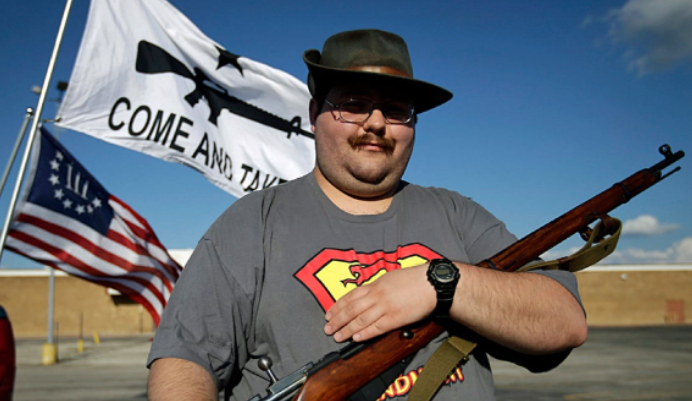


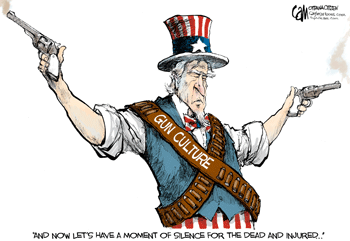 I was inspired and encouraged by our local “March For Our Lives” event in Tacoma, and by those held concurrently around the world. A number of speakers conveyed their passionate optimism regarding our prospects for implementing “sensible gun laws.” Some cited our eventual acceptance of seat belt laws, despite tremendous initial resistance, as one example of how important change can and does happen.
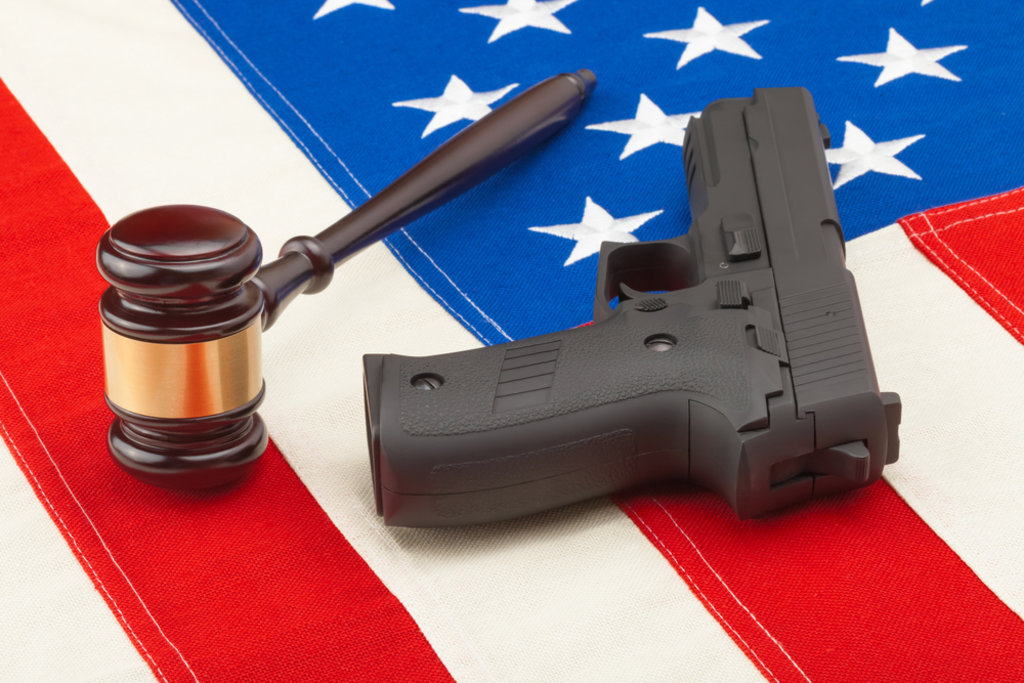 We are trapped in a nightmarish, escalating civil war in which gun nuts, bolstered by the otherwise sensible people who support them in this national insanity, battle against those who recognize that we can we never hope to acceptably reduce gun violence until gun ownership is dramatically reduced.
 I am a proud card-carrying member of the NRA. My father and my grandfather were members of the National Raptor Association as well. My great-granddad owned several hawks and a falcon that he used for hunting back in the day so it is a matter of tradition in our family. My collection currently includes a goshawk, a kestrel, two owls, and a buzzard as well as several dozen other magnificent predatory birds.
 I also own three velociraptors that descended directly from the line that were rescued from the destroyed Jurassic Park facility – the first one. These are the original birds of prey. Wingless, yes, but ancient raptors nevertheless. They are potentially dangerous but that is why it is so important that they be kept only by responsible owners like myself.
 figmentums