In a previous article I discussed the impact of proximity on ethical responsibility (see here). In it, I pointed out that while proximity should impact ethical decisions, we must be careful that we do not assign too much priority for benefits to groups or individuals nearest to us and push blame and responsibility for problems off to those farthest away from us. In it I said:
The bottom line is this. Be aware of the role of proximity assessments in your ethical decisions and judgments. Try to avoid giving unduly large or exclusive priority to your own narrow group. Likewise try to avoid assigning blame and responsibility disproportionately to groups farthest away from you.
We see this pulling in benefits and pushing off blame around us every day, and no where is it as stark as in Presidential politics. We have some candidates who perpetuate a self-serving inversion of proximity ethics by claiming that people “like us” deserve all benefits while those “not like us” deserve all blame. These politicians present a very self-serving set of ethical arguments.
Other politicians emphasize that “it takes a village” and present a far less self-serving vision of a society with a broad and wide view of balanced benefits and responsibility. For a society, and I would argue for individuals as well, this is far more healthy and sustainable.
But there is another spectrum by which ethics are selectively applied. We all experience a continual friction between personal and systemic blame. Is it nature or nurture? Is the individual solely responsible for his or her actions, is society to blame, or is it a combination? And even if we acknowledge that responsibility is a combination of the two, how much emphasis do we necessarily attribute to personal responsibility for purposes of punishment? Do we focus on changing the system that drove the individual to crime, on punishing the individual, or both? How do we balance these?
It is my observation that we tend to unduly blame the individual when they are “not like us“, poor, and underprivileged. However, when the individuals are rich and powerful, we tend to blame the system. When talking about poor Black teens, we tend to emphasize that they should pull themselves up by their bootstraps, tow the line, and take responsibility. However when we are talking about corrupt Wall Street billionaires who selfishly destroy countless lives and fortunes, we tend to shift blame to the system.
This kind of selective assignment of personal responsibility serves those with all the power. Corporate executives are never irresponsible, it is always the system that is to blame and must be changed. Donald Trump deserves no blame for tax avoidance, the tax system is to blame. However, when poor immigrants do their best to give their families some kind of basic standard of living, they are criminals who are fully responsible for their actions and must be punished for violating the system.
This extremely unbalanced assignment of personal and systemic blame serves and is perpetuated by those with all the power. When wealthy, powerful people commit terrible large scale crimes, they indict “the system.” But when poor, powerless individuals step over the line of systems designed to favor the wealthy, they must be held personally responsible for their actions. In our society, insulation from blame and punishment is a perk of power. Selfishness is a virtue reserved only for the most wealthy.
My ethics say that is backwards. I believe that with great power comes great responsibility.
 If, after all this, you still feel compelled to vote third-party, think about who you are supporting with your symbolic vote. Johnson and Weld are Libertarians. They claim to be “fiscally conservative and socially liberal.” But this is a HUGE LIE. They are only socially liberal in as far as they support the legalization of pot and a woman’s right to choose. But they also support privatization of almost every social institution including education, the right to own assault weapons, eliminating all corporate taxes, instituting a hugely regressive consumption tax, trusting in the private sector to stop climate change, and eliminating almost all regulations. The list goes on and on. These guys are not socially liberal since all of their “fiscally conservative” positions are actually
  Of course job loss is not the only concern or even the major concern. The number of people forced to retrain and change jobs is not included in these projections. Certainly jobs always evolve, but periods of rapid and widespread job disruption are nevertheless painful and difficult. Even those who can transition through the major upheaval being caused by automation and globalization may find themselves forced into jobs they no longer love. More importantly those new jobs may pay far less than the old ones. This loss of standard of living must be mitigated through responsible corporate and governmental policies.
 Make Nice incremental advocates, don’t discredit your Make War brethren and thereby waste the leverage they afford you. Appreciate that they are an asset not a liability and use them to your advantage. Radicals, appreciate that your role is bad cop and pursue it with relish but also appreciate that it ultimately takes Make Nice folks to close the deal. When a better compromise is achieved then either camp could have negotiated alone, realize that it was only possible because both camps were strong and worked with each other rather than against each other.
 Like all animals, we humans have evolved certain preprogrammed behaviors. Some of these we call instincts but they can also be thought of as just the tuning of our pattern-recognition systems. For example we have an instinct for detecting when we are being stalked and hunted. This is a pretty valuable instinct. It is essential that our pattern recognition systems are tuned to detect some agency following us. We are in fact tuned to err heavily on the side of false-positives. That is, better that you think a tiger is following you when it is not than that you miss a real tiger stalking you. False-positives are unlikely to do you any real harm but you will be unlikely to survive even one false-negative.
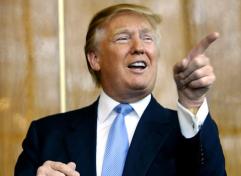 The state of the union is … great! It’s the greatest in fact. It is the greatest state of any union ever. The main reason our union is so great is because I am honestly the greatest president ever, no contest, and everyone agrees on this. Am I right?
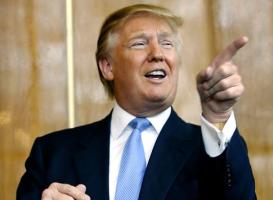 How could Donald Trump conceivably be good for us and for the USA? I’m glad you asked!
 figmentums