 In our everyday lives we make ethical judgments resulting in ethical decisions all the time. So often in fact that we mostly don’t even realize that we are doing so. Often we don’t even think of these as ethical decisions but merely as practical routine judgments. These range from small personal decisions to collective national policy decisions.
In making these judgments we weigh and balance, largely subconsciously, a large number of different criteria across a number of different dimensions. One key criterion is the proximity of the individuals or organizational entities involved relative to ourselves and our own identity groups. In general, the closer the impacted group is to our own, the greater weight, priority, and consideration we give the issue.
This is perfectly understandable, natural, and sensible. For example, we give our spouse higher priority than our family which we give higher priority than our friends to whom we give higher priority than other people. Similarly, we give higher priority to our own neighborhood, followed by city, state, and country. We are more concerned over issues impacting our own gender or race or religion than others.
There is a great deal of sensible practicality in this kind of analysis. It’s fair that we organize into groups. It doesn’t say we should ONLY give consideration to groups closest to our own, but it’s fair that we give groups in close proximity to us greater consideration.
But there are a number of ways that this proximity calculation can fail us. The first is if our concern falls off too rapidly. While we should first look out for those close to us, too much emphasis on our own groups can lead us to be needlessly callous and insensitive to the needs of groups farther away. We demand the best school for our own kids, but completely ignore the needs of other kids in our own neighborhood. Orthodox Jews, as one example, might focus exclusively enriching their own enclave communities, regardless of the cost to society as a whole. We often maintain an extremely close proximity calculus even when helping those farther away from our own sphere would, in the long run, help ourselves as well.
The second problem that arises from our proximity calculation comes into play not when we are thinking about allocating benefits, but when we are assigning and assuming responsibility. In this case we often assign far too much weight to far groups and assume far too little for our own. How often do we hear “those Chinese should take action to stop climate change” or “I’m not responsible for US militarism.”
Of course we have to keep it in perspective. Of course the Chinese should do their part to alleviate climate change and we as individual citizens cannot bear the entire brunt of US aggression abroad. But we can and should affect change in our closest proximity groups first. Those are the groups we can and should make right first before we point fingers and deflect all blame and responsibility. We should step up and take every action we can on climate change first. We should appreciate that each of us are citizens with the right to vote and speak out. We all collectively share <some> blame and responsibility for American militarism and torture.
The bottom line is this. Be aware of the role of proximity assessments in your ethical decisions and judgments. Try to avoid giving unduly large or exclusive priority to your own narrow group. Likewise try to avoid assigning blame and responsibility disproportionately to groups farthest away from you.
How do you achieve a fair, just, and healthy balance of self-interest and social consciousness? Here’s a couple good rules of thumb:
- If you typically care about how others can share benefits that your group desires or enjoys, you’ve probably got it pretty right.
- If you first ask what your group can do to improve the world for everyone before you point fingers at other groups, you’ve probably got it pretty right.
 “All things in moderation” is a pretty sound truism. It is true for most things, but there are exceptions. Lead is never good to ingest even in moderation. Likewise, activism is not usually very effective and can even be harmful when taken in moderation.
 In fact, President Obama took years to figure out that his moderate reasonable approach in all areas were doomed to fail. Over and over he reached out across the aisle with modest requests of Jokers in Congress, only to accomplish less than nothing. It took him what, 5 years of getting joy-buzzed to finally understand that moderation did not make his opponents any more reasonable or receptive.
 Recently Ted Cruz got a lot of attention for his disparaging reference to “New York Values.” It’s unclear what Senator Cruz meant unless one is attuned to that particular dog whistle. In fact it may mean different things to different people. But according to Cruz himself, he sees New Yorkers as liberal elitist Jews and Atheists who are pro-abortion, pro-gay marriage, pro-media, and pro-money. He sees New Yorkers as anti-gun and anti-prayer.
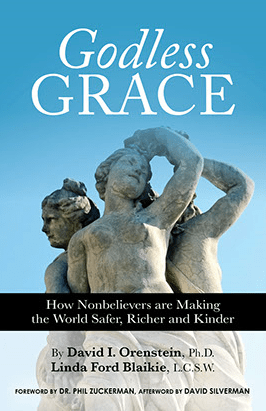 If you believe all grace comes from god, then the phrase “godless grace” probably sounds like an oxymoron to you. Or maybe even a blasphemy. You would probably maintain that grace cannot come from anywhere except from god.
 Needless to say, I gathered up much of my precious savings and rushed off to the local drug store to buy a money order for $9.99 plus Shipping and Handling, found a stamp, and sent it off. Several weeks later, there it was. My new collection of songs by The Original Artists. I tore it open like it was Christmas morning and dragged my little portable record player out from the closet, flipped open the lid, started the platter spinning, carefully put the record on, set the needle, and sat back to immerse myself in rapturous music.
 Abortion safety advocates have a ton of great ideas about how to protect the life and well-being of expectant mothers. Even though the health risk of abortion procedures is essentially zero, these concerned citizens are so dedicated to health and safety that no legislative restriction is deemed too costly or too onerous. In states all across the country, they are proposing and enacting common sense regulations to ensure that abortion facilities are safe and that expectant mothers are afforded every possible protection.
 We at Phizer are thrilled to announce an exciting new product to help women who suffer from the embarrassment of Nipple Erectile Dysfunction (NED). To launch our introductory ad campaign, we would like to engage your client Daniel Craig. We feel that Daniel will be the perfect spokesman for our new NED product line. He has just the “ready for some nipple fondling” look that we feel will be perfect for introducing our product.
 For the generations that frequented movies or browsed magazines back in the 1950’s, Audrey Hepburn became synonymous with elegance. Even for the generations that followed, Audrey Hepburn has remained the iconic symbol of elegance. Ask people for an example of elegance and they are still likely to show you a picture of Audrey Hepburn. When applied to women, she defined elegance as grace and style without ostentatiousness.
 But the word elegance can be applied to ideas and designs as well. When applied to things, it suggests something that is both simple and ingenious – ingenious in its simplicity. A mousetrap is a great example of an elegant design. While not pretty to look at, it is nevertheless functionally beautiful. When William C. Hooker patented his spring-loaded mousetrap in 1894, I wonder if he guessed that its elegant design would not be improved upon for at least a century – and maybe never will be. Hooker’s mousetrap has only 5 parts, but it does it’s job as well or better than far more complex and expensive designs. That makes it very elegant indeed.
 True elegance, whether in starlets or in devices, is rare. Many people confuse complexity with quality; pretty designs with elegant ones. Inelegance is a very common failing of even the smartest people. In fact the most intelligent people are the most susceptible to producing convoluted, over-complicated solutions to address the simplest problems. But like the mouse-trap game, these clever constructions are fatally flawed in their inelegance.
 December 22nd is the Winter Solstice in the Northern Hemisphere. It is the shortest day and longest night of the year. On this day, the noon Sun is at the lowest point of the year, lower the further north you are.
 The slippery slope is one of the most commonly invoked arguments and usage of slippery slope arguments seems to be on the rise. One study found that the phrase is used in the media 7 times more frequently than it was just 20 years ago (
 figmentums