Monthly Archives: July 2026

Situational Journalistic Professionalism

I watched John Stewart interview CNN’s Caitlin Collins today. One could not help but be impressed by her steady professionalism. But at the same time I had to wonder, where was this kind of professionalism during the Biden administration? What I saw at the time was a press corps that often behaved more like a rabid mob. I didn’t hear much talk about journalistic professionalism at the time. Instead they repeatedly defended their overtly combative reporting as central to their journalistic duty to “get to the truth.”

It made me wonder how much of this talk about journalistic professionalism is a reaction to Trump; a posture, defense, and excuse adopted to protect themselves from criticism that they are too timid with this President. It made me wonder where those aggressive reporters from the Biden press room were today?

The White House press corps likes to imagine itself as a principled institution: adversarial but civil, skeptical but professional, always serving the public rather than its own performance. On paper, that’s even their job description — ask hard questions, shine light, hold the president to account. In practice, though, what we see looks less like fixed journalistic integrity and more like situational professionalism: the tone changes depending on which president is standing at the podium and how much disrespect the room can get away with — not how much respect the president actually deserves.

Look at Joe Biden’s Geneva press conference in 2021. CNN’s Kaitlan Collins shouted a question as Biden was leaving the stage, pressing him on why he was “so confident” Vladimir Putin would change his behavior after their meeting. Biden turned back, visibly irritated, and snapped, “Where the hell — what do you do all the time?” before later telling her she might be “in the wrong business” if she couldn’t see the meeting’s value. He eventually apologized, but the exchange is revealing: the press felt free to crowd him, shout questions, and keep pressing until they got a reaction.

That dynamic shows up again in the Biden-era briefings. In one 2024 age-and-debate fallout briefing, while reporters were pressing the White House for Biden to address his future directly, an off‑camera reporter quipped “If he’s awake” about the president. NBC’s Kelly O’Donnell immediately called it “inappropriate,” and the press secretary echoed that judgment. But the line only happened because the room had drifted into a mode where casually disrespectful asides about the president’s faculties felt thinkable in the first place.

Those moments aren’t isolated glitches. They sit on top of a structural reality that Biden “probably takes more questions overall” and does frequent informal Q&A, which gives the corps more opportunities to shout, overlap, and push. You end up with a press environment where the president’s openness becomes an invitation: the more he tolerates the noise, the more the corps turns toughness into a kind of blood sport.

Now set that next to Donald Trump’s long, combative press interactions. The man who called “fake news” the “enemy of the people” over and over again made the press into a personal foil, publicly attacking outlets and individual reporters from the podium and on social media. In one notorious coronavirus briefing, Trump literally played a campaign‑style video attacking the media’s coverage before lashing out at reporters who questioned his response, insisting “everything we did was right” while the media was “guilty”. CNN and MSNBC cut away and labeled the video propaganda. That’s not a calm professional exchange; it’s a president turning the briefing itself into a weapon against the press.

The Charlottesville press conference in 2017 fits the same pattern. Trump took questions in an aggressively defensive tone, arguing “both sides” were to blame and sparring with reporters about CEOs resigning from his manufacturing council and whether the violence counted as terrorism. The transcript reads like a tense negotiation, with the press trying to hold him to clear moral language while he pushes back on their framing. It’s adversarial, but the corps largely sticks to a more formal, single‑voice question pattern instead of the shouted swarm you see in some Biden clips.

Put bluntly: when the president reliably punches back, calls the press “fake news,” and threatens access, professionalism is a posture the press adopts as a defense. When the president absorbs the blows and apologizes, “professionalism” loosens into jokes about whether he’s awake and shouted questions that run right up to the line of personal disrespect. The standard isn’t the same; the risk profile is.

This is where “situational professionalism” comes in. If you only listened to the self‑image of the press corps, you’d think there was one unified ethic: adversarial, serious, fair. But the examples tell a different story:

  • With Biden, openness to questions correlates with the corps becoming louder, more overlapping, and sometimes casually derisive and contemptuous, because the likely consequence is at worst a scolding and later apology.
  • With Trump, the corps often presents a more pious, ceremonious face even while asking pointed questions, because retaliation — rhetorical and institutional — is a real threat.

The White House Correspondents’ Association itself emphasizes the noble language: “It is our job to report on the president… to shine a light and hold the government accountable,” framed as a tradition grounded in the First Amendment. That’s fine in theory. But when the everyday practice shifts based on how much pushback a given president will deliver, what we’re watching is less a fixed code and more a calibration: how far can we go today without paying for it tomorrow?

In that sense, civility for the corps becomes a function of the president’s temperament rather than a consistent journalistic principle. The same reporter who is comfortable shouting at a departing Biden may choose a more tightly controlled question with Trump, not because the underlying issues are less serious, but because the cost of triggering the president is higher. Professionalism becomes a slider, not a standard.

None of this means every reporter in the room is insincere. There are people who clearly try to keep the focus on the substance rather than on their own reactions or one‑liners, and there are moments when colleagues clamp down on crossings of the line, as O’Donnell did with the “if he’s awake” remark. But the broader pattern is hard to ignore if you watch enough of this stuff in sequence: the corps will happily perform toughness when the president lets them, and tout their restraint when the president punishes them.

If professionalism is only strict when retaliation is looming, then it’s not really professionalism. It’s self‑preservation in formal clothing. And if journalists want the public to trust that they’re acting on principle rather than opportunism, they need to close that gap: be just as careful with their tone when the president is easy to shout at as when he is itching to declare them the enemy of the people.

Otherwise, “professionalism” risks becoming just another situational costume — something the press corps puts on or takes off depending on who’s standing at the podium, how much they think they can get away with that day, and whether aggressiveness or respectfulness serves them better.

Gobi Nights: Exploring the Dark

I just published a new novella on Amazon Kindle.

Gobi Nights: Exploring the Dark (see here)

It’s “fictional non‑fiction” in the sense that it stitches together real conversations and lived experiences into a tight story about one woman’s journey to places she never expected to go—and the surprising people she meets in a world where solitude may be the hardest thing to bear.

Set in 1996, when Mongolia had only recently opened to the West and evangelical missionaries were among the first foreigners to arrive, the book follows the threads of ambition, Christianity, Buddhism, and everyday life as they all converge around a vanished yoga icon.

Gobi Nights is a quiet story about searching for, losing, and slowly regaining one’s purpose and meaning in a changing world. And it’s about two women who profoundly change each other.

Recommended Summer Reading

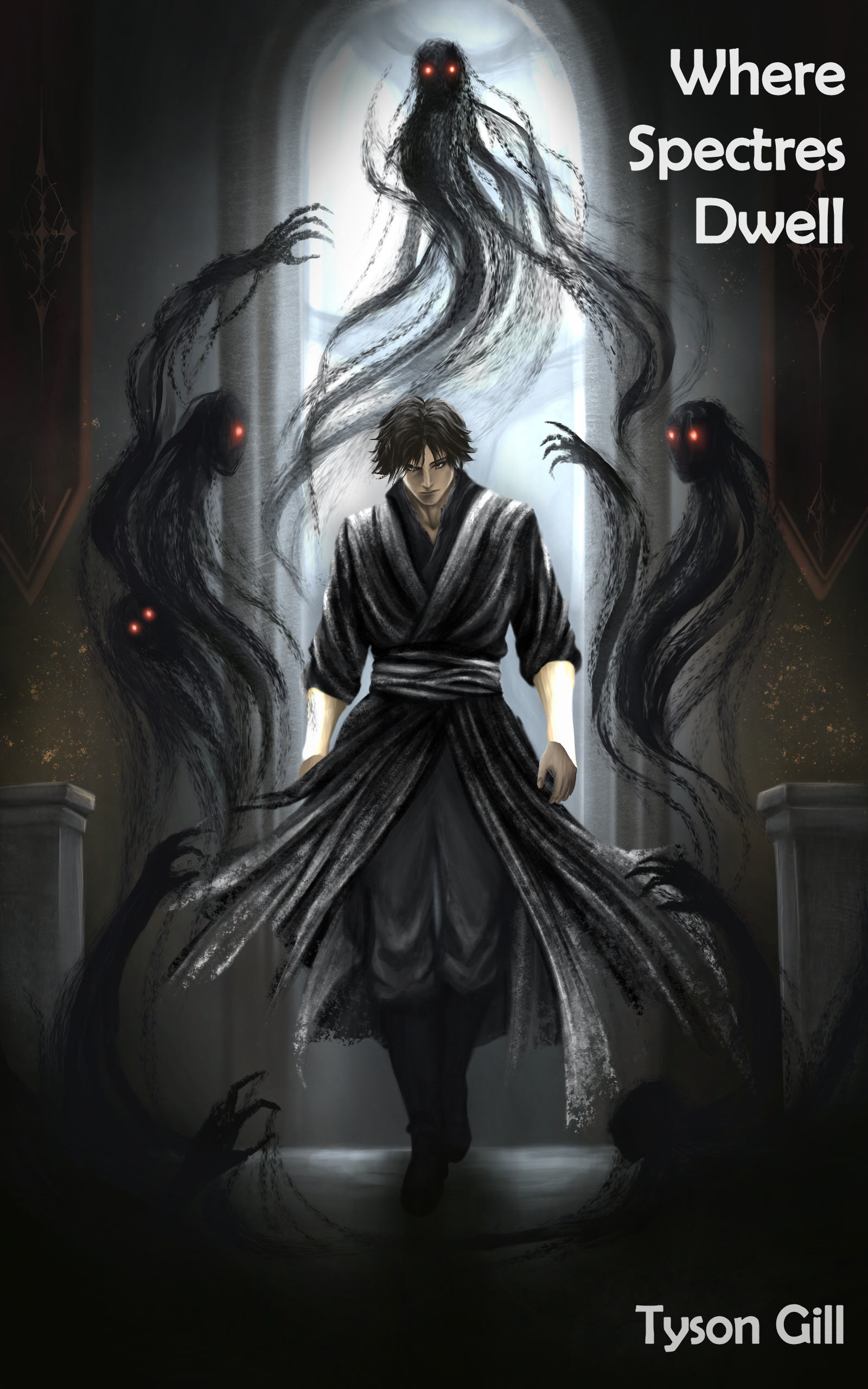
I’d like to invite you to check out my latest books—a fantasy trilogy I’m genuinely proud of. The series is called Monks and Mages, and it includes Where Spectres Dwell, The Nefarium, and The Darker Twin.

At its core, this is Epic Dark High Fantasy.

“Epic” in the true sense: a sweeping narrative with world-shaping events, a broad cast, and a timeline that spans lifetimes. At heart, it’s also deeply personal—almost biographical in the way it follows the lives and evolution of its two central characters.

“Dark” because the story doesn’t pull its punches. There are moments of real terror, dread, and loss, the kind that feel earned rather than contrived. Some of its main characters are anti-heroes. But that darkness is balanced with heart—warmth, sacrifice, and moments that draw tears. It’s written for adults, but accessible to teen readers who enjoy layered storytelling.

“High” because it delivers on scale: powerful magic, formidable antagonists, and ideas that reach beyond the immediate story into larger questions about personal and wider social relationships.

The writing is intentionally dense and efficient. This isn’t a ten-book sprawl—but interestingly, one reader told me it could have been. That is exactly what I was going for. Another reader said “it kicks the shit out of Harry Potter.”

At its center, Monks and Mages is about relationships and growth. There’s wit, banter, and a cast that should feel both vivid and familiar. In fact, one of the most potent characters is Marika, the “Darker Twin”—a woman with no supernatural abilities, but formidable insight and cleverness to match.

Out of curiosity, I once asked an AI to compare the series stylistically. It came back with this:

“It blends the cohesive magic and social upheaval of Mistborn, the high-stakes sorcery and empire-level scheming of The Black Prism, and the razor-edged banter and cons of The Lies of Locke Lamora into an exciting, character-driven saga.”

To that, I would add: it shares a joyful spirit of warmth and intimacy found in The Brotherband Chronicles.

If that sounds like your kind of story, you can find the series on Amazon Kindle. It’s free if you have Kindle Unlimited (see here).