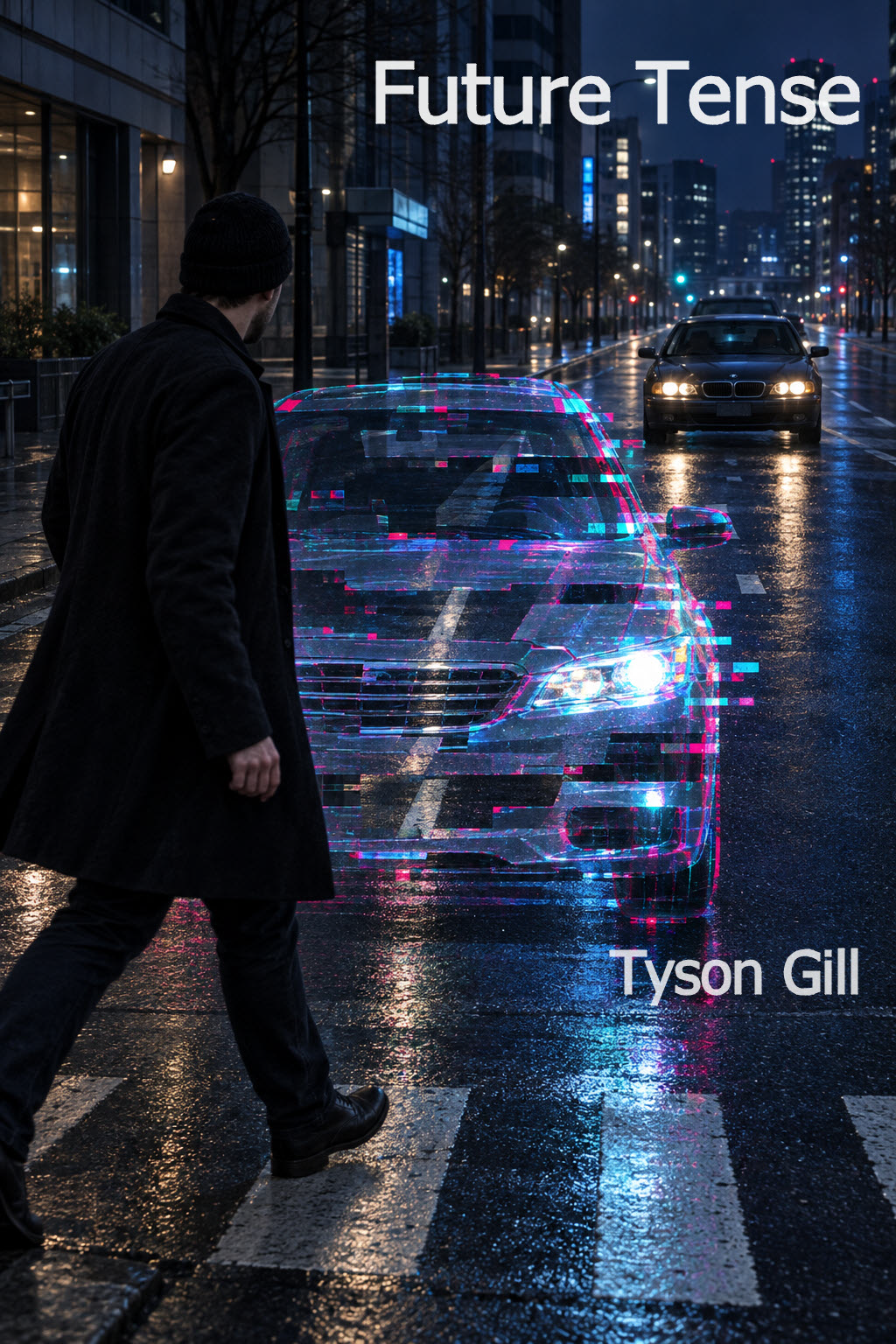
My fiction-writing spree continues. Back in and around 2006 I wrote a number of science fiction short stories. Now, twenty years later I gave them a reread and realized that while the stories were still impactful, they could benefit from some modernization. So I updated them with the latest science, tech, and references. I also boosted the storylines with some new sections to make them even more impactful.
So I hope you enjoy these 20th anniversary makeovers. Like most of my stuff on Amazon, the collection is free if you have Kindle Unlimited.
Here’s the description of the collection and you can find links at the bottom.
Three futures. Three choices no one was supposed to make.
Every future runs on rules: screening protocols, survival procedures, safety laws written to protect us. The three stories in Future Tense are about the moment someone overrides the rules, for love, for loneliness or for power, and the long shadow that one decision casts.
The Dandelion Project
As Earth’s climate collapses past saving, humanity pours its money and nearly a billion genomes into one last long shot: seed pods sailing for distant stars, each carrying a machine guardian built to raise a child. This is an end-of-the-world story that turns out to be tender. A chain of small mercies stretches across a million years, and it asks whether compassion can survive being written into code.
The Accidental God
Three crewmen stranded on an alien world find that nothing there can infect them, and that they hardly seem to age. The narrator has endless time and the best intentions. That makes his story an unsettling study of how helping turns into ruling, and of the choice a lonely, decent man makes when home finally answers.
Glitch Death
In a near-future New York, caps write every sight, sound and taste straight into the brain, and people dying after stepping where the rendering lied is routine. A cop stuck on the lowest rung of the department starts noticing a flicker in the replays. This tight techno-thriller is built on real science and plausible law. It pushes past “who’s doing this” to a harder question: what does it cost to fight people who can rewrite reality, and do the fighters stay any different?
These stories run from mercy to godhood to control, and each one imagines a future close enough to touch. Each one also asks who gets to decide.

