We spend a lot of time worrying about what America no longer makes. Cars, televisions, steel, semiconductors. The assumption is that our standing in the world depends on winning back the factories other countries learned to run more cheaply, or on keeping them from learning to make the things we still make best.
Some of that deserves attention. But it overlooks our most valuable export, one that never shows up in the trade statistics and one the Trump administration seems determined to liquidate: the world’s belief that the United States is a stable, reliable country to do business with.
I am not claiming America has always behaved ethically or deserved the trust it received. Our history won’t support that. My point is more practical. A reputation for predictable institutions, enforceable agreements, and some restraint is an enormous economic and strategic advantage. Partners can make investments that take decades to pay back. They can depend on us without assuming that dependence will be turned into a weapon. That expectation has value even when we have not always lived up to it.
It is the solid trunk that holds up every other branch of the American economy. Previous administrations have chipped away at it with ill-advised plots, schemes, and escapades. Trump has taken a chainsaw to it.
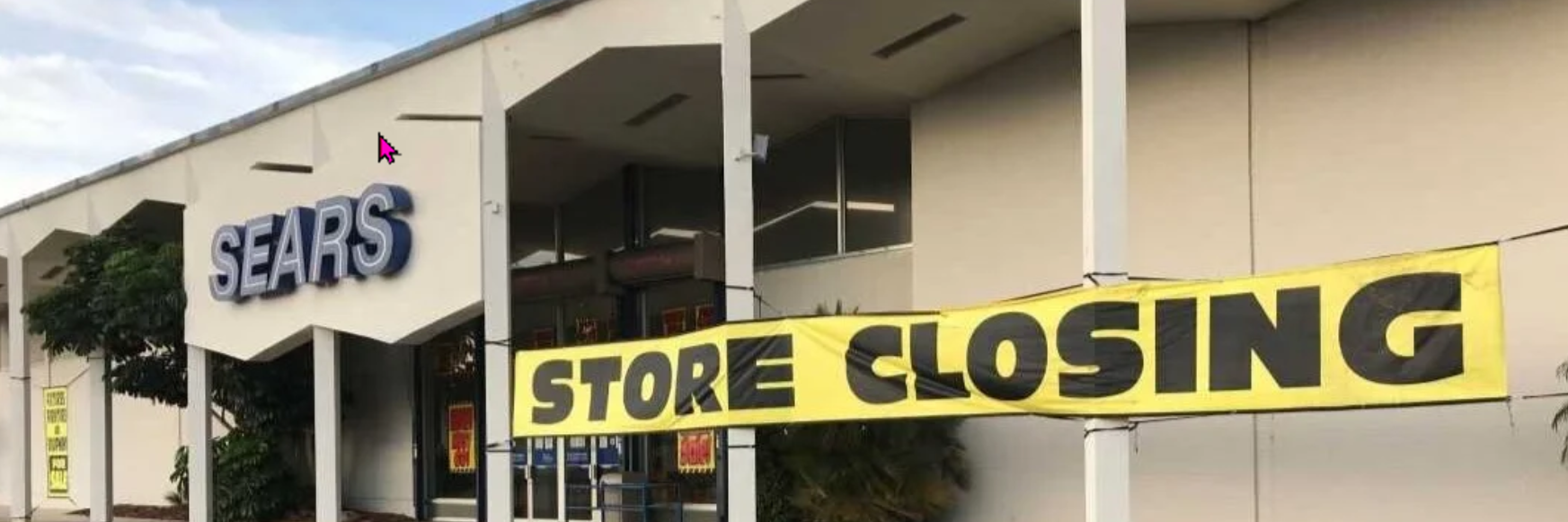
To understand what that kind of reputation is worth, think about Sears.
For most of the twentieth century, Sears was not the cheapest place to shop. It didn’t need to be. Its catalog promised “Satisfaction Guaranteed or Your Money Back,” and people believed it. Craftsman hand tools carried an unlimited lifetime warranty. Break a wrench twenty years later, bring it to the counter, and walk out with a new one. Families willingly paid a little more because Sears stood behind what it sold and, just as important, because they knew Sears would still be there next year to make good on it.
That was the real product. Not the wrenches and washing machines, which plenty of others could make. They sold trust.
Then hedge fund manager Eddie Lampert merged Sears with Kmart and began treating a storied institution as a pile of assets to be stripped. He sold Craftsman to Stanley Black & Decker. He moved hundreds of Sears’ best properties into a separate real estate company. Stores went unrepaired, shelves went thin, and knowledgeable staff disappeared. By the 2018 bankruptcy, a name that had meant “they’ll make it right” meant dingy aisles, half-empty racks, and real doubt that anyone would honor what you bought.
Sears faced real pressure from Walmart and Amazon, and it might have shrunk anyway. But it did not have to become a fly-by-night bargain basement nobody trusted. That was a management choice.
That is what is happening to the United States. We were the great department store of the world. Not always the cheapest option, but the one people chose because we stood behind our commitments and would still be around tomorrow. Trump has looked at that institution and seen only inventory to liquidate.
Trump is managing our national franchise like Eddie Lampert managed Sears… into the ground.
Consider Canada. Threatening a neighbor’s economy while calling it the fifty-first state is not an unconventional negotiating style. It tells Canadians that everything about the relationship, including our respect for their independence, is subject to revision at one man’s whim.
Whether Trump seriously intends annexation hardly matters. Canada need not fear an invasion to conclude it should reduce its exposure to American decisions, and Canadians have acted on exactly that. Statistics Canada reports that Canadian trips to the United States fell by a quarter in 2025, the deepest and most sustained decline on record outside the pandemic, and that early 2026 data show it persisting. That is a loyal customer walking out of the store.
The tariffs work the same way. Whatever a given tariff does for a given industry, the threats, reversals, and demands tell every trading partner that any deal with America is provisional. A customer may keep buying because switching suppliers is expensive. That doesn’t mean the customer is satisfied. It may mean we have just given them a reason to start an expensive transition they never intended to make. We increasingly mistake the difficulty of leaving us for permission to behave however we like.
The June 2025 strikes on Iranian nuclear sites spent a different kind of credibility: our claim to be a stabilizing power. UN Secretary-General António Guterres called them “a dangerous escalation in a region already on the edge – and a direct threat to international peace and security.” Whatever you think of the arguments for the strikes, any government deciding whether to trust Washington now has to weigh not just our military power but our willingness to toss a fresh escalation into an already volatile region.
Each of these can be argued on its own terms. Together they tell the world one thing: this store no longer stands behind its goods.
This is why our fixation on keeping China behind in semiconductors strikes me as so badly misplaced.
Lampert seemed to believe the value of Sears was in its brands and its real estate, so that is what he guarded and sold. Craftsman survived in name only. You can buy it at Lowe’s. Sears did not survive. The thing that actually brought people through its doors could not be spun off, licensed, or sold, and once it was gone, no amount of merchandise could bring it back.
We are making the same mistake, guarding a technological lead while treating our partners’ confidence as inexhaustible. Yet even the chip advantage depends on that confidence. Advanced chips rely on supply chains that run through Japan, South Korea, and the Netherlands, and as an analysis from MIT’s Center for International Studies points out, holding allies together on export controls gets harder when American policy signals look uncertain. We cannot expect other countries to keep organizing their industries around American priorities while we make American commitments less dependable.
China does not have to become admirable to benefit. It has its own coercive practices and serious abuses. But a government or business choosing a partner is rarely judging the moral record of two civilizations. It is deciding who will finish the project, supply the equipment, and refrain from attaching frivolous demands to an existing deal. China can win those transactions simply by looking more dependable.
And China has real merchandise with added value on the shelves. The International Energy Agency reports that China invested more than $625 billion in clean energy in 2024, including the grids and storage needed to support it. That does not erase its continued reliance on coal. But it does mean China is building infrastructure other countries need while we spend our energy threatening the terms under which they may deal with us.
Stability, competence, honesty, restraint, and fair dealing are not sentimental extras to attend to once our material interests are secured. They help determine those interests: whether people study here, invest here, share research with us, and build their futures around us. And if our principles bend depending on whether a friend or a rival is involved, nobody has reason to count on them.
These assets are also exceptionally hard to restore. A tariff can be removed with a signature. The discovery that it can be imposed on a whim survives its removal. A president can stop threatening Canada, but Canada will still know that Americans elected one who did. The next administration can offer assurances, but partners are entitled to ask how long those will last. Repair takes years of repeated proof, and we don’t get to set the timetable.
Rebuilding a steel industry is hard. It takes capital, equipment, skilled workers, and a market. But at least we know what has to be built. Restoring a reputation requires other people to revise a judgment that our own conduct gave them good reason to make. We cannot subsidize their confidence into existence or tariff them until they feel reassured.
I would rather see America compete by being a country others have good reason to choose even when they have alternatives. That takes more than the best chip or the latest extracted concession. It takes recognizing that our conduct is part of what we sell. Sears kept the Craftsman name alive and lost everything that made the name worth having. If we trade away reliability, restraint, and credibility to defend a temporary industrial edge, we may find that no one shops in America any longer and that they are not coming back any time soon.

