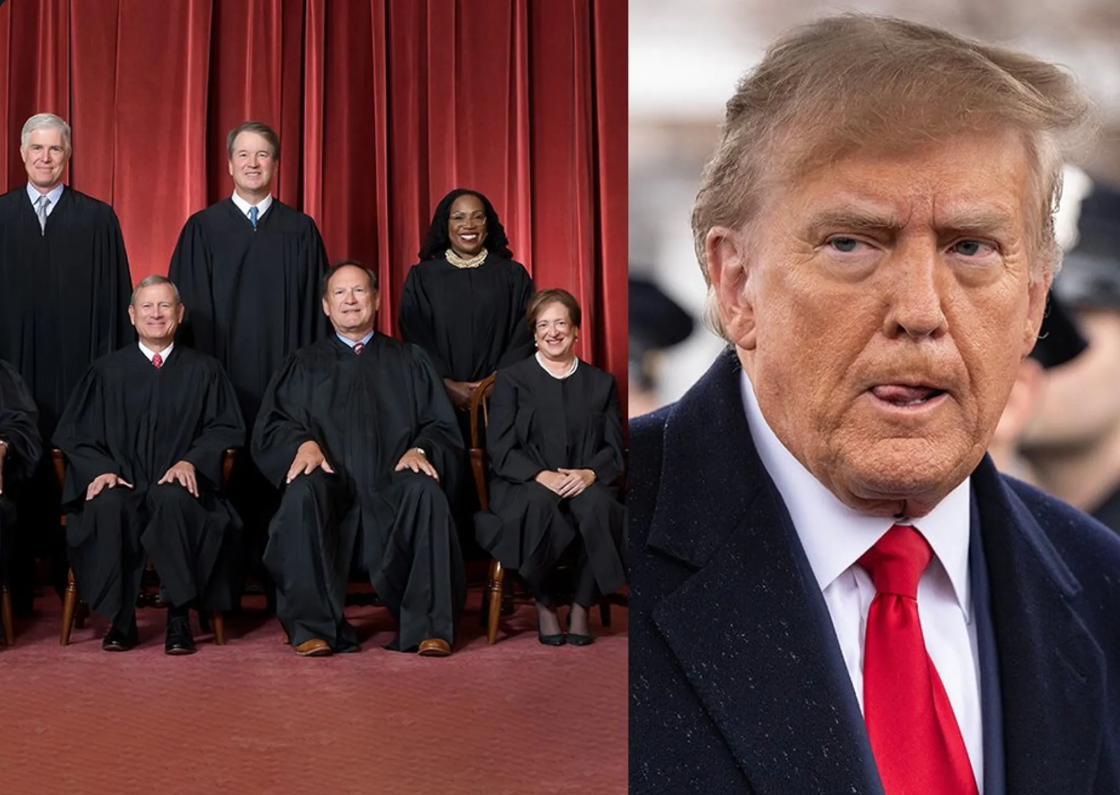
In their 2024 ruling in Trump v. United States, the conservative majority on our Supreme Court gave Donald Trump an extraordinary degree of immunity from criminal prosecution. Absolute immunity for his core constitutional powers. Presumptive immunity for other “official acts.” No immunity for unofficial acts.
That last part sounds reassuring doesn’t it? Until you look at what they did to ensure it is a moot qualification.
One might think “official acts” means legitimately doing the president’s job, not using the machinery of government to carry out corrupt personal schemes. But the majority ruled that courts cannot examine his motives when deciding whether an act is official. Nor does an act become unofficial simply because it allegedly breaks the law.
So you can use presidential power for a corrupt purpose, but judges are instructed not to consider that purpose when deciding whether you were acting as president. Apparently, using the office and abusing the office are distinctions we must never attempt to distinguish.
They did not formally prohibit every investigation or give Trump immunity for absolutely everything. They did something more useful to him: they created sweeping protection for official acts, then made it almost impossible to establish where that protection ends. They even restricted the use of protected official acts as evidence when prosecuting conduct that is not immune.
I consider this the worst Supreme Court decision in our nation’s history. It is particularly stunning that such sweeping protection was handed down in the case of a man widely considered perhaps the most corrupt president we have ever had.
To support their insane theory, the majority separates legality from accountability. They are not saying everything the president does is legal, we are told. They are merely saying he cannot be prosecuted for effectively anything.
Yes, I understand the distinction. I just do not think it answers the objection.
If you cannot prosecute someone for an act, you have removed the criminal prohibition’s teeth as far as that person is concerned. “It is illegal, but you cannot be prosecuted for doing it” sounds an awful lot like permission with a feeble disclaimer. You can keep calling it illegal. But you have made it effectively legal.
But putting the semantic hand-waving aside, there is another problem: what happens to the people carrying out his orders?
The Court’s reasoning is that threatening a president with prosecution would inhibit him from carrying out his legitimate duties. Fine. But then why wouldn’t threatening his subordinates with prosecution inhibit him in exactly the same way?
Presidents do not personally carry out much of anything they direct. A corrupt president like Trump needs minions to do his dirty work. Surely, if his minions cannot carry out his corrupt schemes without risking prison, that also inhibits his ability to go about his supposedly official business.
If I were a Trump minion coming before the Supreme Court for carrying out illegal orders, I would argue exactly that:
“You have already decided that the president must be protected from prosecution so he can perform his official duties. But he performs those duties through us. If you prosecute us for doing what he directs, you are interfering with the very presidential actions you said must be protected.”
That is not something the Court has already granted. It is the next argument its reasoning practically begs someone to make. Once you accept presidential immunity, this downstream protection becomes eminently, almost inescapably, logical and reasonable.
And if the justices reject it, I would like to hear their explanation. The man directing the crime needs protection so he can do his job, but the people carrying it out can go to prison? Apparently, accountability is essential right up until it reaches the person in charge. What corrupt dictator would not love this ruling?
Of course, I have no confidence that this conservative majority would be equally protective of a Democratic president. I expect they would suddenly discover all sorts of limiting principles. Motives, context, the precise boundaries of presidential authority—what a fascinating collection of principled concerns we would suddenly hear to support their rulings calling for presidential accountability.
Look, this is a ruling that only enables and protects criminality. An honest president doing lawful things has far less use for criminal immunity than a corrupt president doing criminal things. The protection becomes most valuable exactly where accountability matters most.
They call this protecting the presidency. I call it protecting the person abusing it most egregiously.
It is the $250 bill of Supreme Court rulings. It only helps criminals like Trump.

